Choosing the 2026 Best 2 Passenger Golf Cart for Global Buyers requires more than comparing glossy colors and advertised speeds. A reliable model must handle daily transport, uneven paths, changing weather, and practical ownership costs. Buyers should examine battery chemistry, charging time, braking performance, ground clearance, seating comfort, and available replacement parts. A beautiful cart can still become expensive when one controller or charger fails.
As golf-cart service specialist Kevin R. Mason explains, “The best cart is not the fastest one; it is the one your local technician can diagnose and repair.” That advice deserves attention. A lithium-powered 2-Passenger Golf Cart may offer lighter weight and faster charging, while a lead-acid model can remain attractive where maintenance support is stronger. Neither choice is perfect.
Small details matter.
Picture a narrow storage garage, a muddy driveway, or a seaside road with salty air. These conditions expose weak suspension components, poor wiring protection, and unsuitable tires. Global buyers should also confirm local requirements for speed limits, lighting, registration, charging standards, and public-road use before purchase. Rules differ between countries and regions.
This guide compares leading 2-Passenger Golf Cart options for 2026 through a practical lens. It considers comfort, range, durability, service access, safety equipment, and long-term value. Some rankings remain debatable. Real-world performance can change with passenger weight, terrain, temperature, and maintenance habits. That uncertainty matters. A thoughtful buyer should test the cart, inspect its warranty, and ask who will support it after delivery.
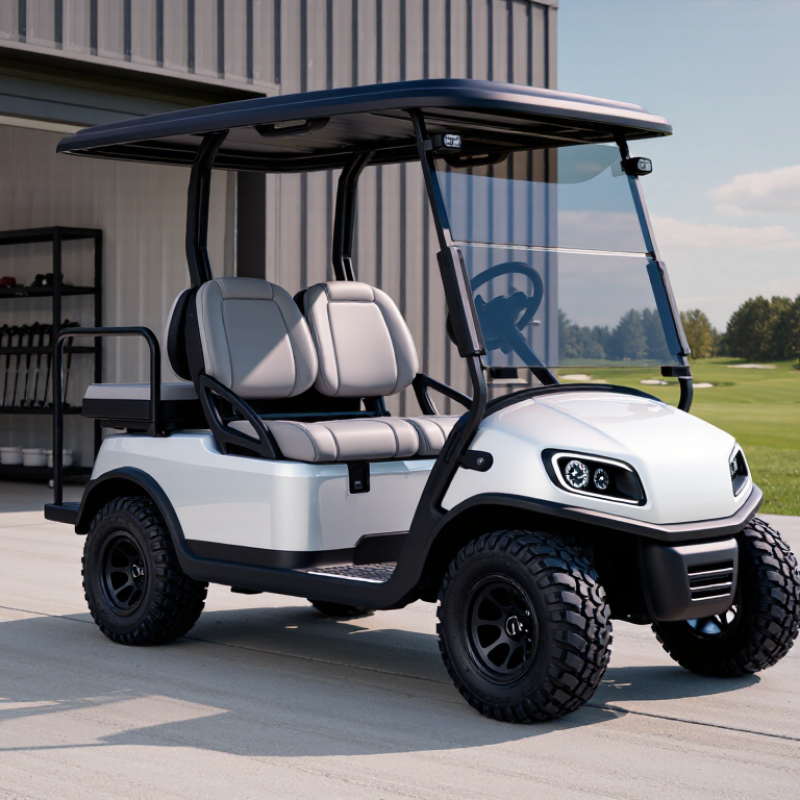
For global buyers, the 2026 two-passenger golf cart is increasingly defined by a 48-volt electrical system and a 15-mph speed limit. A 48-V system can support smoother starts, stronger hill performance, and steadier accessory operation. It may also reduce voltage drop during repeated stops. During inspections, I check battery access, cable protection, charger compatibility, and the condition of terminal connections. Small details matter. A loose connection can create heat, shorten range, and complicate service work.
The 15-mph limit should not be treated as a universal legal standard. Local road rules, vehicle classifications, and registration requirements differ widely. Buyers should confirm the rules where the cart will operate. On private paths, this speed can feel controlled and practical. On uneven ground, however, braking distance still changes with weight, tire pressure, and surface moisture. A speedometer should be checked against an independent device. Factory readings are not always perfect.
A dependable two-passenger cart should provide stable seating, predictable steering, effective brakes, and clear operating instructions. Ask for battery specifications, charging time, payload capacity, and verified range under realistic conditions. A short test drive with two adults reveals more than a brochure. I once underestimated how much wet grass affected acceleration. That was a useful correction. Buyers should also inspect underbody clearance, suspension joints, and lighting before placing an order. Availability of replacement parts and qualified service support deserves equal attention.
It can provide smoother starts, steadier accessories, and stronger hill performance. It may also reduce voltage drops during repeated stops. Inspect cables and terminals carefully. Small faults can create heat.
No. Speed limits, registration rules, and vehicle classifications vary by location. Confirm local requirements before driving on public roads. Private paths may allow different conditions. Do not assume the factory limit settles everything.
Test steering, braking, acceleration, seating, and stability with two adults. Try a hill if possible. Wet grass can reduce acceleration more than expected. I underestimated that once.
A 3-kW motor suits flat paths and moderate loads. A 5-kW motor offers more reserve power on hills. Higher output may increase energy use and controller heat. More power is not automatically better.
Its theoretical energy is about 4.8 kilowatt-hours before losses. Actual range depends on weight, slopes, temperature, tires, and driving habits. Published figures may look optimistic. Request tested results under realistic conditions.
Check total payload, axle limits, and braking performance together. Two 90-kilogram adults already weigh 180 kilograms. A 350-kilogram rating leaves less margin for luggage and tools. Confirm the figure in writing.
Lead-acid batteries often require 8–10 hours. Lithium systems may need about 4–6 hours. Actual time depends on battery size, charge level, charger output, and local voltage. Measure it yourself.
Read battery, charger, controller, and frame coverage separately. A battery warranty may include declining coverage, labor exclusions, or cycle limits. Ask about replacement pricing and regional availability. The cheapest purchase can become expensive later.
Inspect underbody clearance, suspension joints, tire wear, steering play, lights, and brake response. Check battery access and charger compatibility too. A polished exterior proves little. Service access may disappoint.
Choosing the best 2-Passenger Golf Cart for 2026 requires more than comparing appearance or price. Most models in this category use a 48-volt electrical system, a top speed near 15 mph, and motors rated between 3 and 5 kW. Lithium-ion battery options can reduce weight, support faster charging, and offer consistent performance, while advertised driving ranges of 40–80 km should be evaluated under clearly stated, standardized test conditions.
For global buyers, safety and legal compliance are essential. Check whether the vehicle is designed around ANSI/ITSDF B56.8 guidance, carries appropriate CE marking where required, and meets the rules of the intended location. The strongest overall value depends on payload capacity, charging time, warranty coverage, battery life, service support, and total ownership cost. A practical 2-Passenger Golf Cart should balance reliable range, safe operation, useful carrying capacity, and transparent specifications rather than relying on headline performance claims alone.