0%

China has become an important sourcing base for golf carts, with manufacturers serving resorts, courses, campuses, and commercial properties. Yet “high performance” can describe very different products. A High Performance Golf Cart might prioritize hill-climbing torque, longer range, passenger capacity, or stable handling on uneven paths. Buyers should match these claims to real operating conditions, not just brochure figures. Details matter. This article introduces ten Chinese manufacturers worth researching, treating the list as a starting point rather than a universal ranking.

To compare suppliers fairly, examine motor output, battery type and capacity, rated payload, braking, suspension, and charging time. Ask whether the stated range was measured with a full load, on flat pavement, and in mild weather; test conditions can change results. Request current specifications, warranty terms, spare-parts availability, and information about quality-control procedures. A factory visit or live video inspection can clarify assembly practices, but it cannot replace independent checks. Real use varies. After-sales support deserves equal attention, especially when carts operate daily and downtime affects staff or guests. Some listings present attractive numbers without enough context. That gap deserves scrutiny. The manufacturers profiled here are considered through practical buyer questions, including product range, customization, production capability, and service readiness. Confirm details directly, since models, components, and export support can change. This is not always simple. A careful shortlist can still save time and help identify a supplier suited to a specific route, workload, and budget.
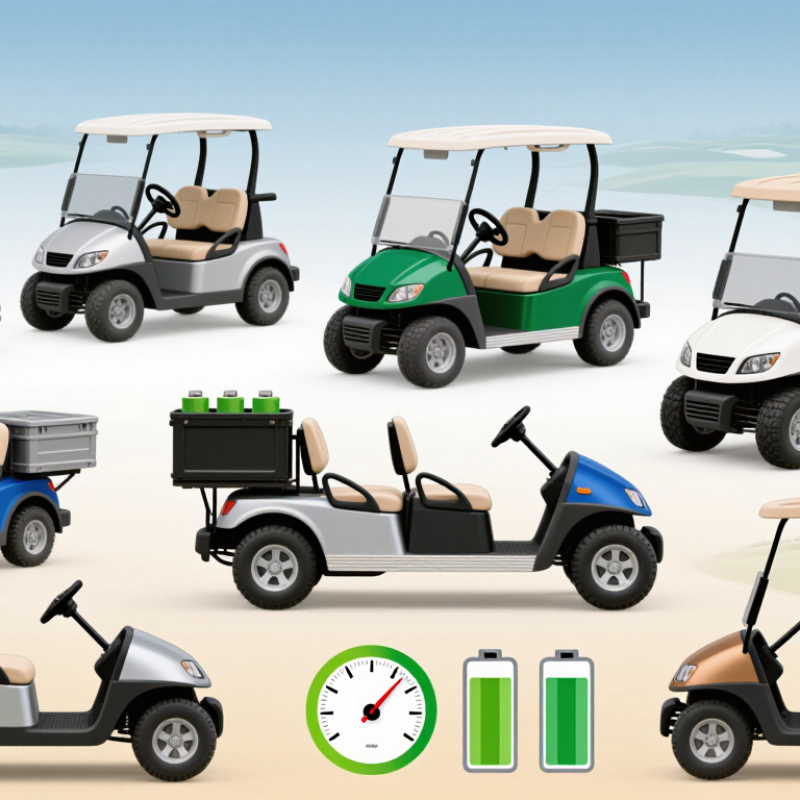
China Top 10 High Performance Golf Cart Manufacturers?

Defining High Performance: 48/72-V Systems and the 15-mph (24-km/h) Class

For this comparison, “high performance” needs a practical definition, not a marketing label. A 48-volt or 72-volt system describes nominal electrical architecture; voltage alone does not prove stronger acceleration or greater carrying ability. Motor output, controller limits, battery condition, gearing, tire size, and passenger load all affect real-world results. A useful benchmark is a cart designed to reach about 15 mph, or 24 km/h, under stated test conditions.

That label can mislead. A lightly loaded cart may reach its target on level pavement, then slow noticeably on a slope with four passengers and equipment aboard. Ask manufacturers for the rated motor power, battery chemistry and capacity, controller specifications, braking details, and maximum tested speed. Request the test conditions too: surface, gradient, load, and battery charge. These details make comparisons more meaningful than voltage figures alone.

A 72-volt setup may support higher power delivery, but it can also add cost and require compatible components. A well-matched 48-volt system may suit many private-site routes, especially where smooth acceleration matters more than top speed. I would not treat 15 mph as a universal threshold; intended use and local operating requirements can differ. One detail is easy to miss: check whether the quoted speed applies to the standard configuration or an optional setup.

Standards and Tests: ANSI/ITSDF B56.8, Gradeability, Range, and Braking

A high-performance golf cart should be judged by measured behavior, not a steep-slope claim alone. ANSI/ITSDF B56.8 provides safety requirements for personnel and burden carriers; it is not a performance ranking. Ask what configuration was tested, including payload, tires, battery condition, and speed. These details matter. A cart tested empty may climb differently with four passengers and equipment aboard. Check that the manufacturer’s test records identify the conditions and method, rather than presenting a single impressive number.

Gradeability tests should use a defined slope and load, with attention to controlled starts and safe stopping. Range figures need context too: route surface, temperature, speed, passenger weight, and stop frequency can change results. Braking tests should report stopping distance under stated conditions, including load and surface. Look for repeat runs, not one favorable pass. A tidy data sheet can still hide real-world variation. I would want to see how performance changes after repeated climbs, because heat and battery state may affect results. Perfectly comparable tests are difficult, and that limitation deserves honest reporting.

China’s Top 10 Golf Cart Manufacturers: Product Lines and Export Markets

China’s golf-cart manufacturers cover more than course vehicles. Common product lines include two- and four-seat carts, utility models with cargo beds, sightseeing shuttles, and electric vehicles with lithium-ion or lead-acid batteries. Options such as enclosed cabins, lifted suspension, and rear cargo boxes reflect different uses, from resort paths to factory grounds.

The details matter. A longer range means little if a loaded cart struggles on a wet incline. Buyers should compare rated payload, battery capacity, charging time, and parts availability, not just seating and speed.

Export markets vary by specification and customer needs. North American buyers often seek utility configurations and serviceable components; resorts in Southeast Asia and the Middle East may prioritize passenger capacity and heat-resistant interiors. These are tendencies, not fixed rules.

The International Trade Centre’s Trade Map can help buyers examine reported trade flows under HS code 870310, which covers golf cars and similar vehicles. For market context, Grand View Research estimated the global golf-cart market at about US$2.55 billion in 2023 and projected 6.5% annual growth from 2024 to 2030. That forecast signals demand, not guaranteed export success. Supplier claims can also be uneven; independent checks of battery specifications and shipment records are worth the extra time.

Comparing Specifications: Motor Power, Battery Chemistry, Payload, and Cycle Life

Motor power is useful only when its rating is clearly defined. Compare continuous output, not just peak watts, and ask how the cart behaves on a loaded hill. A higher rating may improve acceleration, but controller limits, gearing, tire size, and vehicle weight also matter. Numbers can mislead.

Battery chemistry changes both operating cost and daily feel. Lithium iron phosphate batteries are typically lighter and support many charge cycles, while lead-acid packs often cost less initially but need regular care. Compare usable capacity, charging time, warranty terms, and cycle-life test conditions. Cycle life depends on temperature, discharge depth, and charging habits; one headline figure cannot predict every fleet’s results. I would also check whether replacement modules are easy to source.

Payload ratings should include passengers, cargo, accessories, and any added equipment. A cart rated for a certain load may feel very different on wet grass than on a flat paved path. During evaluation, load it with realistic tools, then check braking, hill starts, and range. This takes time. I have seen specification sheets omit the test surface or battery condition, which makes comparison less tidy than it should be. Ask manufacturers for written test methods and service records, not just a polished brochure.

Assessing Suppliers: Warranty, Parts Support, and Total Cost of Ownership

For China’s high-performance golf cart manufacturers, a long warranty matters only when its exclusions are clear. Request written coverage periods for the battery, motor, controller, and chassis. Check whether labor, freight, and diagnostic fees are included. Ask for the nearest parts warehouse, typical dispatch time, and a parts list with prices. A cart can be beautifully assembled and still sit idle for weeks.

Total cost of ownership should include purchase price, energy, scheduled service, replacement batteries, downtime, and resale value. BloombergNEF’s 2023 battery price survey reported an average lithium-ion pack price of $139 per kilowatt-hour, down 14% from 2022. That is a broad market benchmark, not a golf-cart battery quotation; pack design and chemistry change the real cost. The U.S. Department of Energy reported average battery-pack costs of $153 per kilowatt-hour in 2022, 89% below 2008 levels. Different methods and years explain why these figures are not identical. Ask suppliers to itemize battery capacity, warranty limits, and replacement pricing, then compare the same usage period across bids. Use realistic daily mileage, too. Buyers sometimes underestimate downtime, and that estimate deserves a second look.

China Top 10 High Performance Golf Cart Manufacturers? - Assessing Suppliers: Warranty, Parts Support, and Total Cost of Ownership

Anonymous due-diligence scorecard. Supplier slots are placeholders, not verified company rankings or supplier-specific claims. Confirm every item against current written quotations, warranty documents, and service commitments.

Supplier slot Warranty to verify Parts and service support to verify TCO items to compare Evidence to request
Supplier 1 Confirm coverage period, start date, exclusions, and claim process for each major component. Confirm parts list, stock location, ordering process, and response times in the destination market. Compare purchase price, freight, duties, setup, energy, maintenance, and expected replacement parts. Written warranty, itemized quote, parts catalogue, and service contact details.
Supplier 2 Check whether battery, charger, controller, motor, and vehicle coverage have different terms. Ask which routine and repair parts are available, and whether parts are interchangeable across model years. Include battery replacement assumptions and any required charging or electrical upgrades. Component-specific warranty schedule, battery specifications, and replacement-part pricing.
Supplier 3 Verify mileage, operating-hour, usage, and maintenance conditions that may affect coverage. Confirm troubleshooting support, technician training, and procedures for warranty repairs. Estimate scheduled service, labor, consumables, downtime, and shipping of repair parts. Warranty conditions, maintenance schedule, service manuals, and training options.
Supplier 4 Confirm who pays diagnostic, labor, freight, and return-shipping costs for accepted claims. Ask for local service coverage or a defined remote-support escalation path. Price local labor and logistics separately from the vehicle and replacement parts. Claim workflow, service network details, and written allocation of warranty-related costs.
Supplier 5 Check whether commercial, fleet, rental, or other intensive use changes warranty eligibility. Confirm support hours, languages, response targets, and escalation contacts. Model expected utilization, service intervals, and the cost of vehicle downtime. Use-case-specific warranty confirmation and documented support procedures.
Supplier 6 Verify whether warranty coverage is transferable and how registration or proof of purchase is handled. Request part numbers, diagrams, and confirmation of long-term parts availability. Account for inventory carrying costs if the buyer must stock critical spares. Warranty registration instructions, illustrated parts list, and parts-retention policy.
Supplier 7 Clarify coverage for corrosion, weather exposure, and operation in the intended environment. Confirm availability of body, chassis, suspension, brake, and electrical-system parts. Include environmental maintenance, protective equipment, and likely wear-item replacement. Environmental limits, care instructions, and written exclusions.
Supplier 8 Confirm the remedy for covered defects, including repair, replacement, or other stated resolution. Ask how urgent parts are shipped and whether lead times are stated in the contract. Compare shipping terms, customs costs, import taxes, and delivery-related expenses. Warranty remedy language, Incoterms, delivery schedule, and parts lead-time commitments.
Supplier 9 Check maintenance-record requirements and whether non-approved service affects coverage. Verify access to diagnostic tools, software updates, and repair documentation. Include technician time, diagnostic equipment, software access, and training costs where applicable. Service documentation, diagnostic requirements, and maintenance-record template.
Supplier 10 Check the governing warranty document, applicable law, claim location, and dispute process. Identify the responsible service entity and confirm support continuity after the sale. Compare total landed and operating cost over the same ownership period and usage assumptions. Signed contract, final warranty terms, itemized landed-cost quote, and named support contacts.

TCO comparison should use the same ownership period, vehicle configuration, operating hours, energy assumptions, and destination market for every quote. No warranty duration, service level, price, or ranking is asserted here because these vary by model, contract, market, and supplier.

FAQS

Does a 72-volt cart always perform better than a 48-volt cart?

No. Motor output, controller limits, battery condition, gearing, tires, and passenger load also affect performance.

What does a 15-mph rating tell buyers?

It gives a useful speed benchmark under stated test conditions. It does not guarantee that speed on every route.

Why might a cart slow down on a hill?

Four passengers and equipment can reduce speed, especially on an incline. Wet pavement can make the comparison less predictable.

What specifications should buyers request?

Ask for motor power, battery chemistry and capacity, controller details, braking information, and maximum tested speed. Test conditions matter too.

Which test conditions should be checked?

Ask about the surface, gradient, vehicle load, and battery charge. Small details change results.

Is a 48-volt system suitable for private-site routes?

It may suit routes where smooth acceleration matters more than top speed. I may be overvaluing voltage if I ignore the actual load.

What vehicle details matter beyond seating and speed?

Compare payload, battery capacity, charging time, and parts availability. A cargo bed or enclosed cabin may suit a specific site.

How can buyers assess export-market information?

Trade records under HS code 870310 offer market context, not a promise of sales. Check battery specifications and shipment records independently. Worth checking.

Conclusion

This article explores what defines a High Performance Golf Cart, focusing on 48-volt and 72-volt electrical systems and vehicles in the 15-mph (24-km/h) class. It outlines how buyers can assess performance through relevant safety standards and practical tests, including gradeability, driving range, and braking. It also surveys ten Chinese manufacturers by considering their product offerings and export markets, without relying on brand names to explain the broader choices available.

A clear comparison of motor power, battery chemistry, payload capacity, and battery cycle life can help match a cart to its intended use and operating conditions. The article also explains how to evaluate suppliers beyond the initial purchase price, with attention to warranty coverage, spare-parts support, and total cost of ownership. Together, these factors provide a practical framework for comparing specifications and selecting a suitable cart and supplier.

Charlotte

Charlotte

Charlotte is a professional marketing specialist with a strong understanding of the company’s products, services, and customer needs. Through a combination of market insight, strategic thinking, and clear communication, she helps translate complex product features into practical value for......