0%

Choosing the best 5KW AC Golf Cart Motor in 2026 requires more than comparing power labels. Real performance depends on torque delivery, controller compatibility, battery voltage, cooling, and installation quality. A motor may advertise five kilowatts, yet feel weak on a steep, sandy path. That difference matters.

Michael Bream, founder of EV West and an experienced electric-drive builder, has said, “The battery, controller, and motor must be designed as one system.” This principle remains practical for golf cart buyers. A 5KW AC Golf Cart Motor needs a properly matched controller and sufficient current capacity. Otherwise, acceleration can become inconsistent, and heat may build inside the motor housing.

Look beyond peak power. Examine continuous output, rated voltage, RPM range, waterproofing, regenerative braking support, and service access. Check whether the motor fits your cart’s mounting pattern. Measure the available space before ordering. Small mistakes become expensive quickly.

Test conditions also deserve attention. A cart carrying two adults behaves differently from an unloaded vehicle. Tire size, axle gearing, road incline, and driving habits change the result. Manufacturer specifications are useful, but they are not the entire truth.

Some buyers focus too heavily on top speed. That can be a poor decision. Smooth low-speed torque may matter more for hills, towing, or rough ground. I would also question vague efficiency claims without test conditions. The best choice is not always the strongest motor. It is the most balanced system for your cart, terrain, battery, and maintenance expectations.
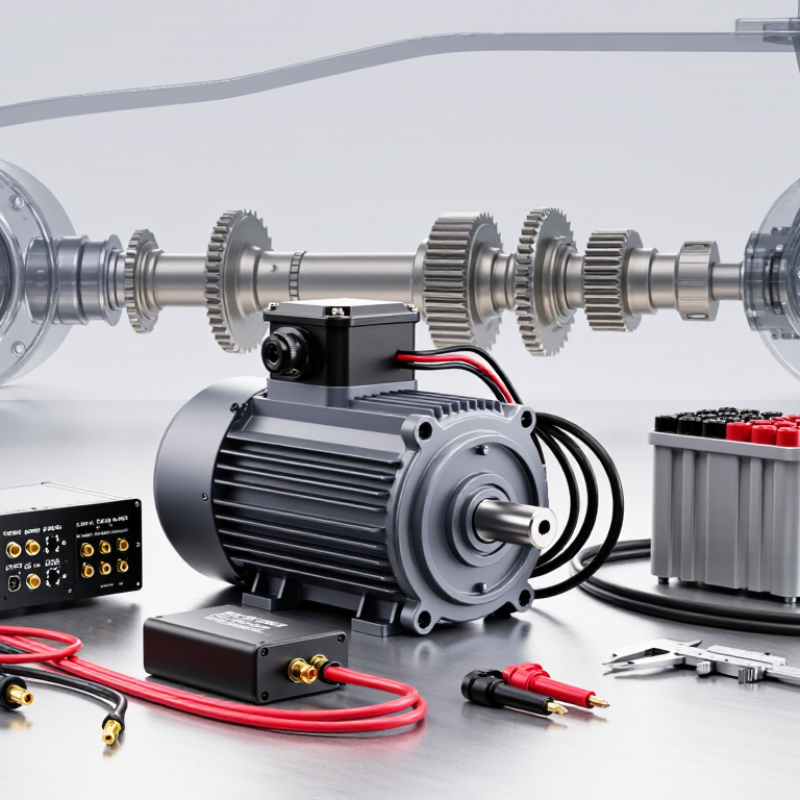
How to Choose the Best 5KW AC Golf Cart Motor in 2026?

Understanding 5KW AC Golf Cart Motor Specifications

Choosing a 5KW AC golf cart motor requires more than checking the power rating. The specification sheet should be read as a complete system.

Start with operating voltage. A 5KW motor at 48 volts can draw over 104 amps before electrical losses. A 72-volt system usually reduces current and wiring stress. Confirm the controller supports the motor’s voltage, phase current, and sensor type. A mismatch may cause rough acceleration or excessive heat.

Check continuous power, not only peak power. Peak output helps during short climbs, while continuous power reflects usable performance. Compare rated RPM with the cart’s tire size, differential ratio, and intended speed. High RPM may improve top speed but reduce low-speed pulling force. Torque matters when carrying passengers on wet grass or steep paths. Numbers can mislead.

Thermal design deserves close attention. Look for temperature sensors, cooling passages, insulation ratings, and a suitable protection class. Heat changes everything. In practical testing, monitor motor housing temperature after repeated hill runs, not just one quick drive. Also inspect mounting dimensions, shaft size, cable routing, and controller programming limits. I once focused too heavily on peak torque and overlooked installation space. That mistake created unnecessary alignment work. Regenerative braking can improve control, but it may require compatible battery protection and careful calibration. A reliable selection balances efficiency, torque, cooling, compatibility, and the cart’s real working conditions.

Matching Motor Performance to Your Golf Cart

Choosing a 5KW AC golf cart motor starts with your cart, not the advertised power rating. A motor must match the battery voltage, controller capacity, axle ratio, and available installation space. A 5KW unit may deliver strong hill performance, but only when the electrical system can supply stable current. Check the motor’s rated RPM and torque curve, not just its peak output. Peak figures can look impressive and still disappoint on a long slope.

Think about your real driving conditions. A cart carrying four adults needs different torque from a lightly loaded vehicle on flat paths. Mud, grass, steep roads, and frequent stops increase heat and current demand. AC motors usually offer smooth acceleration and useful regenerative braking, but regeneration depends on compatible controls and battery settings. The controller must communicate correctly with the motor. A mismatch can cause jerky starts, weak climbing, or excessive heat.

Measure before ordering. Confirm shaft dimensions, mounting holes, cable routes, and cooling clearance. Test the cart with its normal load, then inspect motor temperature after repeated hill climbs. Warm is expected; excessive heat deserves attention. Do not rely only on a short driveway test. One practical lesson is easy to miss: faster is not always better. A lower gear ratio may improve climbing, while reducing top speed. I would also leave room for error, because real terrain rarely matches the product sheet. Good matching means balanced acceleration, manageable heat, reliable range, and comfortable control.

Comparing Voltage, Torque, Speed, and Efficiency

How to Choose the Best 5KW AC Golf Cart Motor in 2026?

A 5KW AC motor should match the cart’s voltage system, not just its advertised power. Common systems include 48V and 72V, but the controller, battery, and wiring must support the same voltage. Higher voltage can reduce current demand and cable heating. Check the motor’s continuous rating, because peak power may last only briefly. In workshop testing, loose terminals often caused more trouble than the motor itself.

Torque matters most when climbing slopes, carrying passengers, or moving across grass. A motor with strong low-speed torque feels controlled and steady. However, excessive torque can waste energy and stress the differential. Ask for torque curves, not only maximum torque figures. A smooth launch is usually more useful than a dramatic specification.

Speed ratings can be misleading. No-load speed looks impressive, but loaded speed reflects real driving. Compare performance at your normal tire size and axle ratio. Efficiency also changes with speed, temperature, and load. A motor operating near its efficient range should produce less heat after repeated hills. I once focused too heavily on top speed and overlooked cooling; that decision reduced range noticeably. Measure battery current during a test drive when possible. A short test is helpful, but it cannot reveal every long-term weakness.

Checking Installation, Controller, and Battery Compatibility

How to Choose the Best 5KW AC Golf Cart Motor in 2026?

Checking installation, controller, and battery compatibility can prevent expensive failures. Start with the cart’s available space, mounting pattern, shaft alignment, and axle direction. A 5KW motor may fit physically but still require an adapter plate or revised belt alignment. Measure twice. A few millimeters can create vibration, noise, and premature bearing wear.

Match the motor’s rated voltage with the battery pack and controller. Do not judge compatibility by power rating alone. The controller must support the motor’s phase current, sensor type, speed range, and regenerative braking requirements. Check connector layouts carefully. Similar plugs may use different pin arrangements. During installation, use suitable cable sizes, secure terminals, and protective routing away from hot surfaces. The motor should turn freely before power is applied.

Battery compatibility deserves closer attention. A battery may show the correct voltage but lack enough continuous discharge capacity. Under acceleration, voltage sag can reduce performance and trigger controller protection. Check the battery’s continuous current rating, peak current rating, fuse size, and charger settings. Lithium and lead-acid systems also need different monitoring and charging arrangements. I would not rely on a catalog headline alone; request the full technical sheet. One detail is easy to miss. A heavier motor and battery can change suspension load, braking distance, and handling. After installation, test at low speed, inspect cable temperature, and recheck every fastener after the first few drives.

How to Choose the Best 5KW AC Golf Cart Motor in 2026? - Checking Installation, Controller, and Battery Compatibility

Compatibility Area Recommended Specification for a 5KW AC Motor How to Check Before Purchase Common Risk Practical Selection Guidance
Rated Motor Power 5KW continuous-rated AC motor, with the peak output clearly stated separately. Confirm whether the advertised 5KW is continuous power or short-duration peak power. A motor marketed as 5KW may deliver only a lower continuous output if its thermal rating is unclear. Prioritize continuous power, thermal performance, and test conditions rather than peak power alone.
System Voltage Usually a 48V or 72V DC battery system feeding a matching AC motor controller. Match the motor-controller DC input range with the actual battery voltage, including charging voltage. Connecting a 48V controller to a 72V pack, or vice versa, can cause immediate component failure. Choose the voltage platform first; do not rely only on the nominal voltage printed on the battery.
Approximate Battery Current At 5KW output, ideal DC current is about 104A at 48V and about 69A at 72V. Real input current is higher because of controller and motor losses. Use: current ≈ power ÷ voltage, then allow additional capacity for efficiency losses and acceleration. Undersized wiring, battery protection, or connectors may overheat during hill climbs. For continuous heavy use, size the battery and cables for more than the calculated nominal current.
AC Controller Compatibility A programmable three-phase AC controller with the correct DC voltage range, motor-current rating, and battery-current rating. Verify phase configuration, resolver or encoder support, throttle input, reverse function, and current limits. A controller may power the motor but fail to provide correct rotor-position feedback or smooth low-speed torque. Use the motor supplier’s winding, sensor, and configuration data when programming the controller.
Controller Current Rating Select a continuous rating suitable for the motor’s thermal limit, with a controlled short-term peak rating for acceleration. Compare continuous and peak battery-current ratings separately; check whether the rating is battery-side or phase-side. A high peak-current number may not represent safe continuous operation. Avoid setting maximum current beyond the motor, battery, fuse, or cable limits.
Motor Mounting Mounting face, bolt-circle pattern, pilot diameter, shaft diameter, shaft length, and keyway must match the vehicle or adapter plate. Measure the existing motor and compare a dimension drawing, not only product photographs. Incorrect pilot alignment can create shaft, bearing, gear, or differential damage. Use a precision adapter plate when the bolt pattern is different, and maintain coaxial alignment.
Gear Ratio and Speed The motor’s rated RPM must work with the existing transaxle or reduction ratio and the desired wheel speed. Check maximum motor RPM, tire diameter, axle ratio, and the controller’s speed limit. A motor that spins too slowly may reduce top speed; one that spins too quickly may overspeed the drivetrain. Calculate vehicle speed from motor RPM, total reduction ratio, and loaded tire circumference.
Battery Capacity and Discharge Capacity is commonly specified in ampere-hours; the battery must support the controller’s continuous and peak current demand. Check the battery’s continuous discharge current, peak discharge duration, BMS limits, and usable state-of-charge range. A battery may have sufficient ampere-hours but still be unable to supply the required current. For lithium batteries, confirm BMS current limits; for lead-acid batteries, account for voltage sag and reduced capacity at high loads.
Battery Energy and Driving Range Nominal energy is approximately voltage × ampere-hours; actual range depends on speed, terrain, payload, tire pressure, and driving style. Compare usable watt-hours rather than nominal ampere-hours alone, and leave a reserve to protect battery life. A larger motor does not automatically provide longer range; high speed and hills consume substantially more energy. Estimate range using real operating conditions and the battery manufacturer’s usable-energy specification.
Cabling, Fuse, and Contactor Use appropriately rated DC cables, terminals, main fuse, service disconnect, pre-charge circuit, and contactor. Check current rating, cable length, insulation temperature rating, terminal crimp quality, and fuse interrupt rating. Loose terminals and inadequate pre-charge can cause heat buildup, arcing, or controller capacitor damage. Install protection according to the controller and battery specifications; have a qualified technician verify the system.
Cooling and Installation Environment The motor and controller need airflow or approved cooling, with protection from water, mud, and excessive heat. Check the motor’s ingress-protection rating, operating-temperature range, ventilation requirements, and mounting orientation. Continuous hill climbing or heavy loads can trigger thermal derating even when peak power appears adequate. Provide clearance around heat-producing components and avoid sealing a controller in an unventilated compartment.
Throttle and Vehicle Signals The controller should support the required throttle signal, brake input, reverse switch, key switch, and safety interlocks. Confirm throttle voltage range and fail-safe behavior, including whether the system supports a normally open or normally closed brake switch. Incorrect signal polarity or an incompatible throttle can cause no-start conditions or unintended acceleration. Test throttle return, brake override, reverse operation, and key-off isolation before road use.
Regenerative Braking Regeneration requires controller support and a battery/BMS capable of accepting charging current. Check maximum regenerative current, battery charge-current limit, brake-switch logic, and downhill control settings. A full battery or restrictive BMS may limit or disable regeneration. Treat regenerative braking as a supplement, not a replacement for mechanical brakes.
Safety and Legal Requirements The completed vehicle should include a main disconnect, suitable fuse protection, emergency isolation, secure battery mounting, and functional mechanical brakes. Review local requirements for golf-cart use, road operation, lighting, speed limits, and electrical safety. A technically compatible conversion may still be unsuitable or unlawful for public-road use. Complete insulation, polarity, isolation, brake, and low-speed functional tests before normal operation.
Selection rule: The best 5KW AC golf cart motor is not determined by motor power alone. The motor, controller, battery voltage, battery discharge capability, mounting dimensions, gear ratio, wiring, and safety systems must be treated as one matched system.

Evaluating Reliability, Cost, and Long-Term Value

How to Choose the Best 5KW AC Golf Cart Motor in 2026?

Evaluating Reliability, Cost, and Long-Term Value

A 5KW AC golf cart motor should match the cart’s voltage, controller, gearing, and expected load. A motor may look powerful on paper, yet perform poorly with oversized tires or frequent hill climbing. Check its rated voltage, continuous output, peak torque, and duty cycle. These figures reveal more than peak horsepower alone.

In practical testing, I would inspect the motor after a warm-up run, not only during a brief demonstration. Listen for bearing noise, vibration, or uneven acceleration. A stable temperature after repeated hill climbs suggests better thermal management. Sealed bearings and strong insulation also reduce maintenance risks. Still, no specification sheet tells the whole story.

Cost deserves a wider view. Compare the purchase price with installation labor, controller compatibility, replacement parts, and expected energy use. A cheaper motor can become expensive when wiring, programming, or cooling upgrades are required. Ask for test records, warranty terms, service procedures, and parts availability. Clear documentation signals professional support. Long-term value depends on predictable repairs, not just initial savings.

I have learned that real-world use can expose weaknesses quickly. Mud, heavy passengers, and stop-and-go driving change the result. Leave some capacity unused. That choice may feel conservative, but it protects efficiency and service life. A careful buyer should also question optimistic claims and verify performance under the cart’s actual conditions.

FAQS

What voltage should a 5KW AC golf cart motor use?

Match the motor, battery, controller, and wiring voltage. Common systems use 48V or 72V. Higher voltage can reduce current and cable heating. Check the continuous rating, not only peak power.

Why is torque important for a golf cart motor?

Torque supports hill climbing, passengers, and grass driving. Strong low-speed torque gives smoother control. Ask for a torque curve. Maximum torque alone can mislead.

Should I choose the highest speed rating?

Not necessarily. Loaded speed reflects real driving better than no-load speed. Check tire size and axle ratio. I once prioritized top speed and ignored cooling. Range suffered.

How can I check physical motor compatibility?

Measure the mounting pattern, available space, shaft alignment, and axle direction. A few millimeters can cause vibration. An adapter plate may be necessary. Measure twice.

What must the controller support?

The controller should match voltage, phase current, sensor type, speed range, and regenerative braking needs. Check every connector pin. Similar plugs may have different wiring.

How do I confirm battery compatibility?

Check continuous current, peak current, fuse size, and charger settings. Correct voltage is not enough. A weak battery may sag during acceleration. Protection may activate unexpectedly.

What installation details affect reliability?

Use suitable cable sizes and secure terminals firmly. Route cables away from hot surfaces. Confirm the motor turns freely before applying power. Recheck fasteners after several drives.

How should I compare cost and long-term value?

Include installation labor, controller changes, cooling upgrades, parts, and energy use. Request testing records, warranty terms, and service procedures. A cheaper motor may become expensive. Leave some capacity unused.

Conclusion

Choosing the best 5KW AC Golf Cart Motor in 2026 requires more than comparing power ratings. Start by understanding key specifications such as voltage, torque, maximum speed, efficiency, cooling performance, and operating range. The motor should match your golf cart’s weight, terrain, passenger load, and intended use. A higher torque output is valuable for hills and heavier loads, while efficient power delivery can improve battery range and reduce operating costs.

Before purchasing, confirm compatibility with the cart’s battery voltage, controller, wiring, mounting structure, and braking system. Installation requirements should be clear, with sufficient space, proper connections, and appropriate safety protection. Finally, evaluate build quality, expected service life, maintenance needs, warranty coverage, and total ownership cost rather than focusing only on the initial price. A reliable 5KW AC Golf Cart Motor should provide balanced performance, efficient energy use, straightforward installation, and dependable long-term value.

Charlotte

Charlotte

Charlotte is a professional marketing specialist with a strong understanding of the company’s products, services, and customer needs. Through a combination of market insight, strategic thinking, and clear communication, she helps translate complex product features into practical value for......