This guide examines the Top 10 173Ah Lithium Golf Battery Suppliers Worldwide. The focus is practical performance, not attractive marketing claims. Golf operators need dependable energy through long rounds, steep paths, and repeated daily charging. We compare suppliers through capacity, cycle life, battery management systems, charging speed, and installation support. Real experience matters. A battery should deliver stable power when a cart carries passengers uphill or works through changing weather.
The review also considers manufacturer documentation, warranty terms, safety testing, distributor feedback, and after-sales service. Numbers alone mislead. A claimed 173Ah capacity may perform differently under heat, cold, heavy loads, or frequent fast charging. Installation details matter, including terminal layout, charger compatibility, case dimensions, and communication with the cart controller. Supplier responsiveness can be as important as the cells inside the pack.
The selected suppliers are assessed for consistency, technical transparency, and suitability for golf fleets and private users. Each entry highlights practical strengths, possible limitations, and questions buyers should ask before ordering. Where possible, we distinguish verified specifications from promotional estimates. This matters.
No ranking is perfect. Supplier quality can vary by factory batch, region, and installer expertise. Some published data remains incomplete, which deserves careful reflection rather than blind confidence. Readers should confirm local service coverage, replacement policies, and current certification documents. A strong 173Ah Lithium Golf Battery should offer usable range, predictable charging, and long-term support—not merely a large number on a label.
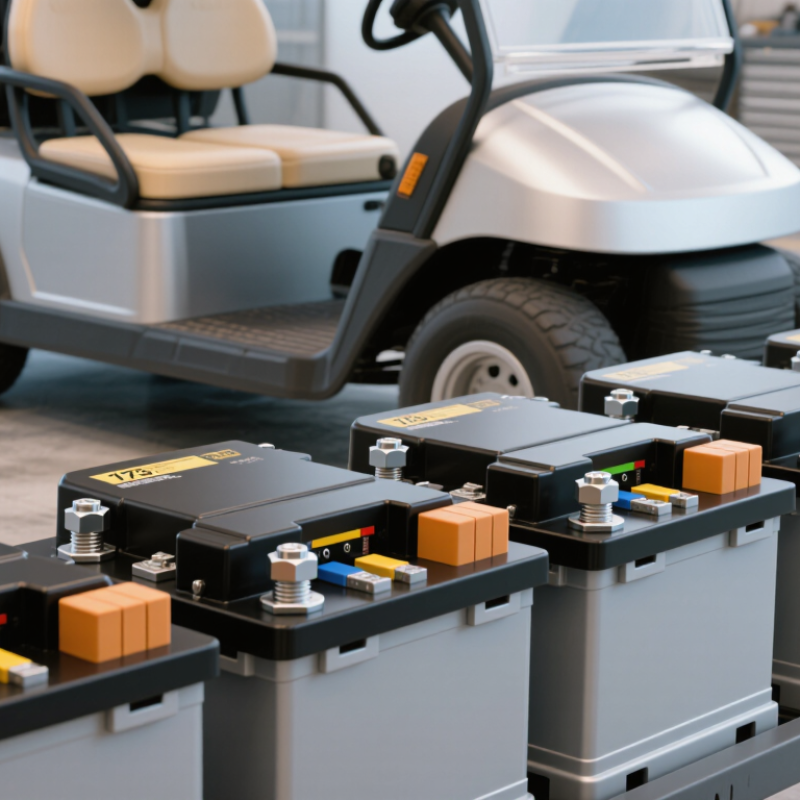
A 173Ah lithium golf battery stores electrical charge for golf carts and other low-speed electric vehicles. The “Ah” rating means ampere-hours, not total energy. Voltage matters too. A 51.2V, 173Ah battery provides about 8.9 kilowatt-hours under rated conditions. A 25.6V model stores roughly half that amount. Check the voltage first.
Most units use lithium iron phosphate chemistry. It offers stable operation, useful cycle life, and lower weight than comparable lead-acid batteries. An integrated battery management system monitors voltage, current, and temperature. It can disconnect the battery during unsafe conditions. That protection is essential, but it cannot correct poor installation or an unsuitable charger.
In practical use, range depends on terrain, passenger weight, tire pressure, speed, and temperature. A cart climbing wet hills may consume much more energy than one moving on level paths. Rated capacity is not always fully available. Cold weather can reduce performance. The battery also needs secure mounting, correct cable sizing, and ventilation around charging equipment. Many buyers focus on 173Ah and overlook continuous discharge limits. That is an easy mistake. I would compare usable energy, warranty terms, test records, and charger compatibility before choosing a supplier. Specifications can look impressive, yet real-world results still need verification.
A 173Ah lithium golf battery is defined by more than capacity. Its voltage determines usable energy. At 51.2V, 173Ah equals approximately 8.86kWh before conversion losses. At 48V, the figure is about 8.30kWh. Buyers should verify nominal voltage, not rely on the amp-hour label alone.
The battery management system is equally important. It should control overcharge, over-discharge, short-circuit, and temperature risks. Continuous output may range from 100A to 200A, depending on cell design and BMS limits. A brief peak rating can look impressive, but it does not represent sustained hill-climbing power. IEC 62619 addresses safety requirements for industrial lithium batteries, while UL 2271 is widely referenced for light electric vehicle battery systems. Certification evidence matters more than printed claims.
Cycle life commonly reaches 2,000 to 4,000 cycles under controlled conditions, often at moderate depth of discharge and room temperature. Real golf-cart use is harsher. Cold storage, high current, and repeated deep discharge can reduce that figure. BloombergNEF’s 2024 Battery Price Survey reported an average lithium-ion pack price of 115 dollars per kWh, but golf batteries include casing, protection, wiring, and integration costs. Weight, charging temperature, ingress protection, and warranty testing deserve equal attention. My own caution is simple: a larger Ah number does not automatically mean longer range. That assumption is too neat.
Selecting the top 10 worldwide suppliers of 173Ah lithium golf batteries requires more than comparing online prices. A 173Ah pack may deliver about 8.9 kWh at 51.2 volts, but voltage, cell chemistry, and usable capacity can differ. Buyers should request test sheets, cycle-life data, and battery-management-system specifications. Small details matter on a golf course.
The International Energy Agency reported that global electric-vehicle battery demand exceeded 750 GWh in 2023. This growth has improved cell availability and manufacturing expertise, including for low-speed vehicles. However, golf batteries face different demands. They must handle repeated acceleration, partial charging, vibration, and long idle periods. The best suppliers therefore show evidence from thermal testing, ingress protection checks, and field performance. Warranty terms should also state capacity retention clearly, not only years of coverage.
A practical top-ten review should examine production scale, regional service, charger compatibility, and replacement-part access. Some suppliers offer impressive energy figures but provide limited independent testing. That is a weakness. I would also question unusually high cycle-life claims unless laboratory conditions are disclosed. Pricing is useful, but total ownership cost is more revealing. Freight conditions, installation support, monitoring software, and recycling arrangements can change the final result. Supplier rankings remain imperfect when public data is uneven, so buyers should verify each specification before fleet deployment.
This supplier-neutral chart shows the calculated nominal energy of a 173Ah LiFePO4 golf battery configured for common golf-cart system voltages. Energy is calculated as nominal voltage × 173Ah; actual usable energy may be lower because of BMS limits, discharge depth, temperature, and conversion losses.
Top 10 173Ah Lithium Golf Battery Suppliers Worldwide
Comparing suppliers requires more than checking a catalog price. A reliable supplier should provide measured capacity data, discharge curves, and production records. During evaluation, ask for test results at realistic golf-cart loads, not only laboratory conditions. A 173Ah battery should deliver stable voltage on hills and during repeated acceleration. Some suppliers present impressive figures but explain little about testing conditions. That gap deserves attention.
Safety performance depends on the battery management system, cell matching, thermal protection, and enclosure design. Look for documented overcharge, over-discharge, short-circuit, and temperature safeguards. Clear installation instructions also matter. Inspectors should check cable terminals, mounting points, and charger compatibility before purchase. An IP-rated enclosure helps, but the rating must match the test standard and intended environment. Water resistance is not the same as waterproofing.
Warranty terms reveal supplier confidence, yet wording can be vague. Compare coverage length, cycle limits, replacement procedures, and excluded damage. Ask whether support staff can review fault codes remotely and provide practical troubleshooting steps. Response time should be tested before ordering, perhaps with a technical question about low-temperature charging. Some suppliers answer quickly but offer shallow guidance. Others provide detailed documents but respond slowly. Both weaknesses can affect fleet uptime. Keep service records, photographs, and voltage readings; they may determine how smoothly a claim is handled.
| Rank | Anonymous Supplier Profile | Primary Supply Region | Battery Chemistry | Nominal Specification | Usable Energy at 80% DoD | Published Cycle-Life Target | Safety and Compliance Evidence | Enclosure / Protection | Warranty Structure | Technical Support | Typical Production Lead Time | Data Verification |
|---|---|---|---|---|---|---|---|---|---|---|---|---|
| 1 | Supplier Profile 01 | East Asia | LiFePO4 | 12.8 V / 173 Ah 2.21 kWh nominal |
1.77 kWh | 3,000–5,000 cycles | Integrated BMS; UN 38.3 transport testing; IEC 62619 documentation available on request | IP65-rated housing; vibration-resistant terminals | 3–5 years, subject to installation and usage conditions | Remote troubleshooting, wiring diagrams, and replacement-part guidance | 20–35 days | Documentation available |
| 2 | Supplier Profile 02 | North America | LiFePO4 | 12.8 V / 173 Ah 2.21 kWh nominal |
1.77 kWh | 2,500–4,000 cycles | Overcharge, over-discharge, short-circuit, and temperature protection; UN 38.3 test report | IP67-rated housing; sealed battery case | 5 years limited warranty | Telephone and email support; golf-cart compatibility review | 15–30 days | Documentation available |
| 3 | Supplier Profile 03 | Western Europe | LiFePO4 | 12.8 V / 173 Ah 2.21 kWh nominal |
1.77 kWh | 3,000+ cycles | Battery-management system; CE and RoHS technical files; transport compliance available | IP65-rated housing; corrosion-resistant casing | 3 years standard; extended coverage may be available | Dealer training, installation guides, and email-based engineering support | 25–45 days | Verify current certificates |
| 4 | Supplier Profile 04 | East Asia | LiFePO4 | 12.8 V / 173 Ah 2.21 kWh nominal |
1.77 kWh | 4,000–6,000 cycles | Smart BMS with Bluetooth monitoring; UN 38.3 and MSDS package | IP67-rated housing; integrated lifting handles | 5 years limited warranty | Application engineering, firmware updates, and diagnostic support | 30–50 days | Documentation available |
| 5 | Supplier Profile 05 | Oceania | LiFePO4 | 12.8 V / 173 Ah 2.21 kWh nominal |
1.77 kWh | 2,000–4,000 cycles | Integrated BMS; low-temperature charge protection; transport test summary provided | IP65-rated housing; shock-resistant internal supports | 3 years limited warranty | Regional distributor assistance and installation checklist | 20–40 days | Verify current certificates |
| 6 | Supplier Profile 06 | Southeast Asia | LiFePO4 | 12.8 V / 173 Ah 2.21 kWh nominal |
1.77 kWh | 2,500–5,000 cycles | Over-current, thermal, and cell-balance protection; UN 38.3 available for export orders | IP65-rated housing; powder-coated metal enclosure | 3–5 years depending on order volume | Online support, customized labels, and basic system sizing | 25–45 days | Verify current certificates |
| 7 | Supplier Profile 07 | North America | LiFePO4 | 12.8 V / 173 Ah 2.21 kWh nominal |
1.77 kWh | 3,000–5,000 cycles | Smart BMS; UL-related component documentation may be supplied for applicable configurations | IP67-rated housing; sealed maintenance-free construction | 5 years limited warranty | U.S.-based service contact, troubleshooting workflow, and return authorization process | 15–35 days | Configuration dependent |
| 8 | Supplier Profile 08 | Western Europe | LiFePO4 | 12.8 V / 173 Ah 2.21 kWh nominal |
1.77 kWh | 2,500–4,000 cycles | CE technical documentation; BMS protection functions listed in product datasheet | IP65-rated housing; reinforced cable connections | 3 years limited warranty | Distributor network, multilingual manuals, and email support | 30–55 days | Documentation available |
| 9 | Supplier Profile 09 | East Asia | LiFePO4 | 12.8 V / 173 Ah 2.21 kWh nominal |
1.77 kWh | 3,000–5,000 cycles | Integrated BMS; UN 38.3, MSDS, and packing instructions prepared for international shipment | IP67-rated housing; optional heated version | 3–5 years, depending on battery configuration | OEM documentation, remote diagnostics, and custom communication interface options | 35–60 days | Configuration dependent |
| 10 | Supplier Profile 10 | South Asia | LiFePO4 | 12.8 V / 173 Ah 2.21 kWh nominal |
1.77 kWh | 2,000–3,500 cycles | Basic BMS with protection against overcharge, over-discharge, and short circuit; export test documents by request | IP65-rated housing; removable service panel | 2–3 years limited warranty | Online support and standard installation documentation | 30–50 days | Verify current certificates |
Technical reference: a 12.8 V × 173 Ah battery has approximately 2.21 kWh nominal energy; usable energy is estimated at 80% depth of discharge. Cycle-life, warranty, certification, protection rating, pricing, and lead-time figures are supplier-profile benchmarks and should be confirmed with current datasheets, test reports, warranty terms, and written quotations before procurement.
Choosing a 173Ah golf battery supplier requires more than comparing capacity and price. Confirm the battery voltage first, because a 173Ah pack at 51.2V stores about 8.9kWh, while a 25.6V pack stores about 4.4kWh. Ask for cell chemistry, usable capacity, peak current, charging limits, and BMS protection details. A credible supplier should provide traceable test records, not only attractive product photos.
Safety evidence matters. IEC 62619 addresses industrial lithium battery safety, while UN 38.3 testing supports lawful transport of lithium batteries. Warranty terms should state cycle conditions, temperature limits, replacement procedures, and capacity retention. The International Energy Agency reported that lithium-ion battery prices fell by 14% in 2023, showing stronger cost pressure across the supply chain. Still, cheaper cells may reduce real-world range or service life.
Request an independent sample test at the golf cart’s actual load. Measure voltage sag, charging time, casing temperature, and low-temperature performance. BloombergNEF reported average battery pack prices of 139 dollars per kWh in 2023, but golf batteries include BMS, enclosure, charger, and support costs. Do not trust a polished spreadsheet alone. I have seen capacity claims change under heavy acceleration. Check production consistency, spare-part availability, and technical response time. A supplier that explains failures honestly is often more reliable than one promising perfect performance.
It describes charge capacity, not total stored energy. At 51.2V, 173Ah equals about 8.86kWh before losses. At 48V, it equals about 8.30kWh. Voltage matters.
No. Range also depends on voltage, usable capacity, terrain, speed, weight, and temperature. A heavy cart climbing hills may use much more energy. Numbers can mislead.
It should manage overcharging, deep discharge, short circuits, and temperature risks. Ask about continuous output, not only brief peak current. A 150A peak rating may not support long hill climbs.
Many batteries claim 2,000 to 4,000 cycles under controlled conditions. Real use can be harsher. Cold storage, vibration, high current, and repeated deep discharge may shorten service life.
Request cell data, usable-capacity tests, cycle-life results, temperature records, and protection-system specifications. Recognized safety and transport test records are also important. Proof matters.
Compare voltage, cell chemistry, continuous current, charger compatibility, warranty terms, and replacement support. Include casing, wiring, installation, freight, and recycling costs. The lowest quote may not be cheapest overall.
Test the battery under the cart’s actual load. Record voltage drop, charging time, casing temperature, and performance in cold conditions. A short drive test can reveal weaknesses.
It should state capacity retention, cycle conditions, temperature limits, and replacement procedures. Check whether coverage includes labor and shipping. A long warranty sounds useful, but unclear conditions weaken it.
No. Public information can be incomplete, and performance claims may use ideal laboratory conditions. Verify every important specification before fleet deployment. I would still question perfect-looking figures.
A 173Ah Lithium Golf Battery is a high-capacity energy solution designed to provide reliable, efficient power for golf carts and other low-speed electric vehicles. This article explains its core specifications, including voltage, usable capacity, cycle life, charging performance, weight, dimensions, battery management systems, and essential safety protections. Compared with traditional lead-acid batteries, lithium technology generally offers lower maintenance requirements, more consistent performance, faster charging, and a longer service life.
The article also reviews ten worldwide supplier categories and compares their product quality, safety standards, warranty coverage, technical support, delivery capability, and customization options. To choose the best 173Ah Lithium Golf Battery supplier, buyers should evaluate cell quality, manufacturing experience, testing procedures, after-sales service, documentation, and total ownership cost rather than focusing only on the initial price. A dependable supplier should provide transparent specifications, reliable protection systems, clear warranty terms, and responsive support to ensure safe and long-term operation.