0%

A Lifted Electric Golf Cart can look ready for rough trails, but appearance tells only part of the story. A raised suspension and larger tires may improve ground clearance on uneven paths. They can also change handling, braking feel, and energy use. Small details matter. Tire size, battery condition, passenger load, and terrain all affect real-world range. A tall stance is not automatically a better fit.

This guide explores ten types, from utility and hunting carts to beach, neighborhood, and multi-passenger models. Each serves a different purpose. Some prioritize cargo space; others focus on seating, comfort, or travel over firm dirt. We’ll look at practical features, common trade-offs, and what to check before choosing. For example, compare the cart’s rated payload with the weight of passengers and gear, and ask whether its tires and suspension suit your usual routes. Specifications help, but they do not show every bump or tight turn. That part takes judgment. A lifted cart may be capable, yet still feel awkward on a narrow path. The right choice depends on where it will be driven and how it will be maintained—not just how high it sits.
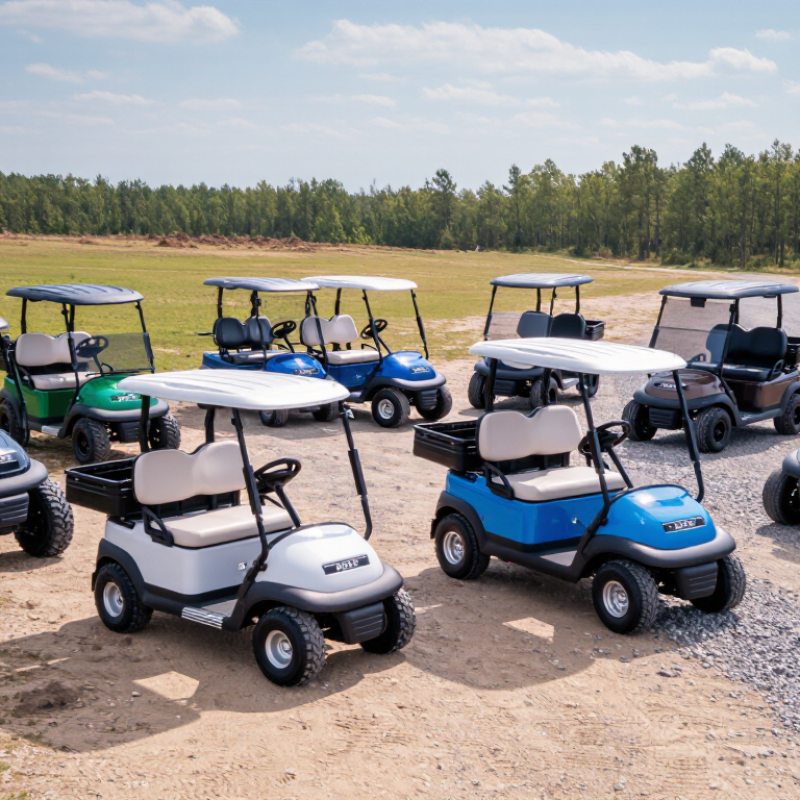
What Are the Top 10 Types of Lifted Electric Golf Carts?

What Defines a Lifted Electric Golf Cart?

What Defines a Lifted Electric Golf Cart?

A lifted electric golf cart is defined by its raised suspension and increased ground clearance, not by its power source. Taller springs or lift blocks raise the frame, while larger tires add clearance beneath the axles. The result is a higher seating position and more room to cross uneven turf, gravel, or shallow ruts. You can often spot the change beside a standard cart: the wheel arches sit higher, and the step up feels taller.

The lift does not automatically make a cart faster or more capable. Larger tires can affect acceleration, braking, and battery use, so the motor, controller, brakes, and tires should be considered as a system. The U.S. Department of Energy’s Alternative Fuels Data Center describes neighborhood electric vehicles as typically reaching 20–25 mph, but that figure is not a performance rating for lifted carts. Their added tire load and terrain can change real-world range. Details matter.

“Lifted” is also a loose label. Two carts with similar-looking tires may have different suspension changes and very different handling. A higher center of gravity can make sharp turns feel less stable, especially on slopes. Measure actual ground clearance and check tire clearance at full steering lock; appearance alone can mislead.

How Lift Height and Suspension Create Different Cart Types

Lifted electric golf carts are not one design; lift height and suspension shape how they ride, turn, and carry weight. A mild spacer lift gives extra clearance for uneven paths while keeping the original suspension layout. A moderate spindle lift raises the body and can make room for larger tires. A long-travel A-arm setup allows more wheel movement over ruts, though it may need careful alignment. Small changes matter. Rear suspension creates other types: solid-axle lifts are simple and sturdy, while independent rear systems can keep tires planted on uneven ground. High-clearance builds focus on obstacles; all-terrain builds pair moderate lift with treaded tires. Utility carts may favor load stability, and performance-oriented carts may use longer travel. These are practical categories, not strict industry standards.

The right height depends on where the cart travels and what it carries. More lift can improve clearance, but it also raises the center of gravity and may affect stability during sharp turns. A cart that looks capable beside a gravel track can still ride harshly if its springs or dampers are poorly matched. Check tire clearance at full steering lock, inspect suspension joints, and confirm that brake lines and cables are not stretched. Weight matters, too: passengers, cargo, and batteries all change how the suspension responds. I would not choose lift height by appearance alone. That part is easy to misjudge.

The Top 10 Types of Lifted Electric Golf Carts

Lifted electric golf carts come in several useful forms. A mild-lift neighborhood cart adds a little ground clearance for uneven driveways and patched pavement. A high-clearance trail cart suits rutted paths, while an all-terrain model typically pairs lifted suspension with rugged tires. Tire choice matters: oversized tires can change handling and reduce available range. Check the cart’s specifications before changing them.

A hunting-style cart may include quiet storage areas and a rear cargo platform for equipment. A beach-oriented type uses wider tires to spread weight over softer ground, though sand can still drain the battery quickly. Four-seat lifted carts balance passenger space with a manageable footprint. Six-seat versions carry larger groups, but need more room to turn and park. They can feel cumbersome on narrow paths.

For work, a lifted cargo cart may have a covered bed for tools or supplies. A utility flatbed offers open space for bulky loads, but weight placement affects stability. Enclosed-cab carts provide a roof and side protection from wind or light rain; they are not necessarily sealed against bad weather. These categories overlap. A cart can be both lifted and utility-focused, and the best fit depends on terrain, load, and typical trip length. One detail is easy to miss: added height can make entry less convenient for some passengers.

How the Top Types Differ in Terrain, Range, and Capacity

Lifted electric golf carts differ less by appearance than by how they handle ground, distance, and weight. A compact two-seat model is easier to maneuver on narrow paths, while four- and six-seat layouts carry more passengers but use more energy under load. Rear-facing-seat versions add flexible seating, though they can make the cart feel longer in tight turns. Trade-offs matter.

For uneven paths, wide-tire all-terrain carts and heavy-duty lifted models offer more clearance, but larger tires may shorten range. Hunting-style carts often prioritize quiet travel and cargo space; utility-bed models suit tools or supplies. Neighborhood-focused carts typically favor paved routes and passenger comfort. Long-range battery configurations can help on extended trips, while compact lifted carts remain practical for shorter outings. These are ten common configurations, not strict categories; many carts combine several.

Capacity is not just the seat count. Passengers, bags, hills, soft ground, and frequent stops all affect how far a charge lasts. Check the maker’s rated load and test a route like your own, if possible. A cart that climbs a grassy slope with two people may behave differently with a full crew. Range estimates can be optimistic. That detail is easy to overlook.

10 Types of Lifted Electric Golf Carts: Terrain, Range & Capacity

Compare estimated range per charge with relative terrain suitability. Hover over a chart item for its estimated range and typical passenger capacity. Terrain suitability is a comparative 1–5 scale, not a standardized rating.

Figures are general estimates, not guaranteed specifications. Actual range varies with battery type and condition, load, speed, tire choice, terrain, and weather.

Factors to Consider When Choosing a Lifted Electric Golf Cart

Choosing a lifted electric golf cart starts with the ground it will cross. A modest lift may clear ruts and gravel, while a taller setup can raise the center of gravity. That can make tight turns feel less settled. Match tire size and tread to your usual paths; aggressive tires may grip loose soil but feel noisy on pavement. More clearance is useful, but bigger is not always better.

Check battery range under realistic conditions, not just an ideal specification. Hills, passengers, cargo, cold weather, and larger tires can all reduce distance per charge. If your route includes steep slopes, ask how the motor and braking system handle sustained climbs and descents. Payload matters, too. Count people, bags, and accessories together. It is easy to underestimate them.

Consider where the cart will be stored and charged. Measure doorways, parking spaces, and the turning area before choosing a wider or taller model. Check whether the battery can be removed, how long charging takes, and what routine maintenance is expected. Small details matter. A lifted cart may look capable, yet still ride roughly on uneven ground. Test-drive one on similar terrain if possible, and note what feels awkward; that first impression is useful, but it may not reveal every trade-off.

FAQS

What makes an electric golf cart “lifted”?

A raised suspension or lift blocks increase ground clearance. Larger tires can add more space beneath the axles. The step up feels higher.

Does lifting a cart make it faster?

No. A lift does not automatically increase speed. Larger tires may affect acceleration, braking, and battery use. Details matter.

What should I check before choosing larger tires?

Check tire clearance at full steering lock, plus the motor, controller, and brakes. Measure actual ground clearance. Looks can mislead.

Which lifted cart suits rough paths?

A high-clearance or all-terrain cart may suit ruts and uneven trails. Rugged tires help, but handling can still vary.

Can a lifted cart feel less stable?

Yes. A higher center of gravity can make sharp turns feel less stable, especially on slopes. I would take turns slowly.

Are lifted carts suitable for carrying passengers?

Four-seat models may fit smaller groups and tighter spaces. Six-seat carts carry more people but need more room to turn and park. They can feel cumbersome.

Do wider tires make a cart better on sand?

Wider tires spread weight over softer ground. Sand can still use battery power quickly. That trade-off is easy to underestimate.

Is an enclosed-cab cart weatherproof?

Not necessarily. A roof and side protection can help with wind or light rain, but may not seal out bad weather. Check the details.

Conclusion

A Lifted Electric Golf Cart is an electric cart raised above its standard ride height, typically through a lift system that creates more ground clearance and room for larger tires. Lift height and suspension design shape how the cart handles uneven paths, bumps, and varied loads. The ten types can be understood by their intended balance of clearance, ride comfort, passenger seating, cargo capacity, and performance on different surfaces, from modestly lifted carts for everyday use to higher-clearance configurations suited to rougher terrain.

Choosing among them means looking beyond appearance. Consider where the cart will travel, how far it needs to go between charges, how many passengers or how much cargo it must carry, and whether the suspension suits the expected conditions. Tire size, overall stability, maintenance needs, and available storage also matter. Matching these factors to your routine helps you select a lifted cart that is practical, comfortable, and capable without choosing more lift or capacity than you need.

Ethan

Ethan

Ethan is a professional marketing specialist with a deep understanding of product strategy, customer needs, and digital communication. As a key contributor to the company’s content and marketing efforts, he regularly publishes insightful blog articles that explain industry trends, product......