0%

Why Choose a Low Speed Vehicle (LSV) for Global Business?

Global businesses are rethinking short-distance transport. Warehouses, resorts, campuses, airports, and industrial parks often need movement, not highway speed. A Low Speed Vehicle (LSV) can carry workers, tools, and small cargo across these environments with lower energy use and quieter operation. Its value appears in ordinary moments: a technician crossing a five-kilometre site, or a hotel moving supplies before sunrise.

Fortune Business Insights valued the global golf cart market at approximately USD 1.78 billion in 2023. It projects the market could reach USD 2.49 billion by 2030. Allied Market Research also identifies electrification and commercial applications as important growth drivers. These figures are useful, but imperfect. Market reports often define “golf cart,” “neighborhood electric vehicle,” and LSV differently. Buyers should compare definitions carefully.

Bob Lutz, a former General Motors vice chairman and longtime electric-vehicle industry expert, said, “The electric car is the future.” His statement supports the direction, but not every electric vehicle suits every business. Range, charging access, payload, weather protection, service networks, and local operating rules still matter. A vehicle that looks efficient on paper may struggle on steep roads or during a twelve-hour shift. That is the practical question.

This article examines why companies choose LSVs for global operations. It considers operating costs, sustainability goals, workforce mobility, and deployment risks. The strongest choice is not always the fastest vehicle. It is the vehicle that fits the route, task, and working environment.
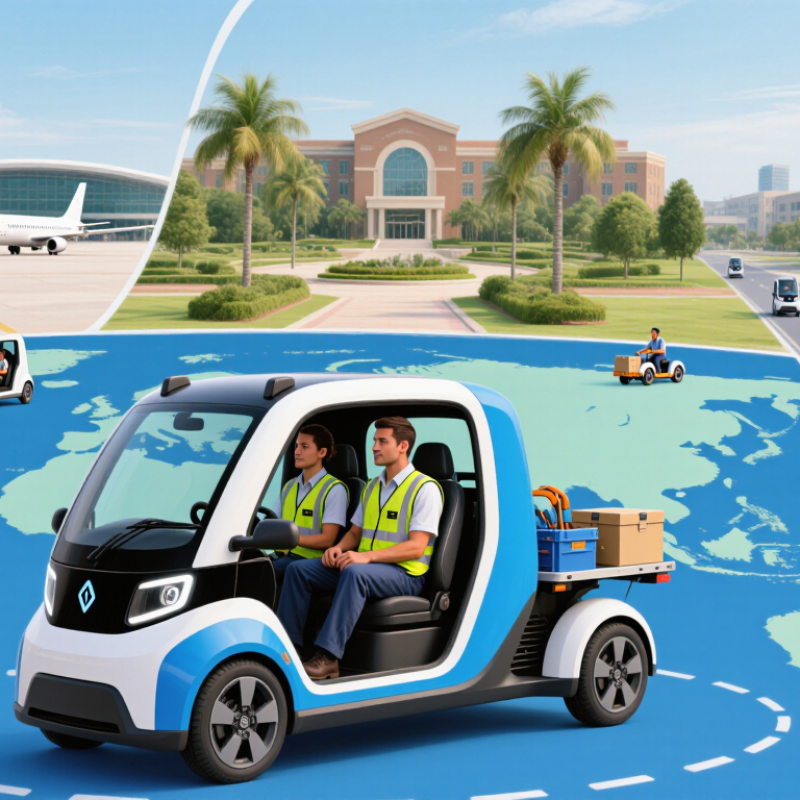
Why Choose a Low Speed Vehicle LSV for Global Business?

LSV Definition: FMVSS No. 500 Sets a 20–25 mph Speed Range

A low-speed vehicle can serve campuses, resorts, logistics parks, and planned communities. Its defining limit is not simply “slow.” Under U.S. FMVSS No. 500, an LSV must reach at least 20 mph but cannot exceed 25 mph. The standard also requires specified equipment, including lamps, mirrors, seat belts, and a windshield. This framework creates a clear operating envelope for fleet planners. It also prevents a common mistake: treating every small electric vehicle as an LSV.

The speed range suits short routes with frequent stops. A driver can move between warehouse buildings without using a full-size commercial vehicle. The International Energy Agency reported that global electric car sales exceeded 17 million in 2024, showing wider acceptance of electric transport. However, that figure does not directly measure LSV demand. It is useful context, not proof. In field planning, route length, road access, charging schedules, and local registration rules matter more than optimistic market forecasts. FMVSS No. 500 applies to U.S. compliance, while other countries may set different speed and equipment requirements. That uncertainty deserves attention. A 20–25 mph vehicle may reduce energy use and maintenance exposure, yet it can become inefficient when routes regularly exceed its designed range. Teams should validate the vehicle against real stops, payloads, weather, and traffic conditions before scaling a global fleet.

Global Compliance: Compare U.S. FMVSS 500 with EU L6e’s 45 km/h Limit

Why Choose a Low Speed Vehicle LSV for Global Business?

Choosing a low-speed vehicle for global business requires more than comparing top speeds. Rules define testing, equipment, registration, and road access. U.S. FMVSS 500 generally covers four-wheeled LSVs traveling above 20 mph and up to 25 mph. It addresses items such as lamps, mirrors, windshields, seat belts, and vehicle identification numbers. However, state and local authorities may impose additional operating limits.

EU L6e classification generally limits design speed to 45 km/h, with separate mass and power conditions. It follows type-approval requirements that differ from U.S. certification. These categories are not twins. An LSV compliant in the United States may still need redesign and European approval. The reverse can also happen. Road access remains a separate question. A higher permitted speed does not guarantee access to every public road. I would treat any simple comparison as incomplete, especially when lighting, braking, glass, and occupant protection rules vary.

Tips: Create a country-by-country compliance matrix before production. Record speed, mass, power, braking, lighting, belts, mirrors, and identification details. Ask qualified local engineers to verify current requirements. Keep test reports and approval documents organized. A spreadsheet helps, but it can still miss a local road restriction. That gap deserves careful review.

Commercial Fit: Assess Routes, Payloads Under 3,000 lb, and Fleet Utilization

Commercial Fit: Assess Routes, Payloads Under 3,000 lb, and Fleet Utilization

A low-speed vehicle LSV fits predictable routes better than long-distance operations. Under U.S. FMVSS No. 500, an LSV operates between 20 and 25 mph and has a gross vehicle weight rating below 3,000 pounds. That limit is not the payload. Batteries, tools, passengers, and cargo all consume capacity. A 2,800-pound rated vehicle may carry far less than expected. Check the compliance plate and axle limits.

Route evidence should guide the purchase. NREL’s Fleet DNA project includes data from more than 1,800 vehicles and millions of real-world miles, highlighting speed, stops, distance, and idle patterns as practical fleet variables. Measure each route for seven working days. Record daily mileage, delivery stops, charging dwell time, and the heaviest load. A warehouse loop with repeated stops may suit an LSV well. A mixed route with steep grades or public-road exposure may not.

Fleet utilization is often the weak point. One vehicle serving eight short shifts can outperform two vehicles used occasionally. Yet a simple spreadsheet can mislead. Weather, seasonal demand, and charging access change the result. We once treated average payload as sufficient; peak payload created the real constraint. Review local speed, registration, equipment, and road-access rules before deployment, because LSV requirements differ across jurisdictions.

Operating Economics: Compare LSV Energy Costs with ICE Fleet Fuel Benchmarks

Why Choose a Low Speed Vehicle LSV for Global Business?

Operating economics often decides whether a low speed vehicle earns a place in a working fleet. Energy costs deserve careful measurement, not assumptions. A practical comparison uses kilowatt-hours per 100 kilometers for LSVs and liters per 100 kilometers for ICE vehicles.

For example, an electric LSV using 12 to 18 kWh per 100 kilometers may cost less to operate. At 0.15 dollars per kWh, energy costs range from 1.80 to 2.70 dollars. Charging losses can raise this figure by 10 to 15 percent. An ICE vehicle using 8 liters per 100 kilometers costs 12 dollars when fuel costs 1.50 dollars per liter. Local tariffs and fuel prices can change the result quickly.

Real fleet trials provide stronger evidence than catalog estimates. Record distance, payload, idle time, charging hours, and seasonal temperatures. Short routes with frequent stops often suit LSVs well. Their simpler drivetrains may also reduce routine service requirements. However, battery replacement, charging equipment, financing, and technician training must enter the calculation. Ignoring these items makes the spreadsheet look better than reality. Cold weather may reduce range, while heavy loads increase consumption. A small pilot on three representative routes can reveal unexpected costs. The data may be imperfect, but it is more useful than a universal promise.

Why Choose a Low Speed Vehicle (LSV) for Global Business?

Operating Economics: Energy Cost Compared with ICE Fleet Fuel Benchmarks

A representative electric LSV using 15 kWh per 100 km costs approximately $2.40 per 100 km at an electricity rate of $0.16 per kWh. Comparable internal-combustion benchmarks using 8 L/100 km of gasoline or 7 L/100 km of diesel cost about $7.39 and $7.02 per 100 km, respectively.

Benchmark basis: electricity at $0.16/kWh, gasoline at $3.50/gallon, and diesel at $3.80/gallon. At 30,000 km per year, the estimated energy cost is approximately $720 for the LSV, compared with $2,217 for gasoline and $2,106 for diesel. Actual results vary by country, vehicle load, driving cycle, fuel prices, and charging tariffs.

Deployment Planning: Use IEA’s 2023 EV Sales Data to Guide Market Entry

Why Choose a Low Speed Vehicle LSV for Global Business?

IEA’s 2023 EV sales data offers a practical starting point for LSV market entry. Nearly 14 million electric cars were sold worldwide that year. They represented about 18% of new car sales. China accounted for around 60% of global electric car sales. Europe contributed roughly one quarter, while the United States approached 10%.

These figures reveal demand, but they do not confirm LSV demand. An LSV serves different journeys. It may move workers across campuses, guests around resorts, or goods through industrial sites. Market teams should compare EV adoption with short-distance travel patterns, road rules, charging access, and fleet purchasing habits. A city with strong EV sales may still have weak LSV infrastructure. That gap matters.

Start with a small pilot. Choose one controlled route, such as a warehouse loop or residential community. Measure daily distance, charging downtime, passenger loads, maintenance calls, and seasonal performance. Local operators can expose problems that national data misses. A vehicle that performs well in a mild climate may struggle during heavy rain or steep terrain. The planning may be imperfect.

That is useful feedback. Use IEA data to rank markets, then validate each location through site inspections and operator interviews. Track results for several months before expanding. Reliable deployment depends on evidence, not excitement.

FAQS

What defines a low-speed vehicle?

In the United States, it generally travels from 20 to 25 mph. It also requires lamps, mirrors, seat belts, and a windshield. Small does not always mean low-speed vehicle.

Where does a low-speed vehicle work best?

It suits campuses, resorts, warehouses, logistics parks, and planned communities. Short routes with frequent stops are usually the strongest fit. Think building-to-building travel.

What weight limit should fleet planners check?

The vehicle’s gross vehicle weight rating must remain below 3,000 pounds in the United States. This is not the available payload. Passengers, batteries, tools, and cargo use that capacity.

How can a company test route suitability?

Measure every route for seven working days. Record mileage, stops, charging time, weather, and the heaviest load. A flat warehouse loop may work well. Steep grades can change the result.

How many vehicles might a fleet need?

Utilization matters more than vehicle count alone. One vehicle serving eight short shifts may outperform two rarely used vehicles. That assumption can fail during seasonal demand.

Are electric operating costs usually lower?

An electric vehicle using 12–18 kWh per 100 kilometers may cost less to operate. At $0.15 per kWh, energy costs reach about $1.80–$2.70. Charging losses can add 10–15 percent.

What costs are easy to overlook?

Include charging equipment, battery replacement, financing, training, and maintenance. Cold weather may reduce range. Heavy loads increase energy use. A clean spreadsheet can still be wrong.

Do United States requirements apply everywhere?

No. Other jurisdictions may set different speed, equipment, registration, and road-access rules. Check local requirements before deployment. A 20–25 mph vehicle may not suit longer routes or unrestricted roads.

What should a pilot program include?

Test three representative routes with different loads and operating conditions. Track distance, stops, charging hours, idle time, and temperatures. Our first estimate might be wrong. Real data is better.

Conclusion

A Low Speed Vehicle (LSV) can be a practical option for global businesses seeking efficient, purpose-built transportation for short routes. In the United States, FMVSS No. 500 defines LSVs within a 20–25 mph speed range, while the European L6e category generally allows speeds up to 45 km/h. Understanding these standards helps businesses evaluate where a vehicle can be deployed and identify the compliance requirements of each market.

Commercial suitability depends on route length, traffic conditions, payload needs, and fleet utilization, especially when loads remain below 3,000 lb. Businesses should also compare electricity consumption and charging expenses with conventional internal-combustion fleet fuel benchmarks to estimate operating savings. Finally, IEA 2023 electric-vehicle sales data can help companies prioritize markets with stronger adoption, infrastructure, and policy support, enabling a more informed and scalable market-entry strategy.

Ethan

Ethan

Ethan is a professional marketing specialist with a deep understanding of product strategy, customer needs, and digital communication. As a key contributor to the company’s content and marketing efforts, he regularly publishes insightful blog articles that explain industry trends, product......