Explore China’s premier range of street-legal, resort, and utility electric golf buggies powered by 72V/48V high-torque AC motors and integrated lithium-ion energy storage systems.
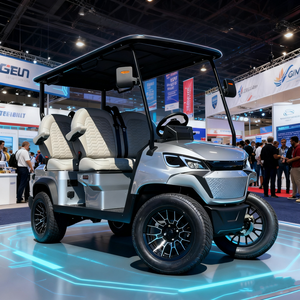
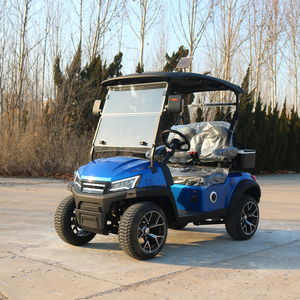
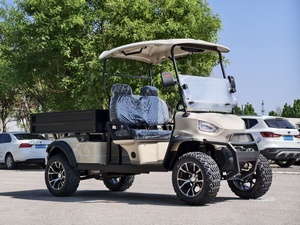
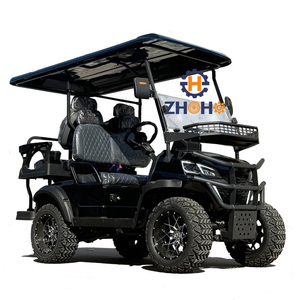
The electric golf buggy and Low-Speed Vehicle (LSV) sectors are undergoing a technological paradigm shift. Below is an engineering deep-dive into the critical architectural advancements shaping modern powertrains.
Legacy brushed DC motors are virtually obsolete in modern fleet deployments. China’s leading manufacturing hubs have standardized on 5KW to 7.5KW Permanent Magnet Synchronous Motors (PMSM) paired with Field-Oriented Control (FOC) AC controllers. This shift yields a 25% increase in energy efficiency, zero brush maintenance, and superior gradient climbing capabilities under maximum payload.
Lead-acid batteries are being aggressively replaced by 72V Lithium Iron Phosphate (LiFePO4) systems. Standardizing on larger capacity packs—such as 173Ah units—provides extended multi-day operational ranges without memory effect. Integrated thermal management and active cell balancing prolong pack lifespans beyond 4,000 charge cycles @ 80% Depth of Discharge (DoD).
Modern golf buggies utilize automotive-grade CAN 2.0B communication protocols. The Vehicle Motion Control Unit (VMCU) continuously communicates with the Battery Management System (BMS), driving telemetry to high-definition digital cockpits (up to 12.5 inches). OEM fleet managers can track real-time SOC, diagnostics, and geofencing remotely.
Energy recovery during deceleration is critical for steep golf courses and resort landscapes. Next-generation AC controllers automatically modulate braking torque to feed energy back into the lithium pack, reducing brake pad wear by up to 60% while ensuring seamless hill-hold performance without manual parking lever engagement.
Global procurement directors, resort operators, and dealership networks are restructuring their supply chain criteria. Sourcing from Chinese OEM factories requires understanding key market shifts over the next 3 to 5 years.
B2B importers are prioritizing suppliers capable of delivering full EEC (European Community Whole Vehicle Type Approval) and US DOT Low-Speed Vehicle (LSV) compliance right out of the box. Procurement strategies now mandate pre-installed automotive glass, 3-point seat belts, turning signals, and hydraulic four-wheel disc braking systems.
Initial unit acquisition price is no longer the sole decision metric. Fleet managers calculate 5-year TCO, where maintenance-free lithium powertrains eliminate lead-acid watering labor, acid corrosion repairs, and frequent battery replacement cycles, resulting in a 40% net operational savings over 60 months.
Distributors demand modular platforms that support custom body styling, proprietary color palettes, branded digital dashboard interfaces, and customized chassis lift heights. Manufacturers in China with in-house tooling, robotic welding, and rapid prototyping lead market share acquisition.
Compare conventional cart setups against China's next-generation 72V AC High-Output Lithium Powertrains.
| Performance Specification | Legacy DC Lead-Acid System | Standard 48V AC Lithium System | Next-Gen 72V High-Power AC System (Featured) |
|---|---|---|---|
| Motor Architecture | Brushed DC (2.5KW - 3.7KW) | Brushless AC (4KW - 5KW) | PMSM High-Torque AC (5KW - 7.5KW) |
| Energy Density / Battery | 48V Lead-Acid (Deep Cycle) | 48V LiFePO4 (105Ah) | 72V High-Density LiFePO4 (173Ah Standard) |
| Maintenance Requirement | High (Watering, Terminal Cleaning) | Zero Maintenance | Zero Maintenance + Remote BMS Telemetry |
| Hill Climbing Gradient | 15% - 20% Incline Limit | 25% Incline Limit | > 35% Incline with Full Payload |
| Charge Cycle Lifespan | 500 - 800 Cycles | 2,500+ Cycles | 4,000+ Cycles (@ 80% DoD) |
| Warranty Coverage | 1 Year Limited | 3 - 5 Years Battery | Lifetime Powertrain / 10-Yr Battery / 3-Yr Bumper |
Integrating international engineering standards with China's high-efficiency industrial ecosystem creates an unparalleled competitive advantage for global vehicle OEMs and distributors.
Founded by industry veterans who have developed, homologated, and launched major electric vehicle platforms globally. Our engineering protocols combine Western quality assurance with Asian manufacturing agility.
Every powertrain assembly undergoes 100% dyno load testing, salt spray environmental validation, thermal chamber stress monitoring, and IP67 water immersion checks to ensure flawless reliability under extreme resort or utility conditions.
Backed by industry-leading terms: Lifetime Powertrain Protection, 10-Year Battery System Warranty, and 3-Year Bumper-to-Bumper coverage. Factory-trained service support and spare part inventories ensure maximum vehicle uptime worldwide.
Direct answers to key commercial and engineering inquiries from enterprise buyers, dealers, and fleet managers.
Operating at 72V reduces total system current draw for the same power output, yielding lower thermal generation in the motor and controller. The 173Ah capacity standard provides significantly higher watt-hour energy storage, preventing voltage sag under heavy loads and providing reliable multi-day commercial operations without mid-shift recharging.
Yes. Select models are built to satisfy EEC (Category L6e/L7e) standards for European street certification and US DOT Low-Speed Vehicle (LSV) criteria (FMVSS 500). Requirements include certified safety glass windshields, 3-point seat belts, DOT-approved lighting packages, digital speedometers, and rear-view camera systems.
Absolutely. As a direct OEM manufacturer, we support complete custom body painting (matching Pantone/RAL codes), custom seat upholstery, laser-etched steering wheels, branded digital dashboard boot screens, and tailored chassis lift height configurations for dealer orders and fleet deployments.
Every lithium pack features a smart BMS communicating via CAN-Bus to the main vehicle controller. The BMS safeguards against over-charge, over-discharge, over-current, short circuits, and thermal extremes. It actively balances cells during charge cycles to ensure maximum battery pack lifespan.
Standard production lead time for full container load (FCL) orders is 20 to 30 days post-deposit, depending on customization parameters. Sample units for technical evaluation and homologation testing can typically be dispatched within 10 to 14 days.
We provide authorized distributors and fleet buyers with direct access to factory replacement parts, diagnostic scanners, and technical documentation. Warranty claims are verified via digital diagnostic logs, with replacement components shipped promptly via global air express.
Connect directly with our engineering and procurement team to download complete product catalogs, factory audit reports, and container load matrices for your region.
Get Catalog