Engineered for resorts, gated communities, commercial campuses, and municipal transport networks. Complete with industrial LiFePO4 power cells, 5KW/7.5KW AC powertrains, and street-legal certification options.
A data-driven analysis of modern shuttle cart manufacturing, total cost of ownership (TCO), and engineering reliability across enterprise deployments.
The global commercial shuttle cart market is undergoing a structural transition from traditional flooded lead-acid batteries to high-capacity Lithium Iron Phosphate (LiFePO4) energy systems. Lead-acid systems historically imposed severe total-cost-of-ownership (TCO) penalties on resort operators, industrial campuses, and municipal fleets due to acid terminal corrosion, continuous watering overhead, rapid voltage drop under heavy passenger loads, and a limited lifespan of 300 to 500 charge cycles.
Modern enterprise procurement requires integrated 72V and 48V LiFePO4 platforms engineered with standard 173Ah capacities. These advanced battery systems maintain flat discharge voltage curves throughout the entire operational shift. As a result, speed and torque performance at a 20% State of Charge (SOC) remain identical to peak performance at a 100% SOC. Furthermore, integrated Automotive-Grade Battery Management Systems (BMS) continuously monitor cell balancing, thermal variations, and over-current conditions via CAN-bus communication. This architecture grants fleet managers real-time telemetry into battery health while eliminating routine battery maintenance.
Historically, legacy low-speed vehicles (LSVs) relied on brushed DC motors, which suffered from carbon brush wear, excessive heat generation, and low mechanical efficiency under maximum passenger capacity. Premier Chinese manufacturing centers have pioneered the shift toward 5KW and 7.5KW AC induction and permanent magnet synchronous motors (PMSM) paired with programmable controller units.
AC motor technology delivers instant start-up torque, allowing 6-seater and 8-seater shuttle carts to climb steep grades exceeding 25% without motor overheating. Crucially, the integration of smart regenerative braking systems converts kinetic energy back into electrical energy during deceleration and downhill operation. This mechanism not only expands effective daily operational range by 12% to 18%, but also dramatically reduces mechanical brake pad wear, yielding substantial maintenance cost savings over a 10-year vehicle lifecycle.
Navigating global regulatory landscapes is critical for commercial importers, resort developers, and municipal distributors. European markets enforce stringent EEC L7e/M1 category homologation, demanding rigorous safety testing for lighting systems, structural roll-over integrity, three-point seat belt tensioning, shatterproof DOT/E-mark glass, and dual-circuit hydraulic braking systems.
Similarly, North American imports require strict adherence to DOT Low-Speed Vehicle (LSV) guidelines under FMVSS 500 regulations, qualifying vehicles for legal operation on public roads with speed limits up to 35 mph (55 km/h). Professional OEMs design chassis structures, lighting harnesses, VIN coding protocols, and speed control parameters directly at the manufacturing level to ensure seamless customs clearance and hassle-free vehicle registration for international buyers.
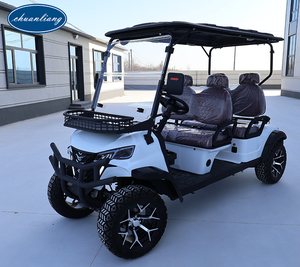
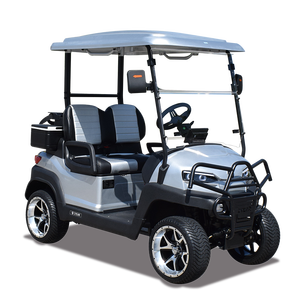
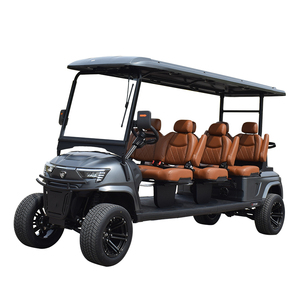
Comparative technical analysis highlighting architectural distinctions across commercial passenger shuttle configurations.
| Performance Specification | 2-Pass Executive Buggy | 4-Pass Community Shuttle | 6-Pass Resort Carrier | 8-Pass Heavy Utility Shuttle |
|---|---|---|---|---|
| Nominal Motor Output | 5KW AC Induction | 5KW AC Asynchronous | 7.5KW High-Torque AC | 7.5KW AC Heavy Duty |
| Battery System (Standard) | 72V 100Ah LiFePO4 | 72V 173Ah LiFePO4 | 72V 173Ah LiFePO4 | 72V 210Ah Commercial Pack |
| Max Speed (Configurable) | 25 - 40 km/h | 30 - 45 km/h | 30 - 40 km/h | 25 - 35 km/h |
| Max Climbing Capacity | 30% Incline | 25% Incline | 25% Incline | 20% Incline |
| Chassis Architecture | Aluminum Alloy Frame | High-Tensile Tubular Steel | Reinforced Anti-Corrosion Steel | Heavy-Duty Commercial Chassis |
| Braking Architecture | 4-Wheel Hydraulic Disc | Front Disc / Rear Drum | 4-Wheel Hydraulic Disc + Regen | Dual-Circuit Hydraulic Disc |
| Digital Command Center | 10.1" Touchscreen LCD | 12.5" HD Touchscreen Display | 12.5" HD Touchscreen Display | Modular Fleet Telematics Unit |
| Certifications Available | CE, ISO9001 | EEC, DOT, CE, ISO9001 | EEC, DOT, CE, ISO9001 | CE, ISO9001, Fleet Homologation |
With over 70 years of combined engineering expertise, our manufacturing facilities stand at the forefront of electric vehicle innovation. We reject generic off-the-shelf assembly methods in favor of full vertical manufacturing control—stamping structural chassis frames, formulating proprietary suspension geometry, and writing custom firmware for AC motor controllers and battery management software.
Automotive-grade electrophoretic dip-coated chassis frames preventing internal rust, salt-fog degradation, and frame cracking under extreme commercial passenger loads.
Comprehensive design flexibility including custom body panel molding, brand color matching, custom seat upholstery, right-hand drive configurations, and custom enclosure systems.
Backed by a standard 10-year battery warranty, lifetime structural frame warranty, and an international spare parts dispatch network keeping maintenance downtime near zero.
How IoT integration, modular chassis dynamics, and solar harvesting are shaping the future of enterprise transport.
Modern commercial operators require real-time fleet visibility. Next-generation shuttle carts feature onboard 4G/GPS telematics connected via controller area network (CAN-bus). Fleet operators can monitor real-time battery status, vehicle speed, geo-fenced boundaries, and predictive diagnostic fault codes via cloud dashboards. This eliminates unexpected vehicle breakdowns and optimizes daily operational schedules.
To maximize daily operating range in high-sunlight locations such as tropical resorts, island communities, and desert campuses, modern shuttle roofs are being engineered with ultra-thin, flexible monocrystalline solar arrays. Providing 200W to 400W of continuous trickle charging, solar-integrated roofs extend battery range by up to 15 kilometers per day while reducing overall grid charging demand.
Future procurement demands modular vehicle platforms capable of rapid conversion. Using standardized chassis mounting points, operators can interchange rear seat configurations for luggage cargo boxes, ambulance stretcher kits, or specialized VIP transport seating without modifying the core vehicle harness or chassis suspension geometry.
Expert insights into wholesale ordering, shipping logistics, customization, battery maintenance, and regulatory compliance.
Request our comprehensive 2026 product catalog, wholesale price sheets, custom OEM design matrices, and container load specifications today. Speak directly with our technical export engineers.
