
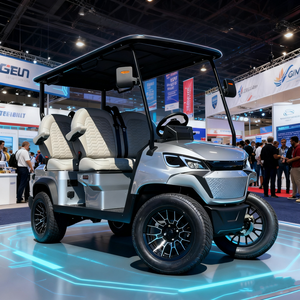
72V EEC Certified Electric Golf Buggy with 5KW/7.5KW High Power Motor & Long Life Charger Integration
- Platform: 72V High-Voltage Architecture
- Compliance: EEC Street-Legal Certified
- Charging: Fast-Charge CAN-bus Ready
Direct factory OEM/ODM solutions engineered for heavy-duty electric golf buggies, utility vehicles, street-legal low-speed electric vehicles (LSVs), and intelligent battery charging systems.
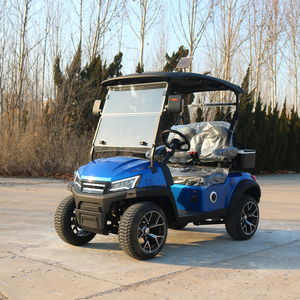

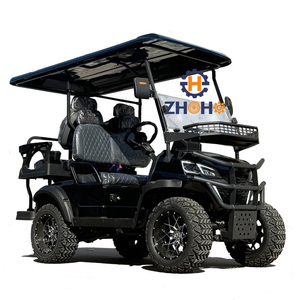
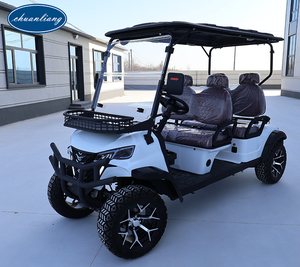
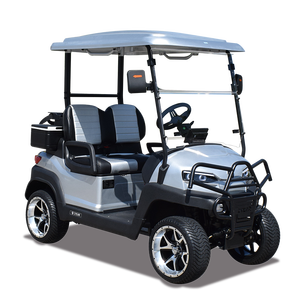
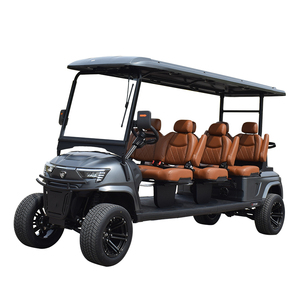

Backed by over 70 years of combined engineering expertise, our modern manufacturing facilities build mission-critical battery charging platforms and industrial electric vehicle electronics designed to surpass global reliability metrics.
From early-stage PCB topology schematics to final IP67 chassis molding, our full-stack engineering team specializes in Phase-Shift Full-Bridge (PSFB) power architectures, resonant LLC converters, and intelligent active Power Factor Correction (PFC) systems tailored to your specific commercial requirements.
Our OEM battery chargers seamlessly integrate with diverse Lithium Iron Phosphate (LiFePO4) and Ternary NCM Battery Management Systems via CAN 2.0B, RS485, and Modbus protocols. Automatic handshake routines enable dynamic thermal derating, individual cell voltage balance monitoring, and zero maintenance operation.
Eliminate compliance barriers across international jurisdictions. Our custom battery chargers are designed and factory tested under strict quality management systems (ISO 9001 / ISO 14001) to fulfill UL 1564, IEC 61851, CE, FCC Part 15 Class B, RoHS, and KC standards for global distribution.
The global transition toward electrified micro-mobility, commercial low-speed vehicles (LSVs), automated guided vehicles (AGVs), and industrial fleets is demanding a fundamental evolution in battery charger design and manufacturing methodologies.
Historically, off-board and onboard battery chargers relied on bulky linear or traditional hard-switched Switched-Mode Power Supplies (SMPS). These older units suffered from thermal bottlenecks, lower conversion efficiencies (typically 80%–85%), and rigid charging profiles that accelerated battery degradation. Modern OEM/ODM battery charger manufacturing has undergone a technological leap, driven by several breakthroughs in power electronics engineering:
To help procurement directors and systems engineers evaluate power electronics vendors, the matrix below details key hardware and architectural performance indicators:
| Engineering Metric | Legacy Industrial Chargers | Next-Gen OEM/ODM Charger Platform | Performance & ROI Benefit |
|---|---|---|---|
| Power Semiconductor Topology | Standard Silicon MOSFETs / Hard-Switched | GaN / SiC MOSFET Phase-Shift Resonant LLC | +12% Efficiency Gain, 40% Volume Reduction |
| Peak Energy Conversion Efficiency | 82% – 88% | 95.5% – 97.2% | Dramatically Lowers Operating Utility Costs |
| Ingress Protection & Thermal Cooling | IP20 – IP32 Open Vented / Active Fan Dust Exposure | IP67 Sealed Die-Cast Aluminum Fully Encapsulated | Immune to Moisture, Mud, Salt Fog & Harsh Environments |
| BMS Communication Protocol | None (Analog Voltage Sensing Only) | CAN-bus 2.0B / RS485 / Modbus Smart Handshake | Extends Lithium Battery Life by up to 300% |
| Power Factor Correction (PFC) | Passive / Low PFC (<0.85) | Active PFC (>0.99 at Full Rated Load) | Ensures Full Global Grid Compliance (90V–264V AC) |
| MTBF (Mean Time Between Failures) | < 20,000 Hours | > 100,000 Hours (MIL-HDBK-217F) | Dramatically Reduces Warranty Replacement Costs |
Procurement managers and original equipment manufacturers face evolving regulatory frameworks, fluctuating raw material costs, and increasingly complex battery supply chains. Aligning with an agile OEM/ODM factory partner requires understanding strategic procurement shifts.
Enterprise buyers are moving away from single-purpose custom chargers in favor of modular platform designs. By deploying standardized core power modules across 48V, 72V, and 96V product lines, OEMs significantly reduce NPI tooling expenses, streamline component inventory, and achieve scalable volume pricing.
Global supply chain risk management now dictates rigorous component-level traceability. Leading OEM factories implement automated Surface Mount Technology (SMT) lines equipped with 3D Automated Optical Inspection (AOI), 100% full-load thermal burn-in testing, and computerized end-of-line functional verification.
While initial unit cost remains an essential procurement metric, leading fleet operators prioritize Total Cost of Ownership. High-efficiency chargers with active PFC and thermal protection reduce total energy consumption, lower warranty failure rates, and protect expensive lithium battery packs against premature degradation.
Clear, definitive answers to common OEM/ODM customization questions, compliance inquiries, and manufacturing lead times.
Our comprehensive OEM/ODM customization services cover every layer of engineering and aesthetics: custom output voltage/current profiles, tailored multi-stage charging algorithms (LiFePO4, NCM, AGM, Gel), CAN-bus protocol programming, IP67 aluminum housing design, custom branding/silk-screening, specialized AC/DC wiring harnesses, and custom packaging solutions.
Our firmware team works directly with your BMS engineering team during the New Product Introduction (NPI) phase. We implement standard or proprietary CAN-bus (2.0B / CANopen), RS485, or Modbus protocols to establish reliable real-time communication. This ensures automatic handshake verification, dynamically adjusted charging currents based on cell temperature, and immediate fault detection shutdown routines.
All our charger platforms are designed to conform with international electrical safety and electromagnetic compatibility standards. Depending on your target export market, we provide products certified under UL 1564, CSA C22.2, IEC/EN 60335, CE, FCC Part 15 Class B, RoHS, REACH, KC, and PSE. Full certification compliance documentation and factory audit reports are provided upon inquiry.
For standard platform configurations, our baseline Minimum Order Quantity starts at 50 units. For fully custom ODM projects requiring dedicated housing tooling or customized PCB layouts, MOQ typically ranges from 200 to 500 units. Sample prototyping is completed in 7 to 14 days, while full volume mass production orders ship within 25 to 35 days post sample sign-off.
Our factory operates under an ISO 9001 certified Quality Management System. Quality control includes Incoming Material Inspection (IQC), automated 3D AOI PCB verification, In-Process Quality Control (IPQC), 100% full-load thermal burn-in aging at 45°C ambient temperature for 4+ hours, and Automated Final Functional Testing (FQC) prior to protective packaging.
Partner directly with our experienced engineering team to design, prototype, and manufacture reliable high-efficiency battery chargers tailored to your precise industrial specifications.