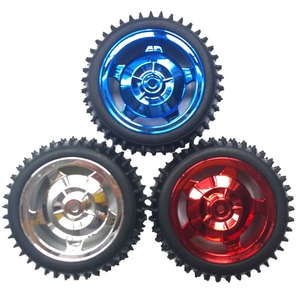
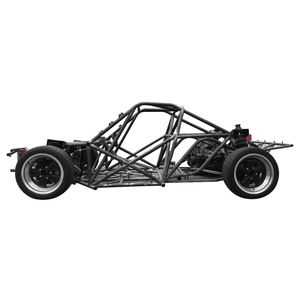
Explore our certified chassis platforms designed for industrial automated handling (AMR/AGV), personal electric vehicles (NEVs), STEM development platforms, and modular custom buggy builds.
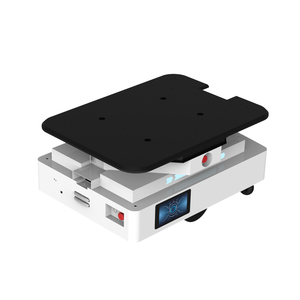
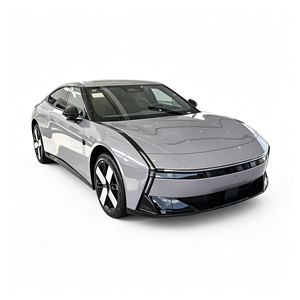
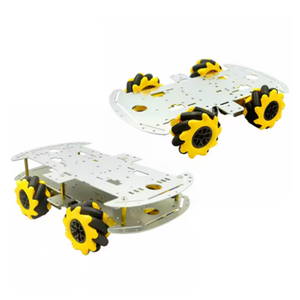
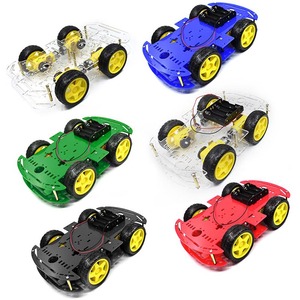
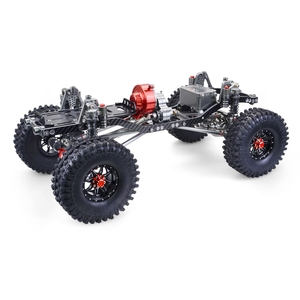
In the rapidly evolving landscape of commercial low-speed vehicles (LSVs), personal electric carts, and autonomous mobile robots (AMRs/AGVs), the underlying chassis framework represents the fundamental core of vehicle safety, structural stability, dynamic performance, and operational lifespan. As a premier global OEM/ODM Cart Chassis Supplier & Exporters, we bridge the gap between heavy industrial robotics architecture and consumer automotive engineering.
Unlike conventional manufacturers who assemble off-the-shelf stamped steel frames susceptible to stress fractures and corrosion, our engineering team brings over 70 years of combined golf cart and industrial vehicle expertise. Every chassis architecture we design undergoes rigorous Finite Element Analysis (FEA) to ensure structural integrity across varied terrain profiles, high load capacities (up to 600kg+ in AMR configurations), and intensive daily duty cycles.
Utilizing high-tensile 6061-T6 aluminum alloys and space-frame tubular steel geometries, our chassis designs optimize power-to-weight ratios while resisting structural torsional flex under extreme payloads.
Engineered for seamless electronic integration, our chassis platforms feature fully accessible CAN-bus protocols and open SDK interfaces, allowing OEM developers to integrate autonomous LiDAR, ultrasonic sensors, and custom controllers smoothly.
Every electric cart chassis is matched to high-efficiency 5KW AC brushless motors and scalable 173Ah LiFePO4 battery modules with intelligent BMS protection, guaranteeing flat discharge curves and zero watering maintenance.
Procurement managers, fleet operators, and global distributors face unprecedented shifts in electric vehicle standards, automated material handling, and international safety compliance. When sourcing chassis solutions from global exporters, evaluating future-proof technology trends is critical to maintaining a competitive advantage.
Industrial logistics and warehouse automation are driving demand for standardized robot chassis platforms. Sourcing trends indicate a rapid movement toward anti-ambient autonomous handling chassis featuring heavy payload capacity (600kg+), omnidirectional or Mecanum steering dynamics, and multi-sensor mounting interfaces. B2B buyers now mandate open SDK access to reduce time-to-market for proprietary software algorithms.
Traditional lead-acid power plants in commercial carts are obsolete. Global buyers now demand pre-engineered chassis frames capable of housing standardized high-density lithium packs (such as our signature 173Ah system). Integrated thermal management, vibration damping for cell protection, and rapid opportunity-charging capabilities are essential specifications in modern chassis procurement.
Efficiency in OEM manufacturing relies on platform modularity. Modern chassis architectures allow a single core wheelbase frame to scale seamlessly from 2-passenger personal utility carts (PRO models) to 6-passenger lifted resort vehicles (MAX platforms) or specialized industrial utility buggies without requiring full re-tooling.
With municipal regulations expanding for Low-Speed Vehicles (LSVs) and Neighborhood Electric Vehicles (NEVs), exported chassis designs must incorporate OEM mounting points for 4-wheel hydraulic disc brakes, DOT-compliant lighting harnesses, seatbelt anchorages, and rollover protective structures (ROPS).
From initial CAD prototyping to full-scale robotic production lines, our manufacturing facilities operate under strict quality management frameworks to ensure every chassis exported meets world-class automotive standards.
Robotic TIG/MIG welding guarantees 100% seam consistency across all chassis joints, eliminating stress concentrations and guaranteeing long-term durability under continuous dynamic loads.
Chassis assemblies undergo multi-stage electrophoretic coating (E-coat) followed by automotive-grade powder painting, offering superior resistance against salt spray, acid corrosion, and harsh environmental elements.
Every frame undergoes 3D Laser CMM dimensional verification, dynamic suspension stress testing, and electrical continuity audits prior to export packaging and shipping.
Compare our standardized chassis manufacturing services to determine the ideal engineering strategy for your product lineup.
| Specification Category | OEM Custom Manufacturing | ODM Standard Platform | Industrial Autonomous AMR Chassis |
|---|---|---|---|
| Primary Application | Custom Electric Carts / Buggies | 2/4/6-Passenger Personal LSVs | Warehouse & Factory Material Handling |
| Frame Material | Hydroformed Aluminum / Steel Alloys | High-Strength Aluminum Space Frame | Heavy-Duty Welded Carbon Steel Structure |
| Payload Capacity | 350 kg – 1,200 kg (Customizable) | 400 kg – 750 kg Standard | 300 kg – 600 kg Autonomous Load |
| Motor Drivetrain Compatibility | AC Brushless / Permanent Magnet Synchronous | 5KW AC Motor System | Dual-Drive Brushless DC Servo System |
| Powertrain Battery Specs | Custom Battery Tray (Lead-Acid / Lithium) | Integrated 173Ah LiFePO4 Compartment | Quick-Swap / Automatic Docking Lithium Pack |
| Braking Architecture | 4-Wheel Hydraulic Disc + Mechanical Park | Regenerative AC Braking + Hydraulic Disc | Electromagnetic Park + Auto-Brake |
| Control Interface | Customer-Specified Wiring Harness | 12.5" Command Center Ready | Open SDK / ROS / CAN-bus Interface |
| Certification & Compliance | Homologated to Client Market Standards | CE / ISO9001 / DOT LSV Ready | Anti-Ambient Industrial Safety Grade |
OEM (Original Equipment Manufacturing) allows you to supply proprietary CAD models, blueprints, and performance specifications for us to manufacture custom frames according to your brand's unique dimensions. ODM (Original Design Manufacturing) utilizes our pre-engineered, factory-tested standard chassis platforms (such as our 2-passenger, 6-passenger, or AMR robot platforms), which can be white-labeled and tailored with custom colors, badging, and module options.
All our cart chassis undergo a rigorous multi-stage chemical surface treatment. Steel frames receive an automated cathodic electrocoating (E-coat) process followed by heavy-duty electrostatic powder coating. For aggressive marine or coastal applications, we manufacture chassis frames out of aerospace-grade 6061-T6 aluminum alloys, which are naturally immune to rust and atmospheric oxidation.
Yes. Platforms such as the Reeman 600kg AMR chassis ship standard with an Open SDK architecture, standard ROS (Robot Operating System) node compatibility, hardware CAN-bus protocols, and pre-drilled mounting interfaces for LiDAR, ultrasonic obstacle avoidance sensors, and depth cameras.
Our modern electric cart chassis are engineered around high-density lithium-ion battery integration. While legacy lead-acid battery trays can be provided upon request, our standardized chassis platforms are optimized for 173Ah LiFePO4 battery modules, providing lower structural center-of-gravity, built-in BMS mounting brackets, and superior payload distribution.
For ODM standard chassis platforms, sample units can be dispatched within 7–14 days. For custom OEM chassis engineering involving new tooling, FEA simulation, and CAD prototyping, initial samples are typically delivered in 30–45 days. Mass production lead times range from 25 to 35 days depending on batch volume and shipping destination.
Whether you are launching a new fleet of autonomous handling robots, designing custom low-speed neighborhood electric vehicles, or sourcing heavy-duty replacement buggy frames, our engineering team is ready to support your technical requirements.