Explore our export-grade rechargeable battery configurations built for commercial, industrial, drone, and mobility applications.
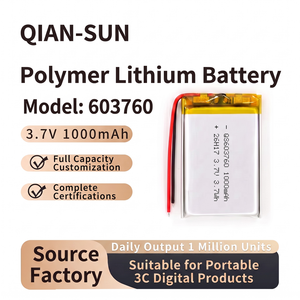
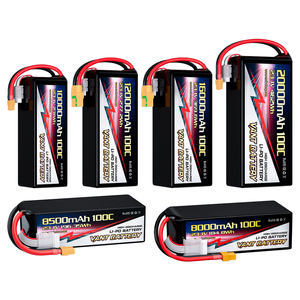
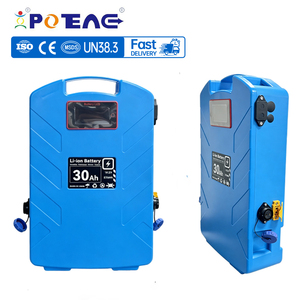
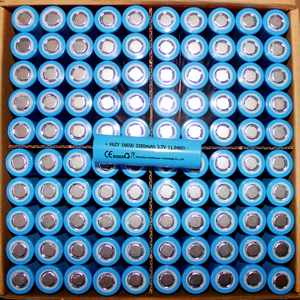
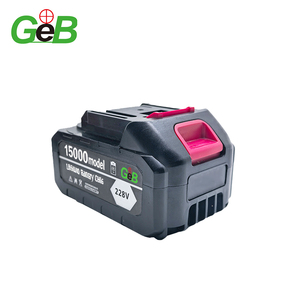
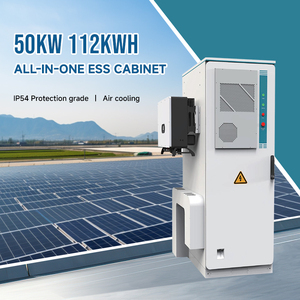
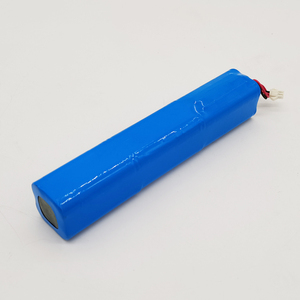
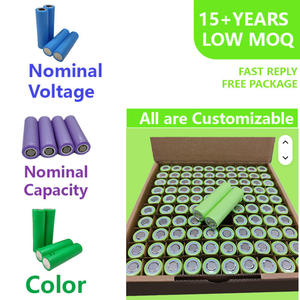
From initial chemical formulation select to precision BMS firmware writing, we eliminate procurement risks for international buyers and tier-1 system integrators.
We design intelligent Battery Management Systems (BMS) with dedicated Hardware PCM and Programmable Software PCM. Support real-time CAN 2.0B, RS485, SMBus, and Bluetooth 5.0 telemetry to monitor cell voltage, temperature coefficient (NTC), state-of-charge (SOC), and state-of-health (SOH).
Our in-house structural tooling department engineers custom IP67/IP68 waterproof enclosures using V-0 flame-retardant ABS+PC, extruded aluminum, and stainless-steel framing. Structural design incorporates thermal separation walls and anti-vibration silicon dampening for high-stress agricultural and mobility deployment.
We maintain strict strategic partnerships with primary tier-1 cell manufacturers (including Samsung, LG, CATL, EVE, and high-discharge pouch formulations). Every batch undergoes strict 100% capacity grading and internal resistance matching (tolerance within ±0.05V and ±0.3mΩ) to maximize cycle endurance.
OEM/ODM Technical Insight: Integrating high-discharge rate cells (such as 100C LiHV or Samsung 21700 formulations) requires thermal management built directly into the battery nickel grid. Our automated ultrasonic micro-wire welding lines prevent cold-solder joint failures under extreme industrial vibration.
Select the optimal cell chemistry and mechanical layout to meet your volume, thermal, volumetric energy density, and discharge rate parameters.
| Battery Format / Chemistry | Nominal Voltage | Energy Density | Cycle Life (80% DOD) | Discharge Rate (C-Rating) | Target Applications |
|---|---|---|---|---|---|
| LiHV Pouch (High-Voltage LiPo) | 3.85V - 3.88V per cell | 230 - 270 Wh/kg | 500 - 1,000 Cycles | 50C Continuous / 100C Burst | FPV Drones, Industrial Survey UAVs, Agricultural Spraying |
| Cylindrical Li-ion (18650 / 21700) | 3.6V - 3.7V per cell | 210 - 250 Wh/kg | 800 - 1,500 Cycles | 1C to 10C High Drain | Cordless Power Tools, Electric Mobility, Portable Power Banks |
| Prismatic LiFePO4 (LFP 314Ah) | 3.2V per cell (51.2V Pack) | 160 - 180 Wh/kg | 6,000 - 8,000 Cycles | 1C Continuous / 2C Pulse | Rack-Mounted ESS, Solar Microgrids, Commercial Backup Power |
| Custom LiFePO4 Backpack Pack | 12.8V - 19.2V Pack | 140 - 165 Wh/kg | 3,000+ Cycles | 1C to 3C Continuous | Outdoor Power Equipment, Mobile Robotics, Field Research |
Analyzing key technology shifts, supply chain resilience factors, and regulatory demands shaping lithium pack manufacturing over the next decade.
Industrial procurement is shifting rapidly away from standard 280Ah cells toward next-generation 314Ah prismatic LiFePO4 chemistry. This upgrade delivers a 12% increase in volumetric energy density within identical standard 19-inch rack footprints, significantly dropping balance-of-system (BOS) integration costs for utility-scale energy storage projects.
Commercial agricultural and industrial survey drone platforms require higher voltage thresholds (4.35V to 4.4V per cell) to reduce amp draw while maintaining high motor RPM. Procurement trends show a 40% annual growth in demand for custom 6S to 14S LiHV battery packs equipped with smart cell-balancing connectors and anti-spark protection modules.
Future battery procurement mandates strict compliance with international carbon tracking and remote health visibility. OEMs are integrating cloud IoT telemetry chips directly into custom BMS boards to transmit real-time thermal alerts, impedance changes, and lifetime state-of-charge logs to central management dashboards.
Eliminating module housings inside battery packs reduces weight by up to 18% while improving manufacturing assembly speeds. OEM buyers are increasingly opting for CTP architecture in custom 18650 and 21700 assemblies, utilizing direct thermal adhesive bonding to structural heat sinks.
How electrochemical breakthroughs in thermal barriers, rapid charging, and solid-state materials are elevating product performance.
Advances in silicon-anode doping allow lithium-ion pouch and cylindrical cells to accept 3C to 5C fast charging without dendrite formation. This reduces recharging cycles for industrial cordless tools and robotics from hours down to under 20 minutes.
To prevent thermal runaway propagation between high-density cells, custom battery packs now incorporate nano-aerogel insulation sheets and Phase Change Material (PCM) heat absorption pads capable of containing cell combustion up to 1000°C.
Semi-solid state pouch cells are entering early-stage commercial adoption for high-end UAV payloads. Featuring a hybrid gel-polymer electrolyte, these cells achieve 300+ Wh/kg energy density while significantly lowering puncture ignition risks.
Expert engineering answers to common technical, logistics, certification, and custom manufacturing questions.
Connect directly with our senior electro-mechanical battery engineers to evaluate cell chemistry selection, request 3D CAD modeling, and secure factory-direct OEM pricing.
