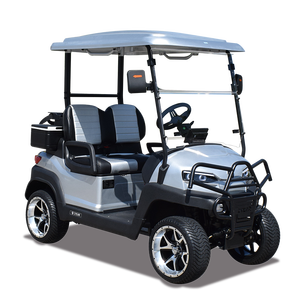
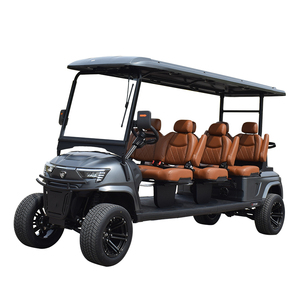
Precision-engineered electric buggies, utility carts, and personal transport vehicles integrated with high-efficiency Chinese rear axle drivetrains and AC motor assemblies.
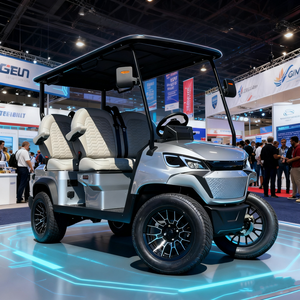
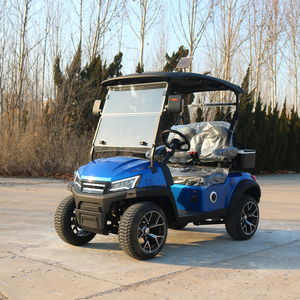
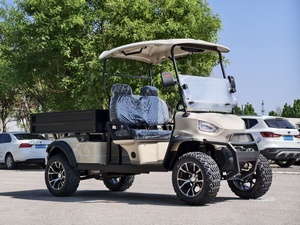
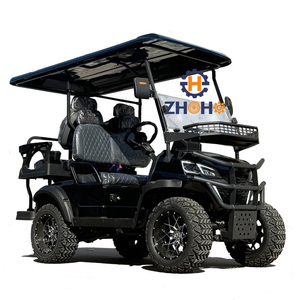
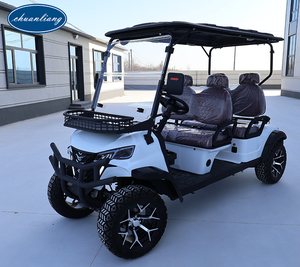
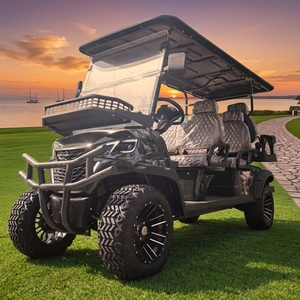
In the rapidly evolving Light Electric Vehicle (LEV) and Low-Speed Vehicle (LSV) sectors, the axle assembly—encompassing the transaxle gearbox, differential gear housing, axle shafts, and braking mechanisms—serves as the primary structural and mechanical backbone. As global original equipment manufacturers (OEMs), fleet aggregators, and custom builders seek optimal balances of energy efficiency, structural rigidity, and thermal resilience, China has emerged as the global epicenter for precision axle engineering and mass export.
Modern Chinese transaxle manufacturing has undergone a profound paradigm shift. Transitioning from legacy cast-iron, splash-lubricated mechanical assemblies designed for low-power DC motors, leading tier-1 Chinese manufacturers now deploy automated CNC gear hobbing, heat treatment vacuum carburizing, and micro-geometry tooth grinding (Gleason & Reishauer systems) adhering strictly to IATF 16949 automotive standards. This white paper analyzes the core technical parameters, global procurement trends, and engineering benchmarks defining elite Chinese cart axle exports.
Technical Insight: Modern high-performance golf buggies and LSVs equipped with 5KW to 7.5KW AC brushless induction or Permanent Magnet Synchronous Motors (PMSM) generate instant torque spikes exceeding 120 Nm. Premier Chinese transaxle units incorporate forged 20CrMnTi alloy helical gears to mitigate tooth shearing and reduce power dissipation under heavy dynamic loads.
To withstand the rigorous demands of multi-passenger resort shuttles, off-road lifted golf carts, and heavy-duty utility vehicles, Chinese cart axle exporters have overhauled metallurgical selection and production control systems. A granular examination of leading Chinese transaxle construction reveals several non-negotiable engineering benchmarks:
Noise, Vibration, and Harshness (NVH) profiles are critical for luxury electric buggies operating in quiet resort communities and suburban neighborhoods. Top-tier manufacturers utilize high-precision helical gear trains with gear ratios ranging from 10.5:1 (high-speed configurations) to 16:1 or 18:1 (high-torque hill climbing and cargo applications). Gear surfaces are finished to DIN 3962 Class 5 standard via post-heat treatment tooth grinding, keeping operating acoustic emissions below 58 decibels under full load.
Axle shafts and sun/planet gears undergo deep vacuum carburizing followed by oil quenching, creating a core toughness capable of absorbing sudden impact loads while delivering a surface hardness of HRC 58-62. This prevents surface fatigue pitting, tooth bending fatigue, and spline twisting across 10,000+ hours of continuous field service.
Modern rear axle designs seamlessly integrate mechanical drum brakes, dual-circuit hydraulic disc brakes, or automatic electromagnetic parking brakes (EMB) directly onto the input shaft or wheel hubs. This integrated structural footprint eliminates external linkages, simplifies chassis assembly for OEM buyers, and complies fully with Federal Low-Speed Vehicle (LSV) safety mandates (such as FMVSS 500 and EEC L7e regulations).
Engineered for 16-tooth, 19-tooth, and custom involute splines matching top AC motor brands (KDS, Mahle, Curtis, Danaher).
Factory pre-filled with high-viscosity synthetic gear lubricants and double-lip fluororubber oil seals, eliminating maintenance leaks.
Standardized mounting brackets compatible with leaf springs, trailing arms, and independent coil-over suspension setups.
As international buyers, fleet specifiers, and distributors evaluate supply chain options in China, the landscape for electric cart axle procurement is shifting rapidly toward integrated smart drivetrains and sustainable manufacturing practices. Procurement managers must position their sourcing strategies to capture the following industry trends:
Historically, cart assemblers sourced motors, gearboxes, controllers, and axles from separate vendors, leading to alignment errors, excessive drive-shaft vibration, and split warranty accountability. The dominant trend among top Chinese exporters is the supply of fully integrated 3-in-1 "E-Axles" combining the motor, gear reducer, and differential axle in a single pre-tested assembly. This reduces OEM assembly line labor by up to 40% and ensures perfect concentricity.
Unlike traditional lead-acid battery packs that experience heavy voltage sag under acceleration, modern 72V/48V 173Ah lithium-ion battery systems deliver sustained continuous current and aggressive regenerative braking currents. Axles designed for lithium integration feature reinforced differential housings and oversized bevel gears capable of handling high reverse-torque loads during kinetic energy recovery cycles without tooth flaking.
Driven by consumer demand for automotive-grade ride comfort in luxury neighborhood electric vehicles (NEVs) and personal transport vehicles (PTVs), traditional solid beam axles are increasingly giving way to Independent Rear Suspension (IRS) transaxles. Chinese manufacturers now mass-produce modular IRS center-gearboxes equipped with dual Constant Velocity (CV) axle shafts, enabling superior wheel travel, refined cornering stability, and enhanced ground clearance on uneven terrain.
| Performance Specification | Legacy Lead-Acid Beam Axle | Modern Lithium-Optimized E-Axle | Next-Gen IRS Independent Axle |
|---|---|---|---|
| Typical Motor Pairing | 2.2KW - 3KW DC Brushed Motor | 5KW - 7.5KW AC Brushless / PMSM | 7.5KW - 10KW High-RPM AC Motor |
| Mechanical Efficiency | 82% - 88% | 94% - 96.8% | 95% - 97.5% |
| Peak Input Torque Capacity | 45 Nm | 120 Nm - 160 Nm | 180 Nm+ |
| Acoustic Emission (NVH) | 68 dB - 75 dB | 55 dB - 60 dB | < 54 dB |
| Braking Integration | Mechanical Rear Drum | Hydraulic Disc + EMB Option | Dual-Piston Hydraulic Disc |
| Service Life Expectancy | 3,000 Operating Hours | 8,000 Operating Hours | 12,000 Operating Hours |
When selecting a primary Chinese axle manufacturing partner, international B2B buyers must evaluate production capabilities beyond basic unit pricing. The leading Chinese exporters wyróżniają się (distinguish themselves) through comprehensive technological infrastructure, quality control verification, and custom design capabilities:
Top-tier manufacturing facilities maintain ISO/TS 16949 and IATF 16949 certifications. Every production axle undergoes 100% End-of-Line (EOL) testing on automated dynamometer test benches. EOL testing measures no-load noise, full-load efficiency, vibration spectrums, oil seal tightness under pressurized air, and dynamic backlash verification prior to export packing.
Navigating niche commercial applications—such as heavy resort trams, airport tugs, or lifted off-road buggies—requires bespoke gear ratios and custom shaft lengths. Leading Chinese manufacturers leverage in-house CAD/CAM gear simulation software (KISSsoft, ANSYS) and fast-turn CNC tooling to supply functional prototype transaxles within 21 days of drawing approval.
To eliminate international warranty risks, established exporters provide fully illustrated exploded parts diagrams, maintenance manuals, torque specifications, and factory-trained remote support. Key spare components—such as oil seals, bearings (NSK/SKF), brake pads, and differential pinions—are maintained in standardized regional warehouses to guarantee rapid fulfillment.
Below are authoritative responses to the most critical technical and logistical queries posed by global OEM procurement officers and engineering directors when specifying Chinese cart axles.
For standard 4-seater personal golf carts operating on flat terrain, a 10.5:1 or 12.5:1 helical gear ratio provides an ideal balance of speed (up to 40 km/h) and motor energy efficiency. For 6-to-8 passenger resort vehicles or lifted off-road buggies equipped with 23-inch tires, a 14.7:1 or 16:1 gear ratio is strongly recommended to boost low-end gradeability and reduce thermal strain on the 5KW AC motor.
Low noise levels are achieved through micro-finishing gear teeth via CNC grinding post-heat treatment, optimizing the contact ratio of helical gear profiles, using precision-grade SKF/NSK bearings, and enforcing strict concentricity tolerances on the differential casing. Premier factories guarantee operating sound levels below 58 dB at 3,000 RPM input speed.
Yes. Chinese OEM axle factories routinely manufacture custom motor adapter plates, spline shafts (e.g., 10-tooth, 16-tooth, 19-tooth), and mounting bolt patterns to match specific motor brands including KDS, Mahle, Curtis, D&D, and custom PMSM drives.
Buyers should mandate IATF 16949 / ISO 9001 quality management system certifications from the manufacturing facility. For street-legal LSVs and NEVs exported to Europe or North America, braking components integrated into the axle must comply with EEC, CE, or DOT/FMVSS 500 standards.
Standard production runs typically require an MOQ of 50 to 100 units per specification. However, for engineering validation and prototype testing, top exporters supply sample units within 15 to 25 working days, including custom spline or brake bracket modifications.
Lithium batteries deliver higher continuous power and enable instant peak torque from AC controllers. This requires transaxles with reinforced input pinion shafts, high-tensile differential spider gears, and synthetic extreme-pressure (EP) lubricant formulations to prevent premature pitting or spline shearing.
Streamline your vehicle supply chain with custom gear ratios, IATF 16949 certified quality control, and direct OEM pricing. Speak with our chief drivetrain engineers today.
Contact Us