Commercial Fleet Catalog
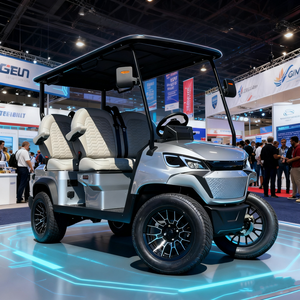
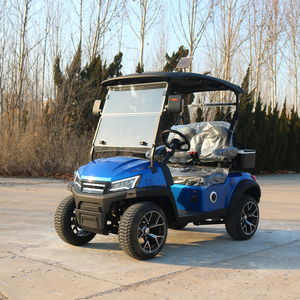
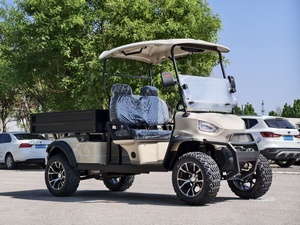
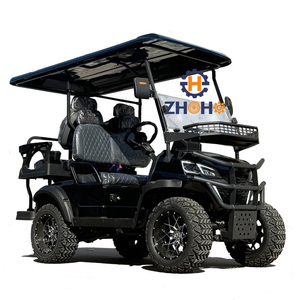
The global shift toward zero-emission commercial operations has fundamentally reshaped the requirements for low-speed electric utility vehicles (LSVs), cargo carts, and industrial shuttle buggies. Today's commercial fleet procurement managers, resort directors, and agricultural operators no longer accept modified recreational golf carts retrofitted with lightweight cargo beds. Modern material transport demands industrial-grade chassis design, modular loading configurations, reliable powertrain thermal management, and long-life lithium-ion energy storage systems.
Information Gain Insight: Unlike standard golf carts designed for intermittent 18-hole operation, industrial cargo vehicles experience continuous heavy-duty duty cycles, frequent stop-and-go load variations, steep incline hauling, and exposure to harsh environmental conditions. Procuring platforms built with standard 173Ah lithium technology and minimum 5KW AC induction powertrain systems cuts total cost of ownership (TCO) by up to 42% over a five-year service life.
Our manufacturing and engineering ecosystem was built by automotive and electric vehicle veterans with more than 70 years of combined engineering, homologation, and manufacturing expertise. Every vehicle leaving our final assembly line in Williston, USA, reflects rigorous mechanical integrity, verified electrical schematics, and standardized global compliance protocols.
As top trusted manufacturers and exporters, keeping pace with global industrial electric vehicle (EV) standards requires relentless technical innovation. Below is a comprehensive analysis of the architectural evolution currently taking place across commercial utility cart manufacturing.
Transitioning from legacy lead-acid to integrated 173Ah lithium packs delivering flat discharge voltage curves, zero power degradation under load, and rapid 2-hour opportunity charging capability.
High-torque 5KW-7.5KW AC brushless motors paired with programmable digital controllers offering smooth low-speed acceleration, thermal cut-off safety, and downhill speed control.
Quick-change rear chassis configurations allowing fleet managers to swap between 4-to-6 passenger seating modules, enclosed dry-freight boxes, and heavy-duty drop-side aluminum cargo beds.
To assist procurement directors and fleet buyers in assessing vehicle durability, the table below illustrates the structural and engineering distinctions between generic consumer carts and enterprise-grade cargo vehicles:
| Engineering Dimension | Generic / Standard Golf Cart | Enterprise Commercial Cargo Cart |
|---|---|---|
| Frame & Subframe Construction | Stamped thin-wall steel or basic tubular alloy | Heavy-duty boxed automotive steel frame with e-coat treatment |
| Energy Capacity & Battery Chemistry | Standard 8V/12V Lead-Acid or 60Ah-100Ah Lithium | Standard 173Ah LiFePO4 with smart cell-balancing BMS |
| Motor Output & Braking System | 3KW DC / Mechanical Drum Brakes | 5KW-7.5KW AC Brushless / 4-Wheel Hydraulic Disc + Regen |
| Payload & Hauling Rating | 250 kg – 350 kg total load capacity | 600 kg – 1,200 kg heavy industrial rated payload |
| Cockpit Digital Instrumentation | Basic analog voltmeter or small monochrome display | 12.5-inch HD Touchscreen Command Center with Telemetry |
| Road Compliance / Certification | Non-certified / Off-road limited | EEC / CE Certified, Street-Legal LSV Package Ready |
International trade data across North America, Europe, the Middle East, and Southeast Asia indicates a rapid shift in commercial fleet sourcing strategies. Procurement officers are consolidating vendors, prioritizing manufacturers capable of delivering factory-direct OEM customization, international safety certifications (CE, EEC, DOT), and transparent long-term warranty backed by global service support.
Procurement Request for Proposals (RFPs) are moving away from evaluating initial unit purchase price in favor of evaluating 5-year and 8-year operational cost structures. While lead-acid vehicles present a lower initial acquisition cost, the recurring expense of battery replacement (every 18-24 months under heavy commercial use), terminal maintenance labor, downtime, and high electricity consumption makes them 35% to 50% more expensive over 50,000 km of operational duty than 173Ah lithium platforms.
Municipal emissions restrictions in European and Asian urban centers have accelerated the adoption of street-legal low-speed electric cargo vehicles (LSVs) for micro-logistics, parcel delivery, municipal park maintenance, and resort operations. Vehicles equipped with 72V EEC certification, full LED road lighting, turn indicators, DOT-approved safety glass, and 3-point seatbelts can legally navigate public city streets up to 45 km/h (28 mph), bridging the gap between small hand-trucks and oversized diesel delivery vans.
Modern commercial exporters must supply vehicles equipped with CAN-bus digital networking capabilities. Fleet operators require real-time remote visibility into fleet locations (GPS tracking), individual battery module health, driver speed behavior, geo-fencing speed restrictions, and automated maintenance reminders. Integrated digital dashboards like our 12.5-inch HD Command Center serve as the hardware hub for these advanced connected fleet services.
Evaluating enterprise cargo carts involves specific technical, logistical, and operational considerations. Below are detailed authoritative answers to common procurement inquiries.
A 173Ah lithium-ion (LiFePO4) battery system delivers sustained voltage without dropping speed during heavy loads or hill climbs, operates maintenance-free without watering or terminal cleaning, supports fast opportunity charging during work shifts, and provides a service life of 8 to 10 years (3,500+ cycles) compared to 1-2 years for lead-acid packs under continuous commercial usage.
Yes. Selected utility vehicles in our lineup feature full EEC certification (European Community Whole Vehicle Type Approval) and CE compliance, allowing them to be registered as street-legal Low Speed Vehicles (LSVs) or Neighborhood Electric Vehicles (NEVs) depending on local municipal and DMV regulations.
Absolutely. As direct manufacturers and experienced exporters, we offer comprehensive OEM/ODM structural customization. Options include automated hydraulic dump beds, insulated thermal food-service boxes, enclosed lockable tool cabinets, extended flatbed platforms, and custom fleet livery/color matching.
Our high-efficiency AC brushless motors produce instant low-end torque. Paired with programmable digital controllers and 72V electrical architecture, these powertrains easily navigate ramps, farm hills, and high-payload terrain without overheating or experiencing torque fade.
Standard export orders are processed and assembled within 15 to 25 days depending on customization depth. We manage full export documentation, container loading, customs clearance compliance, and provide comprehensive spare parts packages alongside factory service manuals for local fleet mechanics.
All current model commercial vehicles are backed by an enterprise warranty package: including lifetime structural frame support, a 10-year battery warranty on 173Ah lithium packs, and a 3-year comprehensive mechanical and electrical warranty administered through our global dealer and service support network.
Connect directly with our engineering and commercial export team to receive technical datasheets, custom OEM manufacturing quotes, and factory-direct volume pricing.
