Top Trusted Cart Controller Manufacturers & Factories

Next-Generation Electric Vehicle Controllers, Speed Governors & CANbus Power Electronics Engineering for Commercial, Golf, and Neighborhood Low-Speed Vehicles (LSV).

70+
Years Combined Engineering
99.8%
Real-Time Response Reliability
ISO26262
Functional Safety Compliant
100%
Automated SMT & EOL Tested
Factory Direct Supply

Featured Vehicle Control Modules & Speed Governors

Explore our flagship OEM/ODM cart controller assemblies, electronic throttle boosters, and Vehicle Control Units (VCUs) engineered for seamless integration across electric golf carts, utility trucks, and personal transportation vehicles.
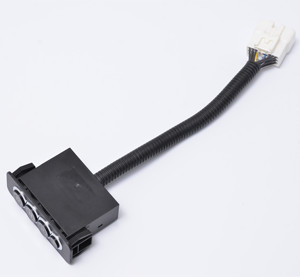
DC / AC Motor Control Car Hand Controls DC Motor Speed Electronic Gear Controller for Car

Car Hand Controls DC Motor Speed Electronic Gear Controller

  • Voltage Range: 24V - 72V DC
  • Peak Current: 350A
  • Throttle Input: 0-5V / Hall Effect
  • Protection: IP67 Sealed
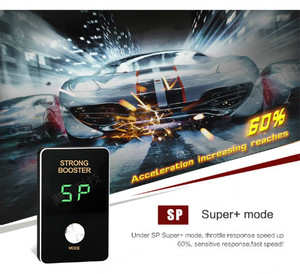
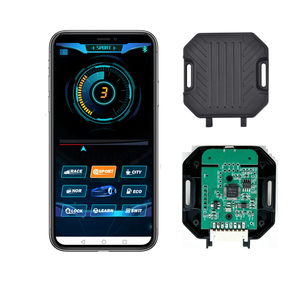
Bluetooth Wireless New Car Throttle Controller bluetooth APP Mobile Wireless Control Speed Booster

Bluetooth APP Mobile Wireless Speed Booster Throttle Controller

  • App Support: iOS & Android
  • Modes: 9-Drive Curves
  • Compatibility: Toyota Tacoma / Cruiser
  • Response: < 1ms Latency
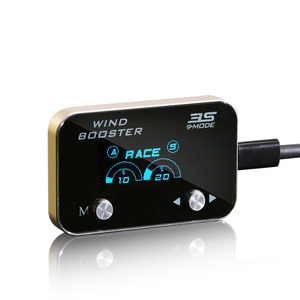
3s Cruise Module Windbooster Car Electronic Speedometer 3s Cruise Control Throttle Controller

Windbooster Electronic Speedometer 3s Cruise Control Module

  • Feature: Adaptive Cruise
  • Fitment: Toyota / Lexus / Landrover
  • Display: OLED Digital Interface
  • Warranty: 3 Years Factory
Racing Grade WiiYii M9 Special Racing Car Wired Throttle Controller with Speed Booster

WiiYii M9 Special Racing Wired Throttle Controller & Accelerator

  • Circuit: Dual Microprocessor
  • Modes: Sport / Eco / Race
  • Installation: Plug & Play Wire Harness
  • Warranty: 2 Year Replacement
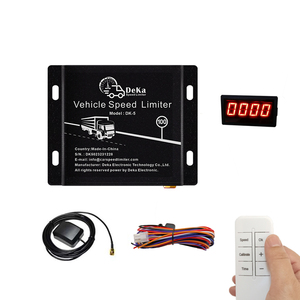
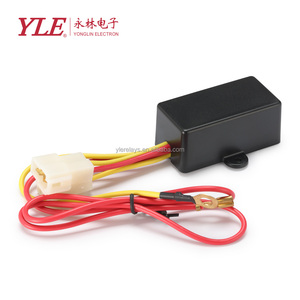
Safety Governor Factory Price Speed Governor Controller for Cars Speed Limits

Industrial Grade Speed Governor & Programmable Limit Controller

  • Limit Range: 10 km/h - 120 km/h
  • GPS Tracking: Optional Module
  • Compliance: Fleet Safety Mandate
  • Output: Relay & Solenoid Cut off
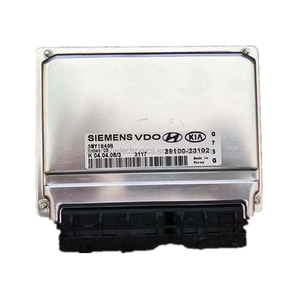
Auto ECU Module Car Control Module 39100-23102 Auto Ecu Controller

High-Performance ECU Engine Control Unit Module (39100-23102)

  • OEM Code: 39100-23102
  • Processor: 32-Bit Automotive MCU
  • Diagnostics: OBD-II / CANbus
  • Housing: Die-Cast Aluminum
Multi-Protocol VCU Factory Direct Vehicle Controller High Reliability Real-time Response

Factory Direct Vehicle Control Unit (VCU) with Real-Time Bus Response

  • Protocols: CANopen / J1939 / LIN
  • Architecture: Dual-Core Lockstep
  • Efficiency: > 98.5% Inverter Conversion
  • Rating: IP69K Waterproof
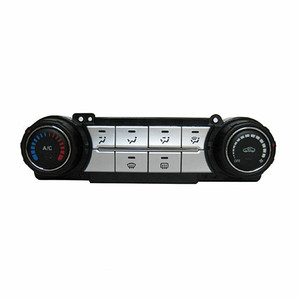
HVAC & Cabin System Automobile Car Climate Control Module Car HVAC Controller

Automobile Smart Climate Control Module & HVAC Logic Controller

  • Control Type: Dual-Zone Automatic
  • Sensor Support: NTC Temp & Humidity
  • Bus System: LIN Bus Interfacing
  • Application: EV Cabin Management
Engineering Whitepaper

The Anatomy of High-Reliability Cart Controllers

Modern personal electric vehicles (PEVs), low-speed vehicles (LSVs), and commercial golf carts require motor control architecture that bridges the gap between raw battery discharge and smooth, whisper-quiet kinetic delivery. Below is an engineering overview of our OEM manufacturing standards.

"In low-voltage, high-current electric mobility applications, controller reliability is not defined merely by peak kilowatt output. True operational excellence lies in thermal dissipation logic, sub-millisecond Field-Oriented Control (FOC) processing, and fault-tolerant CANbus communication frameworks."

Field-Oriented Control (FOC) Algorithms

Replacing legacy trapezoidal wave commutation, our 32-bit vector controllers execute space-vector PWM (SVPWM) algorithms. This provides continuous smooth torque generation, eliminates acoustic motor whine, and increases overall energy efficiency by up to 14% over standard AC drives.

Silicon Carbide (SiC) MOSFET Switch Arrays

By transitioning high-tier controllers from traditional Silicon IGBTs to wide-bandgap SiC MOSFET technology, internal switching losses are reduced by up to 60%. This allows higher switching frequencies (up to 20kHz) without triggering thermal throttling during sustained uphill hill-holds.

Automotive-Grade CANbus 2.0B Integration

Our controllers speak native CANopen and SAE J1939 protocols, allowing seamless real-time handshake between the motor speed controller, high-capacity lithium Battery Management Systems (BMS), digital dashboards, and telematics units.

Functional Safety & Fault Mitigation (ISO 26262)

Hardware-level over-voltage, under-voltage lockout (UVLO), phase-to-phase short protection, and dual-pedal plausibility checking ensure that runaway throttle faults are physically impossible under single-point component failure conditions.

Active Regenerative Braking & Energy Harvest

Programmable deceleration curves return kinetic energy to the battery pack during downhill descents. Controlled roll-back resistance provides automatic hill-hold functionality even on steep incline inclines without mechanical brake wear.

Thermodynamic Die-Cast Aluminum Enclosures

Utilizing A380 die-cast aluminum heat sinks filled with thermally conductive potting compound, our controllers achieve an IP67 to IP69K waterproof rating while withstanding 15G structural shock and vibration testing.

Factory Expertise & Supply Chain Integrity

70+ Years Combined Engineering Heritage

Atlas Carts' underlying power electronics division was built by golf cart industry veterans with over 70 years of combined experience in developing, homologating, and manufacturing electric drivetrain components. We don't just assemble off-the-shelf boards—we custom-engineer every PCB layout, thermal substrate, and firmware control curve.

Designed and assembled with rigorous domestic testing in the USA, our manufacturing facility operates automated Surface Mount Technology (SMT) lines, AOI optical inspection, high-voltage isolation flash testing, and 100% End-of-Line (EOL) dyno load validation.
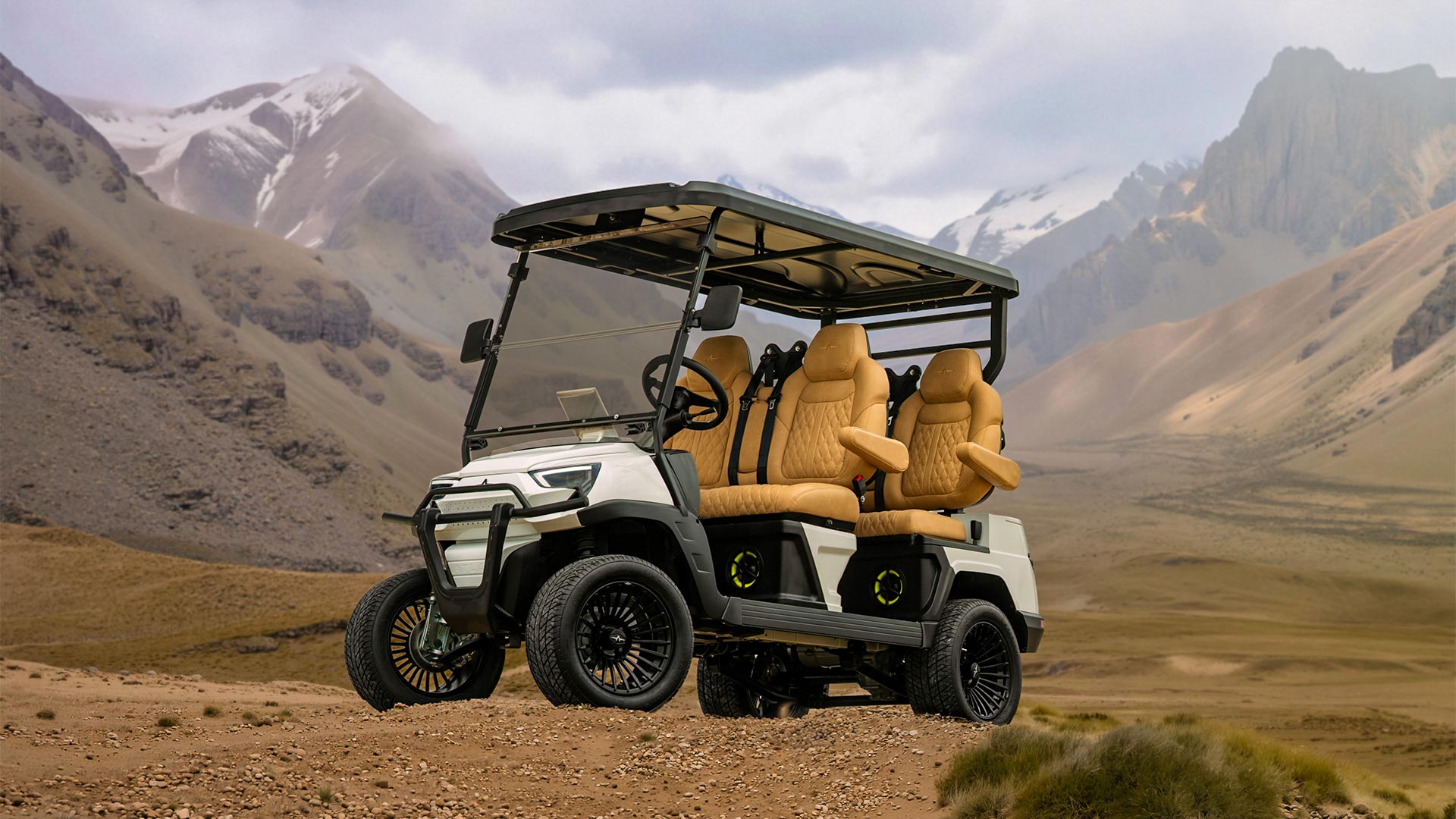
Cart Controller Production line engineering and vehicle chassis integration
Strategic Sourcing Insights

Future Procurement Trends for Vehicle Controllers

As global OEMs transition from legacy lead-acid architectures to high-density lithium powertrains, the demands placed on motor controllers and electronic control units are shifting rapidly. B2B purchasing agents and engineering directors must account for five pivotal industry movements.

1. Native High-Capacity Lithium BMS Communication

Legacy controllers relied solely on raw voltage thresholds to estimate state-of-charge. Modern purchasing specs mandate direct controller-to-BMS CAN communication. Controllers must dynamically throttle current based on real-time cell temperatures, maximum discharge limits, and voltage balance to protect large-format lithium packs (such as our standard 173Ah lithium system).

2. Over-The-Air (OTA) Firmware Flashing

Next-generation fleet operators and dealers demand remote diagnostics and parameter tuning. Contemporary controller architectures incorporate Bluetooth connectivity or unified VCU bus interfaces, allowing technicians to update drive curves, speed caps, and acceleration profiles without physically connecting serial cables.

3. Dual-Motor Synchronous AWD Controllers

Utility vehicles, multi-passenger lifted carts, and rugged resort transports are moving away from single-rear-axle setups toward dual-motor All-Wheel Drive (AWD). Controller manufacturers must supply integrated dual-channel units that calculate electronic differential slip in under 5 milliseconds to prevent turf damage and increase slope traction.

4. Modular Harness & Plug-and-Play Standardization

Supply chain bottlenecks have forced factories to standardize connector pinouts (such as Deutsch or AMPSEAL waterproof connectors). Universal modular wiring harnesses reduce inventory SKU counts for cart assemblers, letting a single controller family operate across 2-passenger, 4-passenger, and 6-passenger vehicle lines.

5. Integrated Command Center Interfaces

The controller is no longer an isolated box hidden under the seat; it is the core data provider for modern digital cockpits. Manufacturers now require controllers to output high-speed telemetry directly to high-definition touchscreens (such as 12.5-inch vehicle command centers), displaying live torque delivery, regenerative current flow, and fault code diagnostics.

6. Extended Powertrain & Component Warranties

Buyer confidence relies on structural warranty guarantees. High-reliability controller factories are moving away from standard 1-year terms toward extended component warranties. For example, our 2026 vehicle line features an industry-leading lifetime powertrain warranty paired with a 10-year battery system framework.

Technical Benchmarking

Cart Controller Architectural Comparison Matrix

A detailed side-by-side engineering evaluation comparing traditional analog/trapezoidal controllers with modern AC Field-Oriented Control (FOC) units manufactured by top OEMs.

Performance Specification Legacy DC Series / SepEx Controller Standard AC Brushless Controller Premium Factory OEM FOC Controller
Motor Control Algorithm Analog PWM / Duty Cycle Basic Sinusoidal Vector 32-Bit FOC Space-Vector PWM (SVPWM)
Inverter Efficiency 82% - 88% 91% - 94% 97.5% - 98.8% (SiC MOSFET Option)
Regenerative Braking Limited / Coarse Engagement Standard Dynamic Braking Smooth Proportional Energy Recovery & Hill-Hold
Bus Communication None / Analog 0-5V Basic RS485 / Proprietary Dual CANbus 2.0B (CANopen & J1939 protocols)
Thermal Management Passive Extruded Aluminum Die-Cast Plate A380 Sealed Die-Cast Liquid/Air Flow Heat Sink
Protection Rating IP54 Splash Resistant IP65 Dust/Water Sealed IP67 / IP69K Submersible & High-Pressure Wash
Operating Temperature -20°C to +50°C -30°C to +65°C -40°C to +85°C Full Load Output

Need Custom Controller Firmware or OEM Harness Design?

Our engineering team works directly with fleet buyers, vehicle manufacturers, and distributors to customize voltage thresholds, CANbus mapping, and throttle response curves.

Buyer Knowledge Base

Frequently Asked Procurement & Technical Questions

Detailed technical answers to help purchasing managers, chief engineers, and OEM fleet buyers select the correct vehicle controller platforms.

Q: What is the critical difference between a speed governor controller and a full Vehicle Control Unit (VCU)?
A speed governor is a dedicated device engineered specifically to monitor vehicle velocity (via Hall sensors, transmission pickup, or GPS) and restrict throttle input or interrupt ignition/power output when a pre-set speed ceiling is breached. In contrast, a Vehicle Control Unit (VCU) serves as the master central computer of an electric cart. The VCU manages motor torque requests, coordinates BMS cell limits, controls lighting and HVAC relays, processes brake interlocks, and transmits telemetry to digital displays.
Q: Can your controllers be customized for specific vehicle voltage configurations (e.g., 48V, 72V, 96V)?
Yes. Our factory production lines support custom nominal voltage configurations ranging from 24V DC up to 96V DC platforms, with peak withstand ratings exceeding 120V DC. During the OEM specification phase, internal MOSFET voltage ratings, capacitor banks, and firmware undervoltage/overvoltage thresholds are dialed in to match your specific lithium chemistry (LiFePO4 or NCM) or lead-acid pack configuration.
Q: How do your cart controllers handle thermal throttling under extreme incline loads?
Our controllers utilize multi-point NTC temperature sensors embedded directly onto the insulated metal substrate (IMS) PCB right beside the power switching MOSFETs. If internal junction temperatures approach 85°C, the Field-Oriented Control (FOC) algorithm smoothly scales back peak current output in micro-steps rather than abruptly shutting down power. This thermal rollback prevents vehicle stalling on steep inclines while protecting internal silicon from catastrophic thermal fatigue.
Q: Are these controllers compatible with street-legal Low Speed Vehicle (LSV) regulatory standards?
Yes. Controllers intended for street-legal Low Speed Vehicles (LSV / NEV) can be flashed with firmware compliant with FMVSS 500 and local municipal speed governance rules (typically capping maximum speed between 20 mph and 25 mph). Furthermore, integrated VCU modules manage signal outputs for brake lights, reverse buzzers, turn indicators, windshield wiper motors, and seatbelt safety interlock sensors required during LSV homologation.
Q: What documentation and software tools are provided for distributor network servicing?
All OEM procurement packages include access to our PC and mobile Diagnostic Software Suite. Authorized dealers and fleet technicians can plug in via USB-to-CAN dongles or connect wirelessly via Bluetooth to view live Diagnostic Trouble Codes (DTCs), log real-time telemetry graphs, flash updated firmware files, and adjust user-definable parameters such as acceleration rates, braking strength, and eco/sport mode switches.
Q: What is the standard factory lead time for custom OEM sample prototyping and mass production?
For standard off-the-shelf catalog controllers, sample orders are typically dispatched within 3 to 5 business days. For customized OEM/ODM projects involving specialized wire harness fabrication, custom CAN protocol mapping, or custom enclosure branding, sample prototyping takes 2 to 4 weeks. Full mass production batch runs generally carry a lead time of 30 to 45 calendar days following engineering sign-off and PPAP approval.
Partner with a Trusted Manufacturer

Ready to Upgrade Your Vehicle Power Electronics?

Connect directly with our engineering sales team to request hardware samples, custom wire harness drawings, or factory-direct B2B price schedules.

Inquire Now