
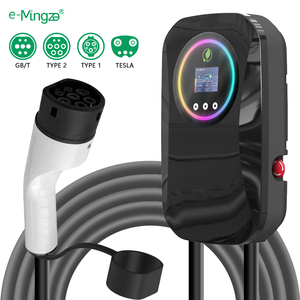
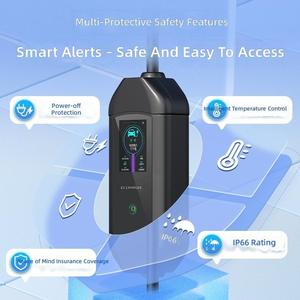
E-mingze 7KW GB/T Wall Mount Fast Charging Station DC Onboard Portable Power
- Power Output: 7kW DC
- Standard: GB/T Standard
- Control: APP & Timer Adjust
- Protection: IP65 / No-Ground Safe
Our engineered product line spans compact trickle chargers for marine and leisure applications to high-voltage liquid-cooled 22kW 800V SiC OBC units engineered for modern passenger EVs, commercial transit buses, and heavy equipment.
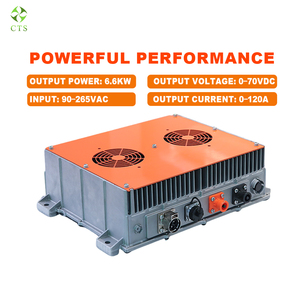
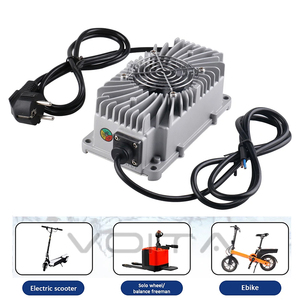
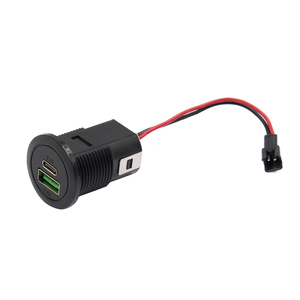
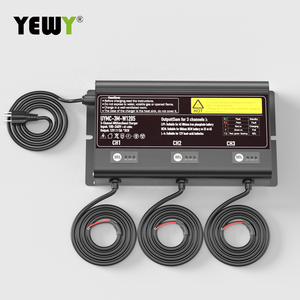
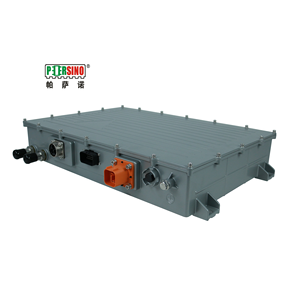
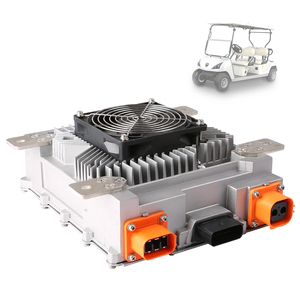
Through decades of combined electric vehicle powertrain integration expertise—mirroring the strict engineering standards applied in advanced high-voltage lithium electric platforms—our manufacturing facilities deliver validated power density metrics exceeding OEM tier-1 requirements.
Utilizing 3rd Gen Silicon Carbide (SiC) power switches to minimize thermal dissipation.
Hermetically sealed die-cast aluminum enclosures for harsh automotive and marine environments.
Next-generation SiC topologies supporting wide battery pack ranges from 200V to 850V DC.
Rigorous HALT/HASS burn-in testing verified over automotive lifecycle parameters.
The global transition to electrification across passenger motor vehicles, commercial transit fleets, utility carts, low-speed electric vehicles (LSVs), and marine vessels has escalated performance demands on Onboard Battery Charger (OBC) hardware. Modern vehicle architectures require higher power density, bi-directional vehicle-to-grid (V2G) functionality, smaller physical footprints, and uncompromised thermal survivability under severe shock and vibration profile parameters.
As a premiere Onboard Charger Supplier & Exporters operating under rigorous IATF 16949 quality management systems, our engineering directives focus on solving the systemic bottlenecks of legacy AC-to-DC power conversion: volumetric power density limitations, high switching losses, excessive electromagnetic interference (EMI), and elevated thermal stress under full-load continuous operations.
Traditional onboard chargers built upon Silicon (Si) Insulated-Gate Bipolar Transistors (IGBTs) operate at constrained switching frequencies typically below 50kHz. This frequency constraint forces power engineers to incorporate bulky passive magnetic components—specifically heavy PFC inductors and EMI filtering transformers. By contrast, our flagship 6.6kW, 11kW, and 22kW liquid-cooled OBC lines leverage Third-Generation Silicon Carbide (SiC) MOSFET switch topologies operating at switching frequencies up to 250kHz.
Operating above 200kHz reduces the volumetric envelope of passive magnetic components by over 40%, enabling ultra-compact chassis designs ideal for space-constrained EV engine bays.
SiC technology reduces switching energy losses by up to 70%, boosting system efficiency to 96.8% and significantly reducing auxiliary cooling requirements under continuous full-load operation.
Wide bandgap SiC semiconductors maintain stable breakdown voltage characteristics at junction temperatures exceeding 175°C, ensuring robust operation in demanding climates.
Modern vehicle OEMs are rapidly abandoning standalone onboard chargers in favor of Integrated Power Distribution Units (2-in-1 or 3-in-1 Combo Systems). By unifying a 6.6kW or 11kW AC-to-DC onboard charger with a 1.5kW to 3kW high-to-low voltage (HV-to-LV) DC-DC converter inside a single IP67-rated enclosure, system integrators achieve profound commercial and engineering advantages:
Proper thermal dissipation is vital for preserving battery life and ensuring continuous power delivery without thermal throttling. Selecting between conduction/forced air-cooled designs and liquid-cooled designs depends on total power throughput and ambient operating envelope:
| Engineering Metric | Air-Cooled / Conduction OBC | Liquid-Cooled SiC OBC |
|---|---|---|
| Power Density Target | 0.8 kW/L – 1.4 kW/L | 2.5 kW/L – 3.8 kW/L |
| Typical Power Capacity | 300W to 3.3kW Output | 6.6kW, 11kW, to 22kW Output |
| Protection & Ingress Class | IP65 to IP67 Sealed Fin Radiators | IP67 / IP6K9K Fully Hermetic |
| Operating Temperature Window | -40°C to +65°C (Derating > 50°C) | -40°C to +85°C Full Power Capacity |
| Primary Application Sectors | Golf Carts, AGVs, Marine Trickle, LSVs | Highway EVs, Electric Buses, Heavy Mining |
Building on over 70 years of combined vehicle powertrain engineering history, our R&D and manufacturing protocols adhere strictly to international automotive quality standards.
Our digital firmware stack incorporates redundant over-voltage, over-current, over-temperature, low-voltage isolation monitoring, and reverse polarity detection, complying with stringent functional safety requirements.
Every intelligent OBC module features programmable CAN communication matrices, enabling seamless integration with BMS protocols across lithium iron phosphate (LiFePO4), NMC, and solid-state battery chemistry packs.
Our products are fully certified for export to North America, Europe, Asia-Pacific, and Latin America, complying with CE, UL, FCC, RoHS, ISO 16750-3 vibration safety, and IEC 61851-1 electric vehicle conductive charging standards.
Our engineering team collaborates directly with vehicle design engineers, fleet managers, and industrial equipment manufacturers to develop custom voltage curves, bespoke mounting plates, and integrated DC-DC power units.
Contact UsAs global electrification expands beyond automotive passenger transport into specialized industrial, agricultural, and marine sectors, procurement teams must align specifications with key technological shifts.
Vehicle architectures are increasingly transitioning from 400V to 800V battery systems to facilitate ultra-fast DC charging and reduce harness weight. Suppliers capable of manufacturing wide output voltage range OBCs (e.g., 200V–850V DC) allow OEMs to utilize unified power conversion hardware across diverse platform lineups.
Modern fleet operators and personal electric vehicle owners expect dual-use power delivery. Bi-directional onboard chargers equipped with grid-tied inverter capabilities allow vehicles to discharge battery energy back to the grid (V2G), power Jobsite equipment (V2L), or supply standby power to residential units during grid outages.
Global export success relies on universal voltage compatibility. Tier-1 exporters must ensure onboard chargers feature active Power Factor Correction (PFC with PF > 0.99) capable of accepting wide single-phase and three-phase inputs without manual voltage switching or thermal derating.
Technical details, order minimums, custom configuration capabilities, and warranty terms for onboard charger procurement.
Whether you require sample units for prototype validation, small-batch custom CAN units for specialized machinery, or large-volume OEM production runs, our engineering team is ready to deliver world-class onboard charging solutions.