Factory-direct low-speed electric vehicles engineered for Australia's demanding coastal climate, turf topographies, and commercial resort operations.
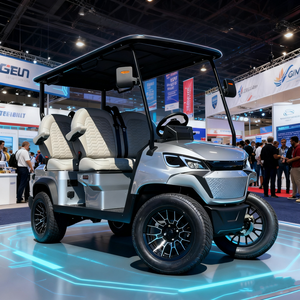
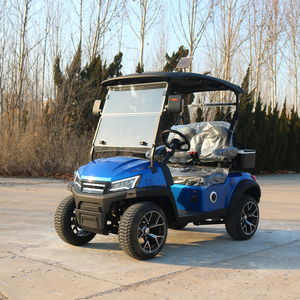
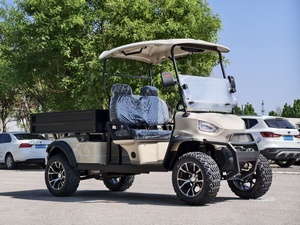
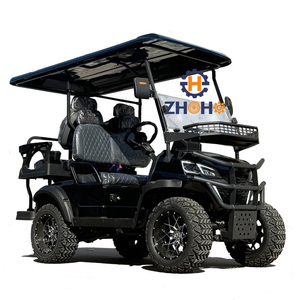
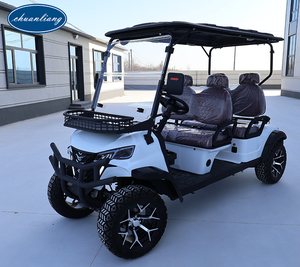
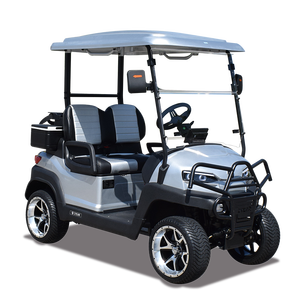
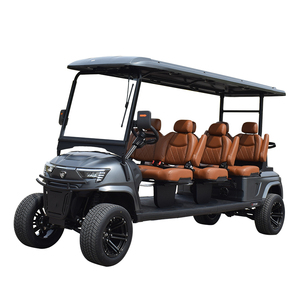

The commercial and recreational landscape for personal electric vehicles (PEVs) and light utility golf trolleys across Greater Sydney and New South Wales (NSW) is undergoing a paradigm shift. Driven by rigorous net-zero emissions mandates, rising maintenance overheads of legacy internal combustion engine (ICE) fleets, and rapid developments in high-voltage lithium-iron-phosphate (LiFePO4) battery systems, Australian golf course operators, commercial fleet managers, and luxury estate owners are seeking direct manufacturing partnerships with tier-1 export factories.
Sydney presents a distinct operating context. From the undulating dune topographies of coastal championship courses like The Lakes, St. Michael’s, and Royal Sydney to the hot inland summer temperatures exceeding 42°C in Western Sydney (Penrith, Campbelltown), imported golf trolleys must fulfill strict engineering metrics. Standard off-the-shelf golf carts designed for mild climate conditions frequently suffer from thermal throttling, rapid chassis corrosion due to airborne coastal salinity, and inadequate hill-climbing torque on steep turf gradients. This white paper serves as an authoritative technical breakdown for B2B distributors, resort procurement officers, and fleet importers sourcing factory-direct golf trolleys tailored specifically to the Sydney market.
To successfully deploy electric golf trolleys and personal transport vehicles in New South Wales, export manufacturers must engineer chassis and electrical architectures to combat four key environmental variables:
Sydney's eastern suburbs and coastal courses (Cronulla, Long Reef, Manly) experience intense salt-laden sea breezes. Chassis frame construction requires hot-dip galvanizing and multi-stage electro-phoretic powder coating to surpass 1,000-hour ASTM B117 salt spray standards.
NSW summer heat regularly pushes ambient temperatures above 40°C. Factory lithium battery packs must incorporate active thermal management, automotive-grade aluminum heatsinks, and IP67-sealed AC motor controllers to prevent thermal shutdown.
Courses situated along the Hawkesbury River and Blue Mountains foothills demand high-torque peak power (7.5KW AC brushless motors) paired with smart regenerative braking to safely hold position on 25-degree slopes without mechanical brake fade.
The Australian golf cart market is transitioning away from fragmented regional dealerships toward direct-from-factory volume procurement. Key macro trends shaping Sydney fleet acquisitions include:
Lead-acid batteries are rapidly being phased out by Sydney golf clubs due to high labor costs associated with water topping, acid spillage damage to turf, and a limited 300-500 cycle lifespan. OEM factory exporters supplying 173Ah LiFePO4 battery modules offer 3,500+ charge cycles, reducing total cost of ownership (TCO) by up to 48% over a 5-year operating window.
Beyond traditional 2-passenger fairway buggies, demand in Sydney's master-planned developments (such as Sanctuary Lakes, Harrington Grove, and Hunter Valley eco-resorts) has shifted toward street-legal Low-Speed Vehicles (LSV). Importers require factories capable of supplying vehicles with DOT-certified windshields, 3-point seatbelts, LED turn indicator systems, hydraulic 4-wheel disc brakes, and vehicle identification numbers (VIN) compatible with Transport for NSW (TfNSW) conditional registration schemes.
Modern Sydney golf course managers require integrated CAN-bus telemetry. Factory-installed 12.5-inch HD command centers allow remote monitoring of state-of-charge (SOC), real-time GPS tracking, electronic geofencing (preventing carts from entering sensitive wetlands or hazard zones), and automated fault diagnostics sent straight to the maintenance hangar.
When placing bulk orders with overseas golf trolley exporters, Sydney procurement buyers should benchmark factory specifications against the following technical requirements:
| Feature / Component | Legacy Standard Spec | Sydney Commercial Export Spec (Recommended) | Operational Impact in Sydney |
|---|---|---|---|
| Battery System | 48V 100Ah Lead-Acid / AGM | 72V 173Ah LiFePO4 (Lithium Iron Phosphate) | Zero maintenance, 45+ km range on hilly turf, 2.5-hour fast charging |
| Drive Motor | 3.7KW DC Brushed Motor | 5KW / 7.5KW AC Brushless Synchronous | Instant torque delivery, high hill climbing efficiency, no carbon brush replacements |
| Braking System | Rear Mechanical Drum Brakes | 4-Wheel Hydraulic Disc Brakes + Regenerative Electromagnetic Park | Immediate stopping capability on wet grass gradients; automatic hill-hold security |
| Chassis Structure | Standard Painted Tubular Steel | Hot-Dip Galvanized Powder-Coated Steel / Anodized Aluminum | Complete resistance to salt air corrosion near Botany Bay & Sydney Coast line |
| Cockpit Technology | Analog Battery Indicator | 12.5" HD Touchscreen Command Center with Bluetooth & Reverse Camera | Enhanced guest experience, integrated fleet management, clear operational metrics |
| Suspension Setup | Leaf Springs with Basic Shocks | Independent Double A-Arm Front Suspension with Tuned Coil-Overs | Superior ride comfort, reduced turf compaction, improved high-speed stability |
Our manufacturing complex represents over 70 combined years of golf cart engineering and specialized electric mobility production. We maintain rigorous internal quality assurance protocols designed to support high-volume international exporters and OEM brand partners in Australia.
Every chassis frame is fabricated utilizing automated robotic MIG welding cells, guaranteeing dimensional repeatability within 0.2mm tolerances. Frame assemblies undergo stress-relief treatment before being passed through a 12-stage electro-phoretic dipping process. This ensures complete internal and external coating coverage against rust—an absolute necessity for buggy fleets operated near Sydney's coastal zones.
All electrical harnesses utilize wiring bundles wrapped in flame-retardant corrugated conduit and fitted with waterproof Deutsch connectors (IP67 standard). Prior to container packing, every exported unit undergoes a 50-point quality check including digital wheel alignment testing, dynamic hill-climb simulation under maximum rated load, and high-pressure water deluge testing to verify rainproofing.
Request technical spec sheets, wholesale bulk export price lists, and OEM customization catalogues tailored for Australian fleet distributors and resort buyers.
Inquire Now