
Executive Summary: The Industrial Lithium Landscape in Greater Nagoya
The Chubu economic region—anchored by Nagoya, Aichi Prefecture—represents the beating heart of Japanese advanced manufacturing, automotive OEM supply chains, industrial automation, and aerial logistics. As METI (Ministry of Economy, Trade and Industry) accelerates Japan’s Green Transformation (GX) policies, regional enterprises are undergoing an aggressive transition toward total electrification. From automated guided vehicles (AGVs) operating inside Toyota City automotive plants to high-altitude agricultural inspection drones hovering over rural Gifu and Mie, energy density, safety compliance, and thermal reliability are non-negotiable parameters for lithium battery integration.
As qualified lithium pack suppliers and exporters serving the Nagoya port hub, our engineering directive is built around solving localized industrial friction: eliminating premature capacity fade caused by Japan's humid summer microclimates, ensuring zero-tolerance thermal safety under high-discharge stress, and complying seamlessly with Japanese METI Denan law (PSE mark certification) alongside JIS C 8712 / JIS C 8714 safety frameworks.
Technical Information Gain: Unlike standardized off-the-shelf lithium export assemblies, custom battery architectures engineered for the Nagoya manufacturing cluster require specific multi-stage battery management system (BMS) balancing algorithms, reinforced nickel-plated busbar welding to resist vibration during automated handling, and wide-temperature electrochemical formulations (LiHV and LFP) capable of operating between -20°C winter warehouse environments and +60°C engine-adjacent enclosures.
Localized Industrial Application Scenarios Across Aichi Prefecture
Nagoya’s unique concentration of aerospace, heavy machinery, automotive assembly, and maritime logistics infrastructure requires specialized lithium chemistries tailored to precise load cycles. Below are four primary localized deployment vectors where our exported lithium battery packs deliver competitive operational metrics:
Automotive AGVs & AMR Factory Logistics
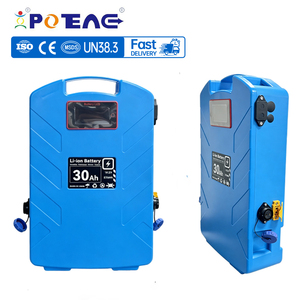
Continuous 24/7 manufacturing plants throughout Aichi require deep-cycle LiFePO4 rack-mounted and modular battery assemblies. Featuring fast-charging capabilities (1C to 3C continuous current acceptance), our high-capacity packs ensure automated mobile robots run multi-shift operations without battery swaps.
Industrial UAVs & Agricultural Mapping
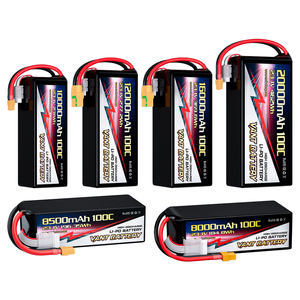
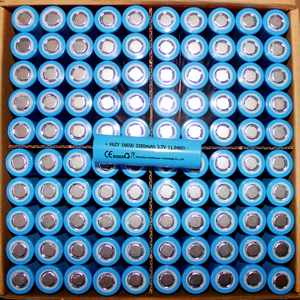
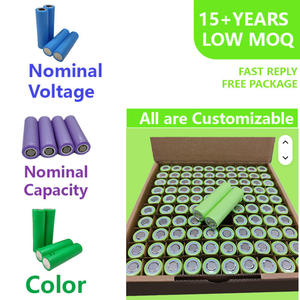
Drone transport corridors across the Tokai region demand ultra-high energy density. Utilizing LiHV 6S (23.1V) and high-rate 100C discharge pouch configurations, payload delivery drones achieve extended flight times while maintaining structural lightweighting via Samsung 21700 cell packaging.
Commercial Utility Vehicles & Golf Fleets
Resort areas in Mie and Gifu reliance on resort electric mobility, low-speed vehicles (LSVs), and golf carts require maintenance-free power setups. Transitioning legacy lead-acid fleets to 173Ah standard lithium platforms provides multi-day usage, 5KW AC drive torque support, and eliminates acid corrosion.
Nagoya Market Trends: Green Transformation (GX) & Technical Compliance
Japan’s strategic focus on supply chain resilience and carbon neutrality by 2050 has transformed procurement criteria for corporate buyers in Nagoya. Procurement managers no longer evaluate battery suppliers purely on unit cost; total cost of ownership (TCO), cell chemistry purity, and regulatory compliance dominate purchasing evaluations.
1. METI Electrical Appliance and Material Safety Act (PSE Marking)
For lithium-ion packs imported into Japan intended for commercial or consumer equipment, adherence to the Denan Law is mandatory. Our export-grade lithium ion packs undergo rigorous overcharge test sequences, external short-circuit simulation, forced internal short-circuit testing, and drop resistance evaluations to ensure full alignment with PSE guidelines and JIS C 8712 standards.
2. Port of Nagoya Logistics & UN38.3 Dangerous Goods Transport
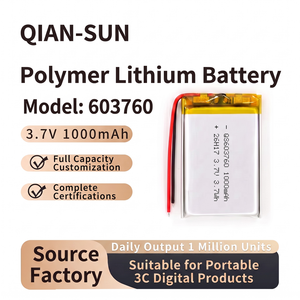
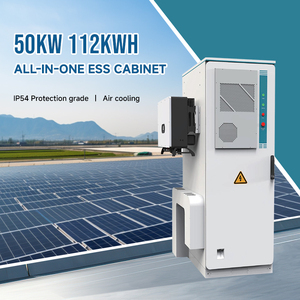
As one of Japan's largest ports by total freight tonnage, Port of Nagoya (JP NGO) enforces strict maritime safety inspections under Class 9 hazardous goods regulations. All exported lithium battery packs—from 1000mAh pouch cells to 112kWh industrial containerized storage units—ship with comprehensive UN38.3 test reports, MSDS documentation, and custom anti-vibration UN-rated outer wooden packaging.
Engineering Competence & Enterprise Advantages
Formed by electro-mechanical and battery chemistry veterans possessing over 70 years of combined industry experience, our manufacturing philosophy rejects fragile, generic battery assembly. Every custom lithium pack shipped to Nagoya clients embodies automotive-grade structural engineering and BMS intelligence.
Smart BMS Architecture
Integrated microcontrollers monitor cell voltage, ambient temperature, and current draw down to individual cell banks. Support for CANbus 2.0B, RS485, and Modbus communications ensures plug-and-play telemetry integration with Japanese industrial machinery and vehicle controllers.
Automated Cell Balancing & Thermal Margin
Active and passive balancing circuits prevent individual cell drift during rapid charge-discharge cycles. Thermal runaway mitigation layers include flame-retardant epoxy insulation, physical cell isolation grids, and integrated thermal cut-off fuses.