Engineered for South Korea's demanding urban electrification standards, featuring broad 90V–264V single-phase and 380V three-phase grid compatibility, IP67/IP69K ingress sealing, dynamic CAN 2.0B communication matrices, and advanced thermal safety loops.
South Korea’s urban power distribution utilizes a 220V 60Hz single-phase AC standard alongside 380V 60Hz three-phase commercial lines. Our onboard chargers feature active Power Factor Correction (PFC > 0.99) and extreme total harmonic distortion (THD < 3%) to protect local transformers while maintaining maximum charging speed.
Over 80% of Seoul’s vehicle charging occurs in multi-level underground parking facilities (e.g., Gangnam, Yeouido, Songpa-gu). Our OBC modules integrate hardware-level thermal shutdown loops, ceramic insulation barriers, and liquid-cooling plates to prevent thermal runaway in high-density basement environments.
Designed from the ground up to fulfill South Korea's rigorous safety benchmarks, including KC 61851-1 (Electric vehicle conductive charging systems) and KC 62196-2 standards. Units feature isolation monitoring rated at > 500MΩ and auto-flash CAN bus communication compliant with Hyundai E-GMP and global VCU matrices.
Traditional onboard battery chargers relied on silicon IGBT switches, which limited switching frequencies, increased magnetics size, and lost substantial power as heat. For the Seoul market—where vehicle space efficiency, weight reduction, and rapid turnaround times dictate market viability—our design team incorporates Third-Generation Silicon Carbide (SiC) MOSFETs into high-frequency LLC resonant converters.
Seasonal load shifts in Seoul's residential micro-grids can cause transient voltage drops. Our wide-bandwidth auto-ranging PFC stage stabilizes charge output even under severe grid fluctuations, ensuring consistent battery health across winter power surges and summer cooling peaks.
To support high-capacity commercial platforms, multi-passenger shuttles, and modern passenger vehicles, our 22kW liquid-cooled OBC delivers output voltages up to 800V DC. This drastically reduces cabling copper mass while doubling total power transfer rates.
Equipped with reverse power transfer logic, our advanced OBC solutions allow vehicles to act as distributed energy storage units. During Seoul municipal power peak-shaving hours, fleet vehicles can supply power back to micro-grids or power external tools via 220V 60Hz AC V2L (Vehicle-to-Load) output.
Consolidating dual power units into a single die-cast housing, our combo OBCs feature an integrated 1.5kW to 3.0kW DC/DC converter. This converts high-voltage traction battery power down to stable 12V/24V DC to power vehicular ECUs, lighting, audio displays, and safety equipment.
Built with solid polyurethane potted encapsulation and heavy-gauge structural ribbing, our OBC components withstand sustained mechanical shocks and multi-axis random vibrations encountered on cobble, construction site, and commercial urban routes.
Each unit offers programmable baud rates (250kbps / 500kbps) with customizable frame IDs. Fleet engineers in Seoul can monitor cell temperature, state of charge (SoC), real-time current draw, and fault telemetry via standard OBD-II diagnostic ports.
From dense metropolitan hubs like Gangnam, Mapo, and Yeouido to nearby resort facilities in Gangwon-do and maritime zones along the Han River, our OBC products power diverse electric transport systems.
Last-mile logistics operators servicing Seoul’s multi-tier residential complexes require fast overnight replenishment without risking thermal overload. Our 6.6kW to 11kW OBCs provide automated scheduling control, allowing fleet managers to capitalize on off-peak electricity tariffs ( midnight to 6:00 AM KST) while ensuring 100% state-of-charge by sunrise.
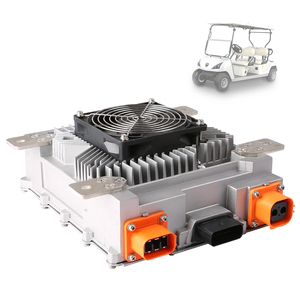
Leveraging our extensive engineering background in high-capacity lithium vehicle architectures (such as the 173Ah battery systems pioneered by Atlas Carts), our compact 300W to 3.3kW smart OBCs power lithium-ion golf carts, campus utility vehicles, and eco-resort transports operating in suburban Gyeonggi-do and regional golf clubs.
As Seoul expands eco-friendly water taxis and electric leisure craft along the Han River, marine electrification demands extreme moisture protection. Our 12V 5A 3-Bank and multi-stage marine chargers feature IP67 epoxy-potted electronics, anodized anti-saltwater aluminum housings, and zero-spark safety circuits.
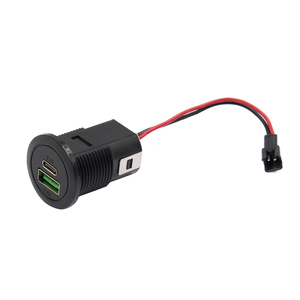
Serving public transit lines and private airport shuttle coaches linking Seoul with Incheon International Airport (ICN), our bus-grade USB chargers (QC3.0 / PD3.0) and heavy-duty 22kW liquid-cooled OBCs deliver continuous passenger power and high-voltage vehicle charging under continuous multi-shift operations.
Use this reference matrix to match electrical specifications with your specific vehicle platform requirements for South Korean registration.
| Model Series | Rated Power | Input Voltage | Output Voltage | Cooling | IP Rating | Primary Seoul Target Application |
|---|---|---|---|---|---|---|
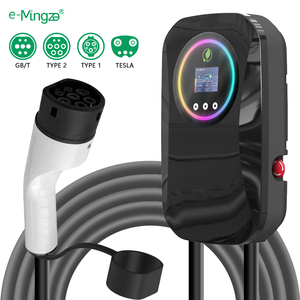
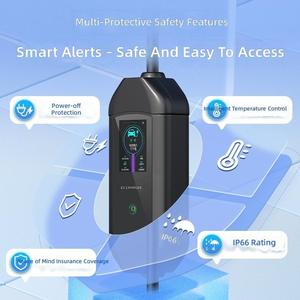
| E-mingze Portable 7kW | 7.0 kW | 220V AC (1-Phase) | 200V–750V DC | Air Cooled | IP65 | Commercial Fleets & Wallbox Fast Charge |
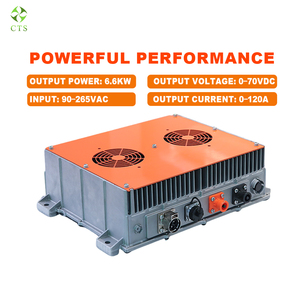
| CTS Modular OBC | 3.3kW–22kW | 90V–264V / 380V AC | 48V / 72V / 400V DC | Air / Liquid | IP67 | Passenger EVs, Delivery Vans & OEMs |
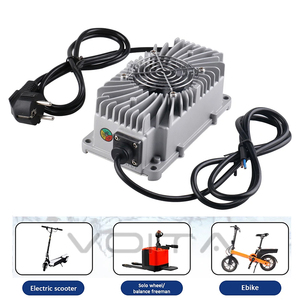
| VOITATOP VT-QA300A | 300 W | 100V–240V AC | 48V DC (LiFePO4) | Convection | IP67 | Golf Carts, Micro-Mobility & Scooters |
| Buspad QC/PD Rail | 60W Total | 12V / 24V DC Input | 5V / 9V / 12V DC Out | Passive | IP54 | Commercial Passenger Coaches & Buses |
| 3.5kW Universal Home | 3.5 kW | 220V AC 60Hz | 200V–450V DC | Forced Air | IP65 | Residential Parking & Personal EVs |
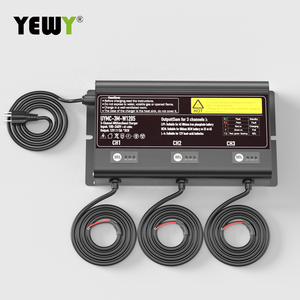
| Marine 3-Bank Smart | 180 W | 110V / 220V AC | 12V (5A x 3 Bank) | Sealed Aluminum | IP67 | Han River Leisure Boats & Marine Vessels |
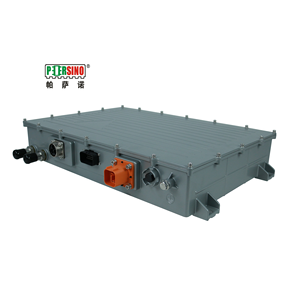
| PERSINO 800V High-Power | 22.0 kW | 380V AC (3-Phase) | 500V–850V DC | Liquid Coolant | IP67 | Heavy-Duty Electric Buses & 800V Cars |
| Dual Combo 6.6kW + DCDC | 6.6kW + 1.5kW | 90V–264V AC | 200-450V (HV) + 12V (LV) | Liquid / Air | IP66 | Integrated Passenger EV Drivetrains |
Every single charger bound for the Incheon / Seoul port undergoes full automated EOL validation: 3,000V AC high-voltage dielectric isolation testing, full-load burn-in inside thermal chambers (-40°C to +85°C), and automated CAN message validation.
We work directly with South Korean software engineers and system integrators to pre-program custom CAN communication matrices, bootloaders, diagnostic protocols, and fault parameters prior to export, reducing on-site commissioning times to zero.
With streamlined maritime and air freight corridors operating daily into Incheon Port and Gimpo/Incheon logistics hubs, we guarantee predictable lead times, transparent customs documentation, and complete KC compliance paperwork support.
Connect with our power electronics application engineers today to discuss custom CAN protocol flashing, sample evaluation units, KC compliance documentation, and OEM volume pricing.
Inquire Now