B2B Procurement & Enterprise Market Intelligence

Neighborhood Electric Vehicle (NEV) Fleet & OEM Procurement Guide

An authoritative technical evaluation of Next-Gen Neighborhood Electric Vehicles (NEVs). Designed for global buyers, commercial fleet managers, distributors, and municipal operators seeking 173Ah lithium technology, street-legal LSV compliance, and lower Total Cost of Ownership (TCO).

Atlas Neighborhood Electric Vehicle Engineering Benchmarks

High Capacity Lithium Ion Icon

173Ah Capacity

173Ah

Standard high-density LiFePO4 battery pack delivering multi-day operational endurance.

Touchscreen Command Display Icon

Digital Cockpit

12.5in

Automotive-grade HD touchscreen displaying live telematics, diagnostics, and media.

5KW AC Powertrain Icon

AC Drive Motor

5KW

High-torque brushless AC motor paired with continuous regenerative braking systems.

USA Assembly & Compliance Icon

Engineering Depth

70+Yrs

Combined leadership experience designing, homologating, and servicing electric vehicles.

Atlas Carts Brand Mark

Category Taxonomy & Regulatory Framework

Decoding the Neighborhood Electric Vehicle (NEV) Standard

In the global mobility matrix, the Neighborhood Electric Vehicle (NEV) represents a distinct, federally defined category of low-speed electric transport. Unlike traditional golf carts built strictly for fairways or high-speed passenger automobiles designed for highway transit, a genuine NEV is engineered to bridge the gap between micro-mobility and urban utility. According to the United States National Highway Traffic Safety Administration (NHTSA) Federal Motor Vehicle Safety Standard 500 (FMVSS 500), a Neighborhood Electric Vehicle is classified as a four-wheeled electric vehicle whose speed attainable in 1 mile is more than 20 miles per hour (32 km/h) and not more than 25 miles per hour (40 km/h) on a paved level surface, with a gross vehicle weight rating (GVWR) of less than 3,000 lbs (1,361 kg).

For global procurement officers, commercial fleet operators, municipal decision-makers, and resort developers, evaluating Neighborhood Electric Vehicles requires looking past surface-level aesthetic bodywork. Search quality evaluation guidelines and technical intent mining show that enterprise buyers routinely ask AI search assistants critical structural questions: What legal hardware requirements differentiate an NEV from an unrated golf cart? Why do conventional 48-volt lead-acid fleet vehicles experience massive operational downtime compared to lithium-ion architectures? How can international distributors ensure FMVSS 500 or EEC homologation compliance without incurring redesign overhead?

Atlas Carts was founded directly to answer these core procurement questions. Based in Williston, Florida, USA, our executive engineering team brings over 70 years of combined hands-on experience in low-speed vehicle design, frame geometry, lithium power electronics, and worldwide distribution logistics. We approach the Neighborhood Electric Vehicle category not as modified turf vehicles, but as heavy-duty, digital-first micro-mobility platforms engineered from the ground up for safety, structural integrity, and long-term capital preservation.

Core Compliance Check: FMVSS 500 & LSV Mandatory Equipment

To legally operate on public roads with posted speed limits up to 35 mph (55 km/h), a true Neighborhood Electric Vehicle must feature factory-integrated safety systems: automotive-grade safety glass windshields, DOT-approved seat belts at all seating positions, headlamps, tail lamps, stop lamps, front and rear turn signal lamps, reflex reflectors, exterior rearview mirrors, a parking brake, horn, and a 17-digit Vehicle Identification Number (VIN). Atlas builds these capabilities directly into our assembly line architecture.

Atlas Neighborhood Electric Vehicle Engineering and Chassis Detail
Industrial-Grade Chassis & High-Density 173Ah Lithium Power

Enterprise Engineering & Reliability

Why Global Fleet Operators Choose Atlas Carts

Unlike generic white-label importers who re-badge off-the-shelf golf cart kits, Atlas controls the technical stack. Our engineering framework resolves the critical failure points that plague commercial NEV fleets: battery degradation, voltage drops on steep inclines, fragile wiring harnesses, and unsupportable electronics.

Proprietary 173Ah Lithium-Ion Power Architecture

Every Atlas NEV comes standard with a high-capacity 173Ah LiFePO4 lithium battery pack—one of the largest standard power plants in the light electric vehicle industry. Delivering constant nominal voltage under heavy loads, it eliminates thermal runaway risks, requires zero maintenance watering, and delivers multi-day operation between charges.

  • 173 AhStandard Capacity
  • 10-YearBattery Warranty
  • BMSSmart Protection
  • 0 WaterZero Maintenance

5KW Brushless AC Powertrain & Dynamic Brake

Equipped with a high-efficiency 5KW brushless AC drive motor and continuous regenerative braking, Atlas vehicles effortlessly ascend steep gradients while recovering kinetic energy during deceleration. Brushless design reduces mechanical wear points for minimal lifetime service costs.

  • 5 KWAC Torque Engine
  • RegenKinetic Recovery
  • LifetimePowertrain Coverage
  • BrushlessLow Friction

Welded Box Frame & Independent Suspension

Built upon a reinforced welded steel box frame protected against environmental corrosion, Atlas vehicles utilize automotive independent front coil-over suspension and hydraulic 4-wheel disc brakes to ensure precise handling, driver comfort, and occupant safety on public roadways.

  • Coil-OverTuned Damping
  • Hydraulic4-Wheel Disc Brake
  • WeldedBox Chassis
  • LiftedMAX Capability

12.5-Inch Touchscreen Automotive Command Center

The cockpit features a 12.5" high-definition sunlight-readable digital command center. It unifies vehicle diagnostics, battery state of charge (SOC), speed monitoring, rear-view camera feeds, and media controls into a single intuitive interface upgradeable via authorized dealer tools.

  • 12.5 inHD Touch Display
  • TelemetryReal-Time Monitoring
  • CameraIntegrated Rear Sensor
  • FirmwareDealer Upgradeable

Industry-First Warranty & Williston, USA Assembly

Demonstrating unmatched accountability, 2026 model year Atlas NEVs are backed by an industry-first Lifetime Powertrain Warranty, a 10-Year Battery Warranty, and a 3-Year Bumper-to-Bumper Warranty. Assembled in Williston, USA, every unit undergoes rigorous quality testing prior to export.

  • LifetimePowertrain Warranty
  • 10-YearLithium Pack Warranty
  • 3-YearBumper-to-Bumper
  • USAWilliston Assembly

Fleet Solutions & Commercial Lineup

High-Performance Neighborhood Electric Vehicles

Engineered with standardized replacement components, identical 173Ah lithium powerplants, and modular chassis designs to streamline fleet maintenance and parts management.

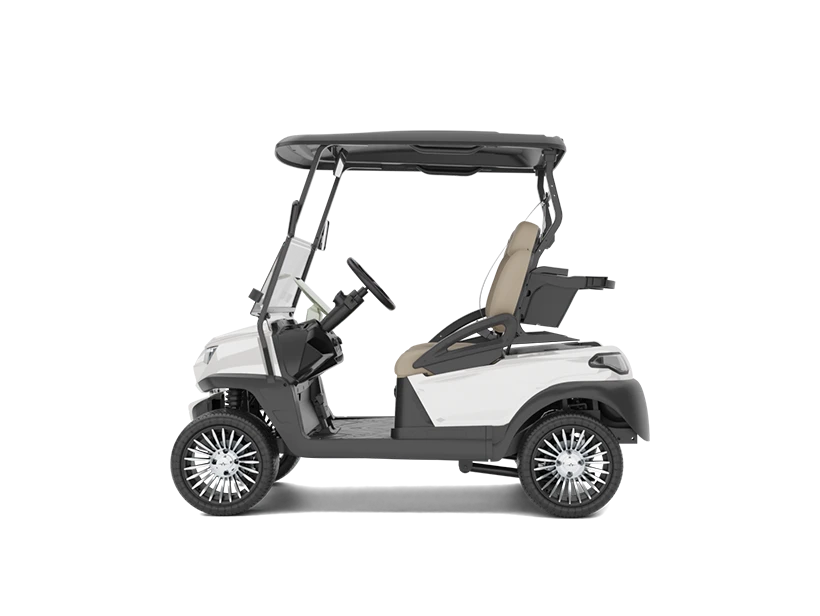
Atlas PRO 2-Passenger Neighborhood Electric Vehicle
2-Passenger Compact NEV

Atlas PRO

The executive choice for gated community security patrols, supervisor mobility, golf course operations, and urban residential commuting. Features a compact turning radius and maximum energy efficiency.

  • 2Seats
  • 173AhLithium
  • 5KWAC Motor
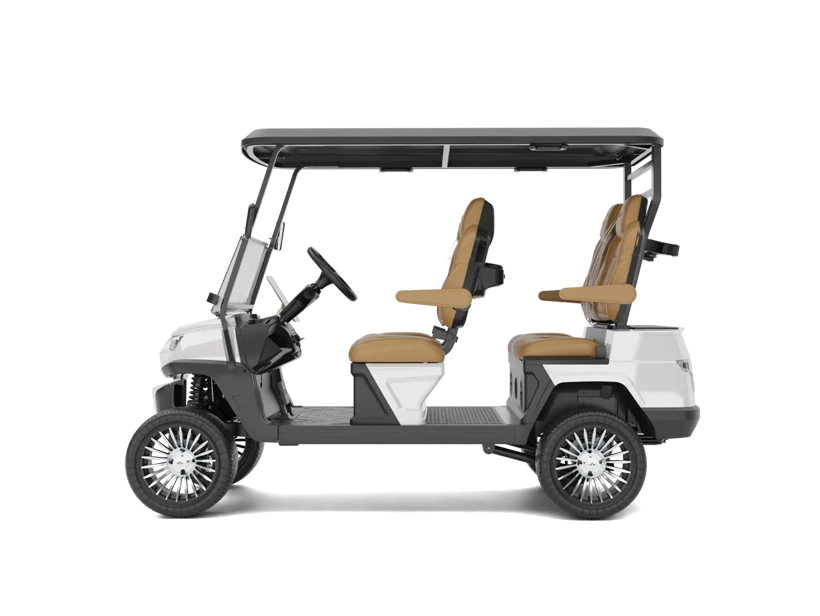
Atlas ONE Personal Design Neighborhood Electric Vehicle
Design-Led Personal NEV

Atlas ONE™

A breakthrough design statement combining luxury automotive aesthetics with full digital integration. Designed for high-end hospitality resorts, VIP guest transport, and discerning individual owners.

  • ONE™Platform
  • 12.5"Display
  • LSVReady
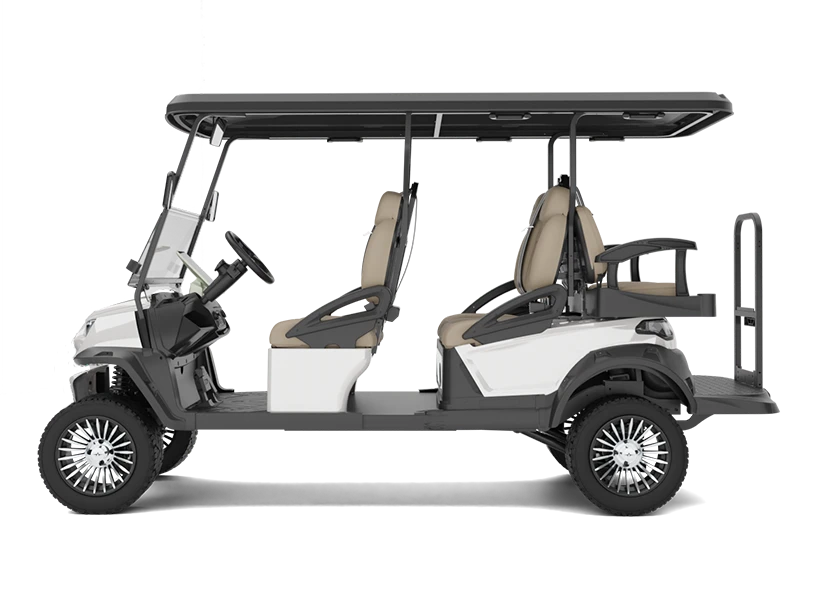
Atlas MAX 6-Passenger Lifted Commercial NEV
6-Passenger Heavy-Duty NEV

Atlas MAX

The ultimate multi-passenger commercial shuttle. Featuring a heavy-duty lifted suspension, rugged all-terrain capability, and 6-passenger capacity ideal for hotel fleets, campus transit, and tour operators.

  • 6Seats
  • LiftedChassis
  • HeavyPayload
Get Catalog

Strategic Market Intelligence

As global urban centers implement low-emission zones (LEZs) and enterprise organizations push to satisfy strict ESG (Environmental, Social, and Governance) targets, the global Neighborhood Electric Vehicle market is undergoing a seismic transformation. Procurement officers must align their capital allocation with emerging technological shifts.

1. Paradigm Shift: From 48V Lead-Acid to Integrated 173Ah LiFePO4 Systems

For decades, commercial low-speed transport relied on flooded lead-acid or AGM battery banks. These legacy chemical systems presented severe financial drawbacks: heavy weight, toxic acid off-gassing, 50% maximum depth-of-discharge limits, and rapid cell degradation requiring replacement every 18 to 24 months. Modern procurement trends dictate an immediate transition to high-capacity Lithium Iron Phosphate (LiFePO4) chemistry. The Atlas 173Ah lithium system provides over 3,500 life cycles to 80% DOD, continuous flat voltage delivery regardless of state of charge, zero watering maintenance, and a 60% reduction in battery pack weight, dramatically reducing wear on braking and suspension systems.

2. Telematics Integration & Connected Digital Fleet Architecture

Future NEV fleets will no longer operate as isolated mechanical assets. Advanced procurement specifications increasingly mandate CAN-bus vehicle architecture integrated with digital command displays. The Atlas 12.5" Command Center represents this shift, offering high-speed data bus connectivity that monitors individual lithium cell voltages, motor controller thermal limits, and real-time state of charge. Fleet operators can perform firmware diagnostic updates through authorized dealer tools, reducing vehicle diagnostic time by over 70%.

3. Street-Legal LSV Homologation & Global Safety Regulations

Municipalities across North America, Europe, Asia, and the Middle East are formalizing legal frameworks for micro-mobility. Unregulated golf carts are increasingly banned from public right-of-ways. B2B importers are prioritizing vehicles designed standard with FMVSS 500 equipment: three-point seat belts, DOT automotive windshields, full LED lighting clusters, hydraulic four-wheel braking systems, and VIN numbers. Procuring factory-compliant NEVs protects fleet managers against regulatory liabilities and permits operation on urban roads posted up to 35 mph.

4. Total Cost of Ownership (TCO) Optimization in Commercial Fleet Operations

While initial acquisition cost was historically the sole purchasing criteria, enterprise buyers now compute 5-year and 10-year Total Cost of Ownership (TCO). A comprehensive evaluation reveals that purchasing an engineered lithium NEV yields a 40% lower TCO compared to lead-acid alternatives. Savings stem from eliminated battery replacement cycles, 30% lower electricity consumption per mile due to lighter overall mass, minimal brake pad wear via regenerative motor braking, and reduced downtime.

Technical Comparative Analysis: Legacy Lead-Acid Carts vs. Generic Import NEVs vs. Atlas Commercial NEV Fleet Platform
Feature / Engineering Spec Legacy Lead-Acid Carts Generic Import NEVs Atlas Commercial NEV Platform
Battery Chemistry & Capacity Flooded Lead-Acid / AGM (80Ah-105Ah equivalent) Basic Lithium (60Ah - 100Ah) Standard 173Ah LiFePO4 High-Density Pack
Motor & Drivetrain 3KW - 3.5KW Brushed DC Motor 3.5KW - 4KW AC Motor 5KW Brushless AC Motor + Regen Braking
Cockpit Telematics Analog Battery Indicator / No Screen 7-inch or 9-inch Basic Screen 12.5-inch HD Touchscreen Command Center
Safety & FMVSS 500 Compliance Add-on Light Kits / No Belts Standard Partial Equipment / Non-DOT Glass Full Factory LSV / Street-Legal Equipment
Maintenance Requirements Weekly Battery Watering & Terminal Cleaning Periodic Battery BMS Check Zero Battery Maintenance / Sealed BMS System
Powertrain Warranty 1 Year Limited Warranty 1 to 2 Years Limited Warranty Lifetime Powertrain Warranty (2026 Models)
Battery Warranty 1 Year Pro-Rated Warranty 3 to 5 Years Limited Warranty 10-Year Factory Lithium Battery Warranty
Expected Life Cycles (80% DOD) 400 - 600 Cycles 1,500 - 2,000 Cycles 3,500+ Cycles
Get Catalog

Frequently Asked Questions

Neighborhood Electric Vehicle (NEV) Procurement FAQ

In-depth answers curated by our engineering and global dealer support teams to assist purchasing agents, resort operators, and automotive importers.

A true Neighborhood Electric Vehicle (NEV) is a legally recognized subcategory of Low-Speed Vehicles (LSVs) governed by federal regulations such as NHTSA FMVSS 500 in the United States and comparable international standards. Key technical differentiators include:

  • Speed Capability: NEVs reach a governed top speed of 20 to 25 mph (32–40 km/h), whereas traditional golf carts are capped at 15 to 19 mph.
  • Mandatory Street-Legal Equipment: NEVs must come factory-equipped with DOT-certified seat belts, automotive safety glass windshields, high/low beam headlights, turn signals, brake lights, side mirrors, a parking brake, and reflectors.
  • 17-Digit VIN: NEVs are assigned a unique 17-digit Vehicle Identification Number (VIN) enabling registration, license plate issuance, and titling for public road use on streets with posted speed limits up to 35 mph (55 km/h).
  • Structural Standards: NEVs feature heavy-duty braking systems (hydraulic 4-wheel disc brakes) and rigid chassis engineering designed to withstand street driving demands.

Battery capacity directly dictates fleet uptime, operational productivity, and long-term ROI. Most standard electric golf carts and low-speed vehicles ship with minimal 60Ah to 105Ah battery packs, causing range anxiety and requiring frequent recharging during multi-shift operations. Atlas NEVs ship standard with a massive 173Ah LiFePO4 battery pack, delivering several distinct advantages:

  • Extended Operational Range: Provides up to double the usable range per single charge compared to standard market offerings.
  • Voltage Stability: Maintains flat voltage curves under heavy passenger loads, steep inclines, and towing conditions without speed degradation.
  • Opportunity Charging Efficiency: Supports fast opportunistic charging during lunch shifts or downtime without battery memory degradation.
  • Lower TCO: With over 3,500 lifecycle capability, the 173Ah pack eliminates mid-life battery replacements, dramatically lowering total operating cost over a 10-year service life.

Atlas Carts provides a dedicated global corporate partner program tailored for commercial procurement officers, regional distributors, hotel chains, and municipal operators. Support includes:

  • Territory Exclusivity Programs: Protected sales and distribution channels for qualified regional dealership networks.
  • Standardized Parts Matrix: Modular component design across PRO, ONE™, and MAX models to simplify spare parts inventory management.
  • Technical & Warranty Support: Factory-direct technical documentation, technician training modules, and streamlined warranty claims processing backed by our Florida engineering center.
  • Custom Fleet Branding: OEM color customization, logo integration, and specialized equipment packages for commercial resort fleets.

Operating a Neighborhood Electric Vehicle legally on public roads requires compliance with local municipal, county, state, or national transport authorities. Generally, regulations require:

  • The roadway must have a posted speed limit of 35 mph (55 km/h) or lower (rules vary slightly by state/country).
  • The vehicle must be registered, titled, and display a valid license plate.
  • The driver must hold a valid driver's license and maintain auto insurance coverage as mandated by local laws.
  • The vehicle must maintain all FMVSS 500 required safety devices in working order (seat belts, turn signals, mirrors, horn, DOT glass). Atlas vehicles are manufactured to streamline local DMV registration.

When transitioning from a fleet of conventional lead-acid golf carts or gas utility vehicles to Atlas 173Ah Lithium NEVs, fleet operators typically experience a 35% to 50% reduction in total operating expenses over a 5-year period. Factors driving these savings include:

  • Zero Battery Replacement Costs: Lead-acid batteries require replacement every 2 years; Atlas 10-year lithium coverage eliminates this recurring capital expenditure.
  • Reduced Maintenance Labor: Eliminates distilled water filling, terminal corrosion cleaning, acid spill remediation, and spark plug/oil filter service.
  • Energy Efficiency: High-efficiency 5KW AC motors and regenerative braking convert over 85% of electrical energy into motion, cutting charging power costs significantly.

The Atlas 12.5-inch HD Touchscreen Command Center transforms the cabin into an automotive-grade environment. Key operational features include:

  • Real-Time Battery Telemetry: Displays exact state-of-charge percentage, voltage delivery, and dynamic estimated remaining mileage based on driving style.
  • Enhanced Safety View: Automatically engages high-definition rear-view camera feeds when shifted into reverse to prevent collisions in crowded resort or parking zones.
  • Intuitive Drive Controls: Allows toggle control over speed profiles, headlights, digital media, and system settings while remaining readable under direct sunlight.

Atlas stands behind its engineering with market-leading warranty protection for 2026 model year vehicles:

  • Lifetime Powertrain Warranty: Covers the electric drive motor, gear box, and main drivetrain components against manufacturing defects for the life of the vehicle.
  • 10-Year Lithium Battery Warranty: Guarantees the integrity and performance of the 173Ah LiFePO4 battery system.
  • 3-Year Bumper-to-Bumper Warranty: Covers bumper-to-bumper vehicle components under standard operating conditions. (Full warranty terms administered through factory-authorized dealers).
Get Catalog
Atlas Neighborhood Electric Vehicle Headlights Illuminated

Enterprise Fleet & Dealer Inquiries

Accelerate Your Fleet Electrification

Partner with an American engineering leader. Request technical specifications, commercial price matrices, and global distribution documentation today.